| Global Cotton Economy | |
|---|---|
| Scientific Genus | Gossypium |
| Primary Family | Malvaceae |
| Origin of Name | Arabic nomenclature “qutn” |
| Earliest Cultivation | 6000 BC (Peru and Pakistan) |
| Global Production | 25 Million Metric Tonnes |
| Global Bales Annually | 110 Million Bales |
| Top Producing Nation | China (29 Percent) |
| Top Importing Nation | Bangladesh |
| Most Common Species | Gossypium hirsutum (Upland) |
| Luxury Species | Gossypium barbadense (ELS) |
| Global Workforce | 350 Million Individuals |
| Primary Pest Threat | Pink Bollworm |
| Industrial Derivative | Nitrocellulose |
| Primary Subsidy Model | Target price-based (China) |
| Textile Testing Standard | High Volume Instrument (HVI) |
| Official Data Source | International Cotton Advisory Committee |
| Official Subsidy Data | World Trade Organization |
Cotton, a term derived from the Arabic nomenclature qutn, represents one of the most transformative agricultural commodities in the history of human civilization. Morphologically, it is a soft, fluffy staple fiber that develops within a protective boll encapsulating the seeds of the Gossypium plant. It consists almost entirely of pure cellulose alongside minor percentages of naturally occurring waxes, fats, pectins, and trace moisture. As an economic engine, the modern global cotton industry presently engages an estimated 350 million individuals worldwide, occupying approximately 2.5 percent of the globe’s available arable land to generate an annual yield of nearly 25 million metric tonnes, which is equivalent to roughly 110 million standard agricultural bales.
The domestication of this versatile plant occurred in multiple isolated geographies, predating recorded history and shaping ancient global trade networks. In the New World, extensive archaeological excavations in the Nanchoc District of Peru have identified cultivated species dating back to the 7th and 6th millennia BC. Contemporaneously in the Old World, fragments of spun thread were excavated in Pakistan, securely dated to the 6th millennium BC. Despite this ancient footprint, it was the rise of mercantilist trade networks and the subsequent British Industrial Revolution that permanently elevated this cellulose fiber into the dominant material of global textiles.
This comprehensive report explores the modern scope of the worldwide fiber trade. We will analyze the evolutionary botany of the plant, the geopolitical trade disputes surrounding state subsidies, the precise mechanics of industrial ginning and chemical finishing, and the biological engineering dictating the sustainable future of the industry.
1. Botanical Classification
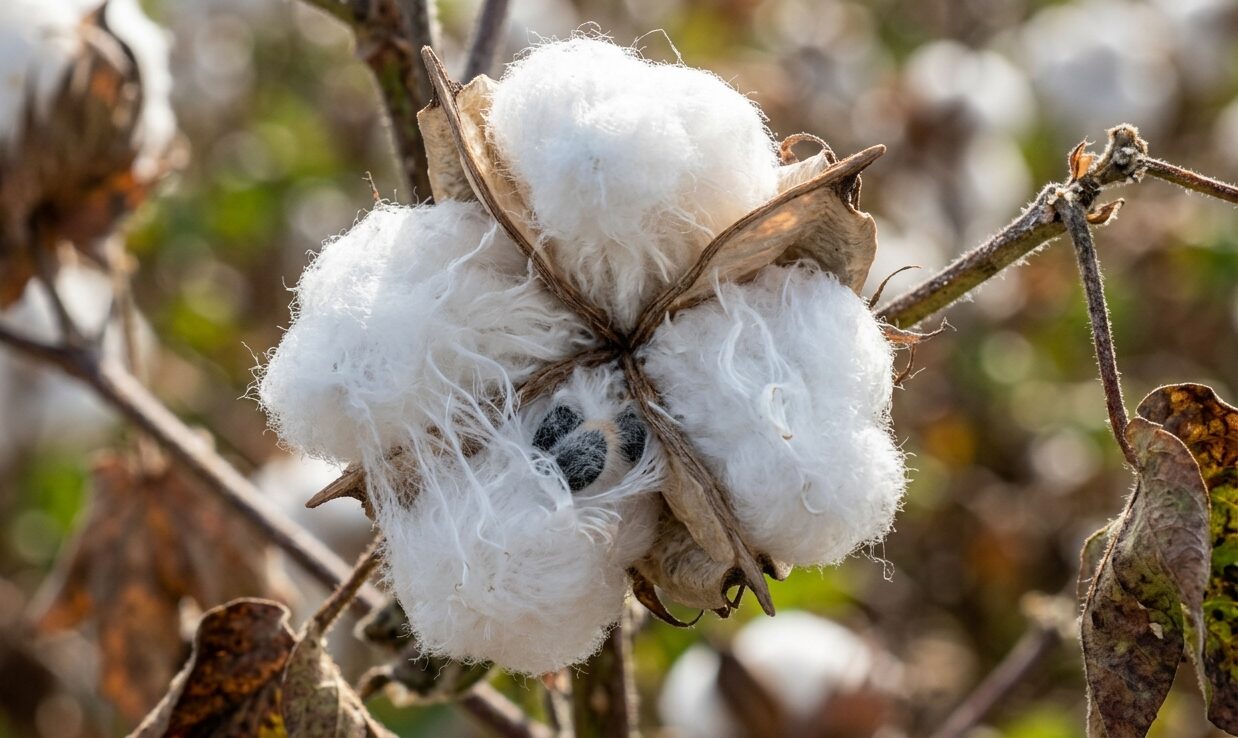
The formal taxonomy of the cotton plant places it within the kingdom Plantae, the clade Tracheophytes, the order Malvales, and the family Malvaceae. Within the broader subfamily of Malvoideae, it sits in the tribe Gossypieae and the genus Gossypium, which encompasses approximately 50 morphologically diverse species distributed across arid and semiarid tropical and subtropical ecosystems. These plants naturally occur on every single continent with the explicit exception of Europe. The biological plasticity of the Gossypium genus encompasses everything from fire-adapted herbaceous perennials surviving in the Australian outback to fully mature arboreal tree species thriving in the Mexican highlands.
The majority of wild species exist as simple diploids. However, the defining evolutionary event that catalyzed modern commercial agriculture occurred approximately 1.5 to 2.5 million years ago. A transoceanic dispersal facilitated a single hybridization event merging two distinct diploid genomes, which subsequently underwent chromosome doubling to form a stable allopolyploid, or tetraploid, lineage. Today, commercial cultivation relies almost exclusively on four domesticated species. The Old World diploid species, Gossypium arboreum (tree cotton) and Gossypium herbaceum (Levant cotton), once dominated ancient trade but now represent a fractional percentage of global output.
2. Commercial Species
The global textile industry is dictated by the superior New World tetraploid species. Gossypium hirsutum, recognized as Upland, Mexican, or American cotton, accounts for over 90 percent of total global commercial production due to its high yield profiles and environmental hardiness. The secondary tetraploid, Gossypium barbadense (historically known as Creole, Egyptian, or Sea Island), is globally prized for producing premium Extra-Long Staple (ELS) fibers. While these plants exist in nature as perennial shrubs, modern agricultural paradigms mandate their cultivation as annuals to disrupt predatory pest life cycles and optimize mechanized harvesting schedules.
3. Ancient Origins
The earliest known human utilization of the fiber predates written language. Deep archaeological excavations in the Nanchoc District of Peru have identified cultivated G. barbadense dating to the 7th and 6th millennia BC. Furthermore, preserved textile fragments dyed with natural indigo blue were discovered at Huaca Prieta, dating to the 4th and 3rd millennia BC. Contemporaneously in the Old World, fragments of spun thread utilized to string copper beads were excavated in Mehrgarh, Pakistan, securely dated to the 6th millennium BC. By the 7th century BC, the Greek historian Herodotus formally documented the advancing armies of Xerxes I of Persia wearing garments fabricated from wool that grew on trees.
4. The Industrial Revolution
Despite this ancient global footprint, Europe remained reliant on domestic linen, flax, and wool throughout the Renaissance. A paradigm shift occurred in the late 17th century when the English East India Company began importing vast quantities of inexpensive, vividly colored calicoes and chintzes directly from India. To protect domestic woolen and linen weavers from impending economic ruin, European powers enacted protectionist legislation. France instituted an absolute ban on imports in 1686, followed by English bans in 1701 and 1721.
The latent profitability of the fiber proved impossible to suppress, catalyzing the rise of war capitalism. This mercantilist framework wedded state naval power with private capital, shifting the economic center from the coasts of South Asia directly into the Atlantic. The establishment of immense plantations across the American South, dependent upon the exploitation of enslaved African labor, provided European spinning mills with an endless supply of raw material at suppressed prices that undercut traditional Indian weavers.
5. Rapid Mechanization
This influx of raw material fueled the British Industrial Revolution. The technological bottlenecks of hand-spinning were shattered by James Hargreaves’ revolutionary spinning jenny in 1764 and Richard Arkwright’s water-powered spinning frame in 1767, enabling the cheap mass production of cloth. The subsequent invention of Eli Whitney’s mechanical gin in 1794, followed by Henry Ogden Holmes’ continuous saw gin in 1796, exponentially increased raw fiber output by removing the seeds mechanically. By the mid-19th century, the county of Lancashire had transformed into Cottonopolis, housing over 2,500 active mills that produced eight billion yards of cloth annually, representing nearly 50 percent of global output. To replace current global textile production with natural wool, the world would require seven billion sheep and grazing land equivalent to 1.6 times the entire landmass of the European Union.
6. Global Production Leaders
The contemporary macroeconomic landscape of the fiber is centralized among a handful of sovereign producers, shaped by governmental subsidy interventions and shifting global weather patterns. Based on projections by the United States Department of Agriculture (USDA) and the International Cotton Advisory Committee (ICAC) for the 2024 to 2026 marketing seasons, global production is structured by a distinct agricultural hierarchy.
| Market / Producing Nation | Percentage of Global Production | Projected Production (Millions of Bales) |
|---|---|---|
| China | 29% | 35.80 |
| India | 20% | 23.80 |
| Brazil | 16% | 19.50 |
| United States | 11% | 13.92 |
| Pakistan | 4% | 5.30 |
| Australia | 4% | 4.50 |
China retains dominance over the global market, with output projected to reach up to 6.81 million metric tons. This production is concentrated in the Xinjiang region, which accounts for 92.3 percent of the nation’s total domestic output. To maintain this dominance, the Chinese government deploys target price-based financial subsidies to offset high input costs, incentivizing the relocation of yarn spinning and textile manufacturing directly into Xinjiang. By 2028, local authorities project that 45 to 50 percent of Xinjiang’s raw fiber will be spun internally, supported by over 29 million modern spindles. However, geopolitical friction, notably the Uyghur Forced Labor Prevention Act (UFLPA) and reciprocal 140 percent retaliatory tariffs imposed on US imports, have bottlenecked bilateral trade relationships.
7. Emerging Agricultural Powers
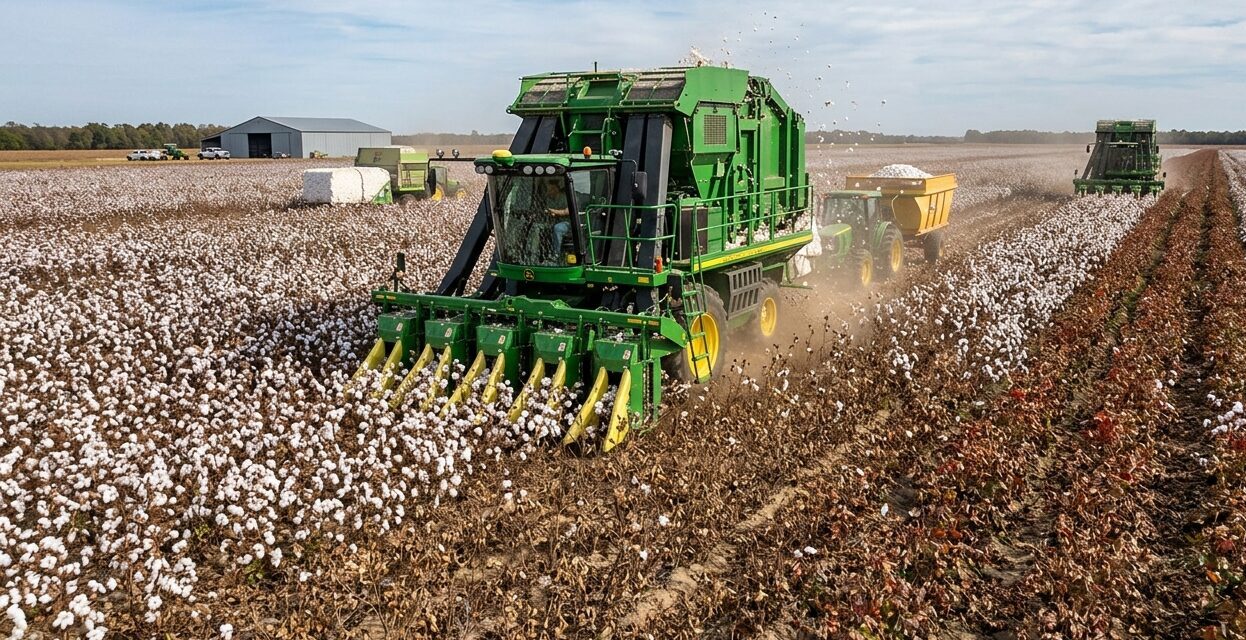
The most dramatic historical shift in modern global trade dynamics is the ascension of Brazil as the world’s leading exporter of raw material. Driven by capitalized agricultural expansion directly into the Cerrado biome, specifically the states of Mato Grosso and Bahia, Brazil boasts a sophisticated safrinha second crop system where the fiber is double-cropped alongside soybeans or corn. Leveraging a 210-day growing season, stable monsoonal rains, and corporate farms frequently exceeding 1,000 hectares, Brazil achieves rain-fed yields that surpass traditional irrigated operations.
Similarly, Australia achieves world-leading agronomic efficiency despite representing only 4 percent of global production. Dependent on precise reservoir discharges for irrigated operations, Australia leverages elite transgenic varieties developed by the CSIRO to maximize output in the face of cyclical La Niña and El Niño weather patterns. Conversely, the United States has experienced a structural contraction to 13.92 million bales, representing 11 percent of global output. US production remains vulnerable to drought risks across the primary growing regions of West Texas, though this has been partially offset by improved weather conditions in the Delta and Southeast regions.
8. The Import Hubs
As Western and Chinese labor costs rise, raw importation has shifted toward South Asian spinning hubs. Bangladesh has emerged as the largest global importer of the raw material, operating an immense readymade garment sector specializing in knitwear, denim, and woven garments. To support these domestic capabilities, the Bangladesh Development Board has initiated nuclear mutation breeding programs, utilizing targeted irradiation to rapidly develop high-yielding, climate-resilient seedlings for local farmers.
Meanwhile, Pakistan faces a severe structural crisis. Despite being a traditional top-five global producer, its overall output has collapsed by a staggering 61 percent over the last decade, falling from 10.6 million bales to an estimated 5.3 million bales. This national decline is attributed to climate change impacts, a dangerously narrow genetic base of germplasm, and systemic national failures in accessing late-generation genetically engineered seed variants. To sustain its textile industry, Pakistan relies on importing up to 5.0 million bales annually to maintain 10.3 million bales of mill consumption.
9. Commodity Markets and Futures
The financial valuation of the raw material is globally benchmarked against ICE Futures and the prominent Cotlook A-Index. During the 2025 to 2026 tracking periods, the nearby May New York ICE futures contracts fluctuated between 65 and 70 cents per pound, while December contracts settled near 75 cents per pound. The overarching A-Index moved between 75 and 82 cents per pound, representing multi-year highs influenced by macroeconomic shocks. Notably, disruptions to maritime shipping routes and escalations in the Middle East elevated crude oil prices globally. Because synthetic polyester is a direct petroleum derivative, higher crude oil prices increase synthetic production costs, driving competitive manufacturing demand back toward natural fibers.
10. The Subsidy Crisis
Free-market dynamics are distorted by state subsidy architectures. Over the past decade, China injected an estimated $41 billion in direct subsidies, compared to $7 billion distributed by the United States. In the US, the subsidy framework relies on Direct Payments, Counter-Cyclical Payments, and Loan Deficiency Payments (LDP), which shield domestic growers from bankruptcy when market prices collapse below target thresholds. Currently, 83 percent of global production benefits from some form of state financial subsidy.
This state-sponsored suppression of global prices inflicts devastating economic damage on non-subsidized developing economies, most notably the Cotton-4 (C-4) nations of West Africa (Benin, Burkina Faso, Chad, and Mali). In these vulnerable nations, the agricultural crop is a macroeconomic pillar and the primary source of foreign exchange. The C-4 produces competitive, clean rain-fed Upland varieties, but struggles to maintain solvency against subsidized international competitors. In 2002, Brazil brought a landmark case against US subsidies before the World Trade Organization (WTO), prompting the C-4 to formally demand the complete elimination of trade-distorting subsidies and direct financial compensation for lost export revenues. Despite nearly two decades of negotiations within the Doha Development Agenda, the dispute remains deadlocked. Consequently, C-4 farmers face chronic debt crises, frequently defaulting on agricultural loans while lacking the capital to access inputs like advanced transgenic seeds and chemical fertilizers.
11. Premium Luxury Varieties
Beyond mass-market Upland production, the global textile industry places exceptional financial premiums on Extra-Long Staple varieties derived from Gossypium barbadense. Raw quality is quantified by specific physical metrics, driving wide price disparities in the raw materials market.
| Variety Designation | Region of Cultivation | Staple Length | Defining Characteristics |
|---|---|---|---|
| West Indian Sea Island | Caribbean (Barbados, Jamaica, Antigua) | 48 to 52 mm | Rare, hand-harvested, unmatched length and luster used in bespoke luxury shirting. |
| Egyptian Giza (45, 92, 96) | Egypt (Nile River Valley and Delta) | 36 to 44 mm | Exceptional tensile strength and crisp drape cultivated in zones governed by ministerial decree. |
| Supima / American Pima | USA, Peru, Australia | 34 to 38 mm | Trademarked ELS utilized in premium retail apparel and high-thread-count bedding. |
| Suvin Gold and Kasturi | India (Tamil Nadu, Gujarat) | 29 to 35+ mm | Kasturi acts as a blockchain-traceable brand guaranteeing whiteness and purity. |
West Indian Sea Island represents the pinnacle of luxury textile materials. Officially identified as the black seed variant of Gossypium barbadense, its ancient origins trace back 6,000 years to the coasts of Ecuador and Peru before taking root in the microclimates of the British West Indies in the 18th century. Today, authentic cultivation is localized to Barbados, Jamaica, and Antigua under the rigorous oversight of the West Indian Sea Island Cotton Association. The sensitive plant demands a precise combination of high humidity and low rainfall, and must be harvested entirely by hand to prevent mechanical fracturing of its extraordinary 48 to 52 mm staple length. Consequently, the annual global yield is minuscule, totaling approximately 150 bales a year, representing 0.0004 percent of global production. Exclusive corporate partnerships, such as the Albini Group’s monopoly on the 70 bales produced directly in Barbados, ensure that garments spun from this material retail at exorbitant price points, valued for a silk-like sheen and tight structural uniformity.
12. Advanced Genetic Heritage
Egyptian Giza leverages the fertile soils and stark diurnal temperature variations of the Nile River Valley to produce some of the finest textiles on Earth. Production is strictly regulated by the Egyptian Ministry of Agriculture, which issues annual decrees assigning specific genotypes to geographic governorates to prevent accidental cross-pollination and maintain genetic purity. While Giza 45 has long been heralded as the standard-bearer for Egyptian luxury, recent bioengineering efforts have introduced Giza 92 and Giza 96. Giza 92 tests superior across major quality indicators and is recognized as the strongest natural fiber in the world, allowing textile engineers to spin unprecedentedly fine, high-thread-count yarns that resist tension breakage. To combat counterfeiting rings, the Cotton Egypt Association actively enforces a mandatory DNA analysis and supply chain traceability protocol for all products bearing the Egyptian trademark.
In India, the government launched the Kasturi initiative to formalize the global reputation of its mid-to-high-tier agricultural outputs. Managed by the Cotton Textiles Export Promotion Council, the Kasturi brand acts as a specification-based guarantee of pure quality, requiring long-staple lengths of 29 mm and 30 mm alongside strict parameters for whiteness, brightness, and purity. Crucially, the Kasturi program integrates advanced blockchain technology directly across the value chain, ensuring verifiable, end-to-end traceability of Indian origin for international buyers.
13. The Farming Lifecycle
The intensive agronomy of the plant is a complex, labor-intensive process defined by persistent vulnerability to climatic shifts and swarms of predatory insects. Cultivation generally requires a maturation cycle spanning exactly 160 to 180 days. The plant naturally thrives in environments featuring significant sunlight and moderate precipitation profiles, ranging from 20 to 30 inches. Successful propagation dictates the use of managed soils with corrected pH levels and the absence of toxic aluminum concentrations.
As the plant reaches full maturity and the tough protective bolls burst open to expose the white lint, a chemical pre-harvest intervention is required. Farmers apply targeted chemical defoliants to force the plant to shed its green foliage. This critical process clears the path for mechanical harvesters, drastically reducing the amount of leaf trash that would otherwise contaminate the fiber and downgrade its market value during inspection.
14. Destructive Pests and Threats
The cellulose plant acts as a powerful biological magnet for destructive insects, with over 1,300 unique species globally documented as actively feeding on the crop. Historically, the notorious boll weevil caused catastrophic economic crises across the United States, while the sap-sucking aphid devastates African crops on a yearly basis. In Asia, the spotted bollworm, the American bollworm, and the highly destructive pink bollworm present severe existential threats to crop viability. The pink bollworm is particularly insidious because it burrows deep inside the tough boll to consume the developing seed, rendering external pesticide sprays ineffective and resulting in bolls that appear normal from the exterior but yield zero spinnable fiber upon mechanical opening.
15. The Transgenic Paradox
To circumvent the environmentally damaging application of broad-spectrum chemical pesticides, agricultural biotechnology introduced Genetically Modified (GM) variants known as Bt cotton. These transgenic plants are engineered to express crystalline insecticidal proteins, identifying the Cry1Ac, Cry2Ab, and Vip3A variants, directly derived from the natural soil bacterium Bacillus thuringiensis. When ingested by target lepidopteran larvae, these proteins bind to the insect’s gut, causing fatal cellular paralysis within hours.
While Bt varieties generated initial yield increases and reduced chemical spraying, a troubling ecological paradox has emerged, particularly within India. First, the primary biological target, the adaptive pink bollworm, rapidly evolved biological resistance to the built-in Bt toxins, surviving the ingestion process. Secondly, the reduction in broad-spectrum chemical spraying inadvertently created a dangerous ecological vacuum. Secondary, sap-sucking pests that are immune to the specialized Bt toxins, such as the reproductive whitefly, jassid, thrips, and the mealy bug, have experienced explosive, unmitigated population growth. In 2015, high humidity and warming temperatures facilitated a whitefly outbreak in the Punjab region, resulting in a 50 to 60 percent crop failure and forcing farmers to plow under their ruined fields mid-season. This dynamic forces farmers back onto an expensive pesticide treadmill, requiring chemical interventions to suppress secondary pests while paying premium prices for failing proprietary hybrid GM seeds.
16. Mechanical Ginning Processes
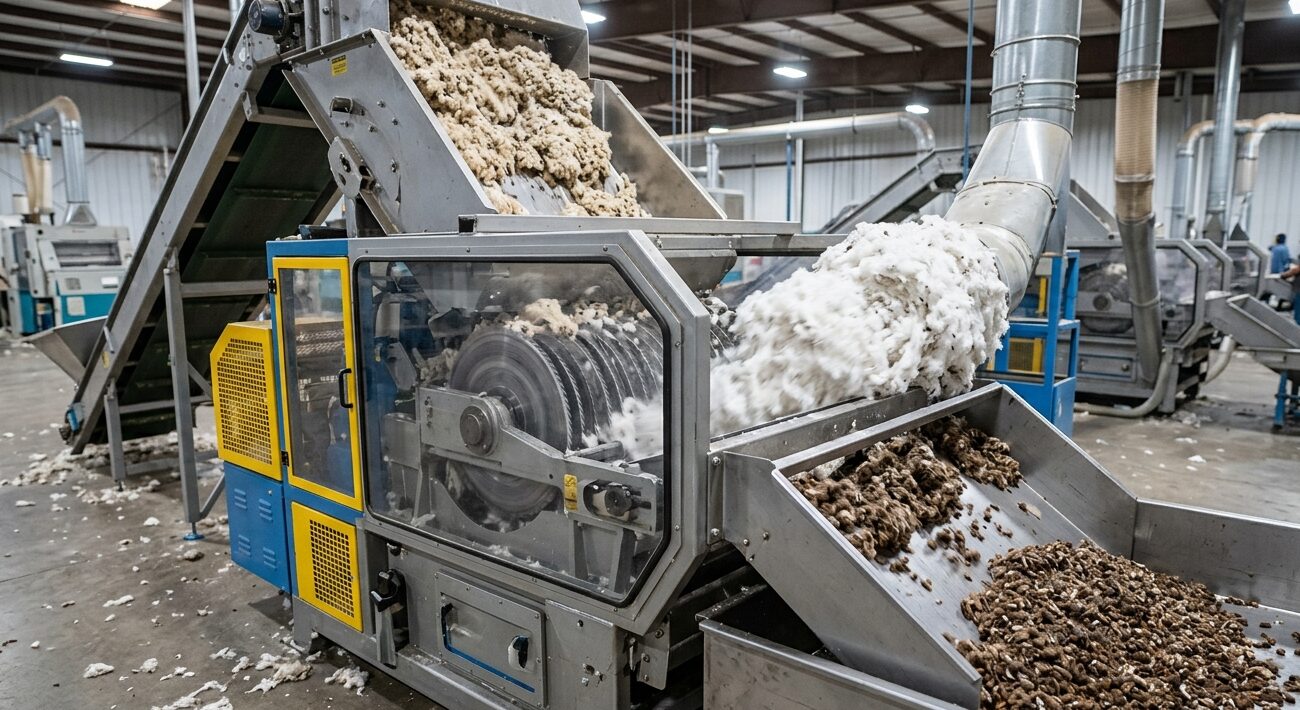
Once harvested from the field, the raw, seed-filled material must undergo aggressive mechanical separation before spinning. The rough material is vacuumed into the ginning facility, where it is subjected to calibrated industrial dryers and humidifiers to ensure an optimal moisture level holding between 5.0 and 8.25 percent. Following pre-cleaning to extract heavy sticks and loose dirt, the material reaches the gin stand.
The global industry relies on two fundamentally divergent mechanical processing approaches: heavy saw gins and delicate roller gins. Originating from Eli Whitney’s spiked cylinder and perfected by Henry Ogden Holmes’ design, modern saw gins utilize fast-moving circular saws that grip the fiber, pulling it through narrow rib slots that physically block the larger, heavy seed. A rotating doffer brush or a high-pressure air blast subsequently strips the pure lint from the metal saws. While saw gins offer massive volumetric processing capacity, their aggressive mechanical action frequently fractures the fibers, making them suitable only for tough Upland varieties.
Conversely, roller gins evolved directly from the ancient Indian Churka, which processed a mere 2.3 kg a day, and the 19th-century McCarthy gin. These specialized machines rely on a gentle rotary knife pressing against a specialized roller to pull the lint free without fracturing the long staple. Plagued by slow output historically, the modern high-speed rotary-knife roller gin matches the volumetric capacity of saw gins while preserving the exceptional length of fragile ELS varieties like delicate Pima and premium Giza.
17. High Volume Instrument Testing
Following the ginning process, the raw, fluffy lint is hydraulically compressed into dense 227 kg bales, wrapped in protective fabric, tagged with a scannable Permanent Bale Identification (PBI) number, and subjected to rigorous High Volume Instrument (HVI) testing by institutions like the USDA Agricultural Marketing Service. The resulting objective data dictates global market pricing and Commodity Credit Corporation loan premium eligibility for the farmers.
Staple length is measured in hundredths or 32nds of an inch, with premium ELS fibers measuring above 1.26 inches, while short, broken fibers face severe financial market discounts. The vital Length Uniformity Index ensures a consistent percentage of length, penalizing variable fibers that cause yarn breakage on spinning machines. The specific Micronaire metric tests air permeability to accurately determine fiber fineness; optimally holding between 3.5 and 4.9, it punishes immature fibers testing below 3.4 or over-mature fibers testing above 5.0. Finally, the strict Color Grade judges overall reflectance and yellowness, ensuring that spotted, tinged, or yellow-stained material results in unavoidable financial penalties.
18. Textile Manufacturing
Upon arrival at the industrial textile mill, the densely packed bales are opened and blended to ensure color consistency. The raw lint is beaten and opened by specialized heavy rollers before being flung by a fan-generated air current into a feeding trunk, where specialized pressure switches regulate the continuous flow of the loose material. The fibers are carded into a continuous, thin web, drafted into a thick, rope-like sliver, and routed to complex spinning frames. Modern spinning is specialized, utilizing fast Ring, Open-End, or Air-Jet mechanics to tightly twist the loose sliver into structurally sound yarn, which is subsequently woven or knitted into final fabric.
19. Chemical Finishing Protocols
Freshly woven material, known universally in the industry as greige or loom-state fabric, is unsuitable for direct consumer use. It possesses a dull, yellowish-grey aesthetic, a harsh tactile feel, and is hydrophobic due to the residual presence of weaving sizing starches, natural plant waxes, and dark machine oils. To achieve commercial viability, the fabric must undergo a sequential chemical finishing process.
First, during the Singeing phase, the flammable fabric is passed at high velocity over a plate heated by direct gas flames, incinerating protruding surface hairs and microscopic fuzz to prevent future pilling. Following this, rigorous Desizing and Scouring occurs, where industrial degreasers, caustic soda, and boiling additives are applied to chemically degrade and emulsify the warp-sizing starches, fruit gums, nitrogenous substances, and remaining shattered cottonseed shell fragments.
To establish a pristine, uniform substrate for coloration, the fabric undergoes Bleaching. It is subjected to oxidative chemical agents, most commonly heated alkaline hydrogen peroxide, which comprehensively destroys natural brown pigments, rendering the fabric pure, bright white. Finally, for premium woven fabrics, the material undergoes Mercerization. The material is submerged under physical tension in a concentrated solution of caustic soda (sodium hydroxide). This chemical bath induces a permanent, irreversible swelling of the cellulose polymer structure, dramatically increasing the fiber’s raw tensile strength, imparting a silk-like luster, and elevating its chemical affinity for capturing synthetic dyes.
20. Modern Fabric Blends
While pure 100 percent material is prized globally for its breathability, its inherent lack of elasticity and susceptibility to deep wrinkling necessitate the widespread use of synthetic blends. Blending optimizes the fabric’s physical properties while significantly reducing manufacturing costs.
Integrating synthetic Polyester represents the baseline of modern mass apparel. Typical ratios, such as 60 percent natural and 40 percent polyester, marry natural comfort with the immense tensile strength, abrasion resistance, and anti-wrinkle properties of synthetic polymers. Integrating a marginal 2 to 5 percent of Spandex ensures the textile gains multi-directional stretch and rapid elastic recovery, forming the structural foundation of modern activewear, athleisure, and form-fitting garments. Furthermore, combining the fibers with tough Nylon is utilized in tactical and outdoor gear, as the inclusion of nylon drastically elevates the fabric’s sheer strength against tearing.
21. Agricultural Byproducts
Despite its classification as an agricultural fiber crop, the plant generates massive volumes of biomass that support global food systems and chemical manufacturing operations. During the ginning process, approximately one-third of the separated mass consists of raw cottonseed. Annually, the 20 million farmers produce roughly 44 million metric tons of this valuable seed.
Cottonseed is crushed to extract its versatile edible oil. Historically foundational to the commercial food industry, the oil was utilized in the early 1900s by Procter & Gamble to formulate the first hydrogenated vegetable shortening, branded as Crisco. Today, it remains a global staple for deep frying due to its extraordinarily high smoke point, neutral flavor profile, and long shelf stability. The refined oil boasts zero trans-fats, zero cholesterol, and is certified for strict kosher dietary requirements.
However, raw, unrefined cottonseed contains gossypol, a toxic polyphenolic compound that acts as a natural defensive mechanism for the living plant. While the extracted oil must be refined to ensure human safety, the remaining protein-dense press cakes, boasting up to 49 percent protein content, are diverted into the agricultural sector as premium feed supplements. Ruminant animals, such as productive dairy cows and grazing sheep, possess unique digestive microflora capable of safely detoxifying the gossypol, utilizing the seed to significantly increase the overall volume and rich fat content of their milk.
22. Nitrocellulose and Munitions
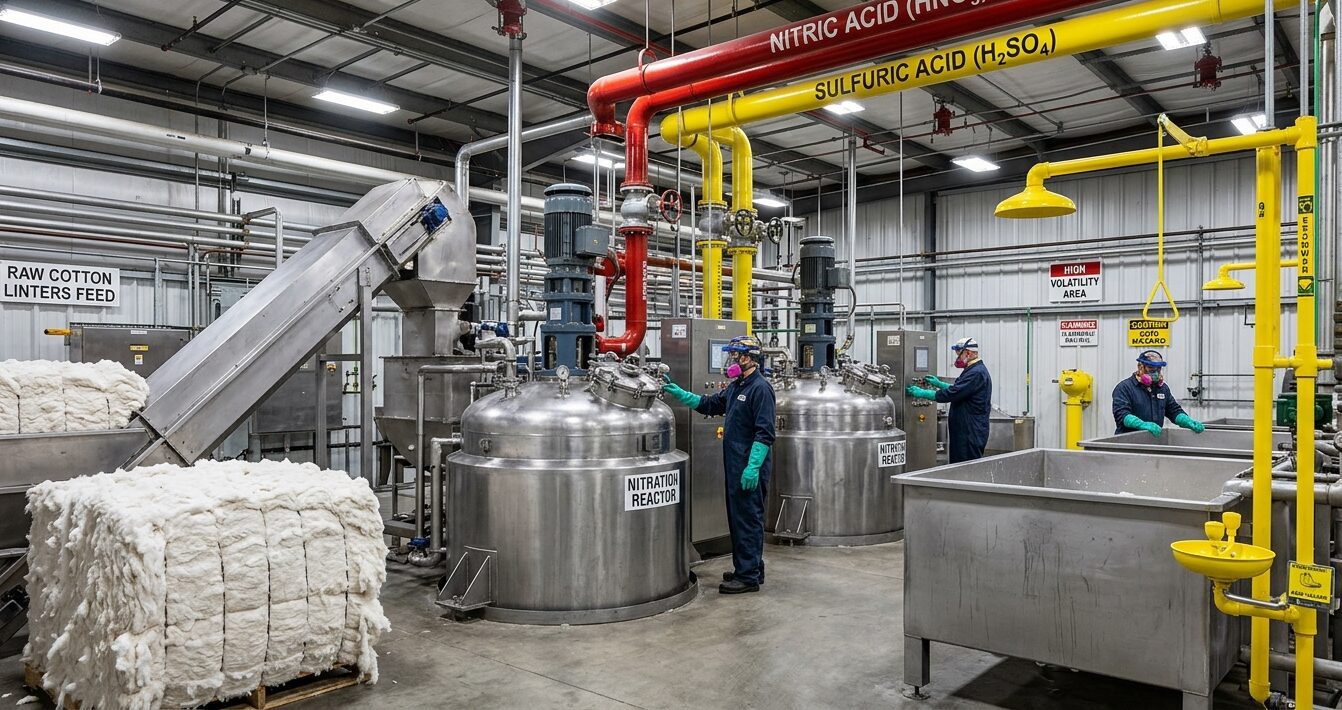
One of the most consequential chemical derivatives in human history is synthesized directly from the microscopic linters, which are the tiny, fuzzy fibers that adhere tightly to the hard seed hull even after the ginning process. When these pure alpha-cellulose fibers are subjected to a reactive catalytic bath of nitric and sulfuric acids, the naturally occurring hydroxyl groups sitting precisely on the cellulose molecular backbone are chemically replaced by volatile nitro groups.
The resulting compound, known scientifically as nitrocellulose, exhibits explosive properties dictated by its specific degree of nitration. Trinitrocellulose, containing greater than 12.5 percent nitrogen, yields a fluffy white substance known as guncotton or pyrocellulose. Guncotton is exquisitely shock-sensitive and ignites spontaneously at temperatures exceeding 150 °C, permanently revolutionizing modern warfare as the primary base for smokeless gunpowder and solid rocket propellants. Conversely, lower nitration levels, such as stable dinitrocellulose containing 10.5 to 13.5 percent nitrogen, yield stable, soluble compounds historically utilized to formulate the first man-made celluloid plastics. This chemical breakthrough enabled the mass production of billiard balls, automotive lacquers, and the foundational film stock that launched the modern motion picture industry.
23. Global Financial Security
The supreme mechanical durability and wear resistance of pure fiber guarantees its indispensability in the guarded realm of global financial security. The official fiat currency of the United States contains zero standard wood pulp; rather, it is composed of a proprietary slurry consisting of exactly 75 percent cotton and 25 percent pure linen. This precise formulation reliably yields the distinctive, un-photocopiable yellowish-green tint and tactile resilience of the US dollar bill.
The sheer scale of this consumption is massive; in fiscal year 2009 alone, the US Bureau of Engraving and Printing consumed an astonishing 21,476 agricultural bales to print 6.24 billion individual banknotes boasting a face value exceeding 219 billion dollars. To thwart global counterfeiting rings, the dense, tough substrate is physically embedded with scattered red and blue microscopic micro-fibers and longitudinally threaded with complex security ribbons prior to the final ink printing process.
24. Environmental Impact
Despite its undeniable global utility, the legacy cultivation and chemical processing of the crop inflict severe, documented ecological damage upon the biosphere. The absolute water footprint of conventional, irrigated agriculture is staggering; the manufacture of a single standard t-shirt consumes roughly 2,700 liters of pure water, a volume sufficient to supply one human being with drinking water for 900 consecutive days.
Furthermore, the traditional textile finishing industry relies heavily on carcinogenic formaldehyde to cheaply produce artificial wrinkle-resistant fabrics, and utilizes synthetic polyaminoamide-epichlorohydrin resins for wet-strength paper products, both of which severely contaminate vital municipal wastewater streams globally. Sustainable Recycled material, mechanically sourced directly from post-industrial and post-consumer waste, drastically minimizes this resource extraction, yielding a 96.7 percent reduction in global water scarcity impact compared to traditional farming.
25. Sustainable Innovations
To decouple the global industry from this unsustainable trajectory, pioneering researchers are pivoting from broad-spectrum agricultural GMOs toward precise CRISPR gene-editing techniques to cultivate Next-Generation Naturally Colored Cotton. By extracting plant stem cells and manipulating genetic markers linked to anthocyanidin modifiers and complex proanthocyanidins, scientists are engineering plants that naturally express built-in, fade-resistant pigmentation, such as deep brown and dark green, directly within the growing boll. If scalable, this could entirely eliminate the toxic, water-intensive industrial dyeing process. Fascinatingly, the unique compounds isolated within these colored fibers exhibit profound natural flame-retardant properties, offering a sustainable, non-toxic alternative to the hazardous synthetic chemicals currently mandated for consumer textiles.
Concurrently, the industrial manufacturing sector is shifting toward total water conservation through supercritical carbon dioxide dyeing. By subjecting basic carbon dioxide gas to extreme heat and immense physical pressure, the gas achieves a supercritical state, behaving simultaneously as a liquid and a gas. This supercritical fluid dissolves and transports dye deep into the cellulose matrix of the fiber without utilizing a single drop of precious water, subsequently evaporating and being captured in a closed-loop system for infinite industrial reuse. Similarly, breakthrough AirDye technology utilizes intense heat and heavy pressure to transfer pigments from specialized paper directly to the fabric, successfully achieving a 95 percent reduction in water consumption compared to wasteful conventional vat dyeing.