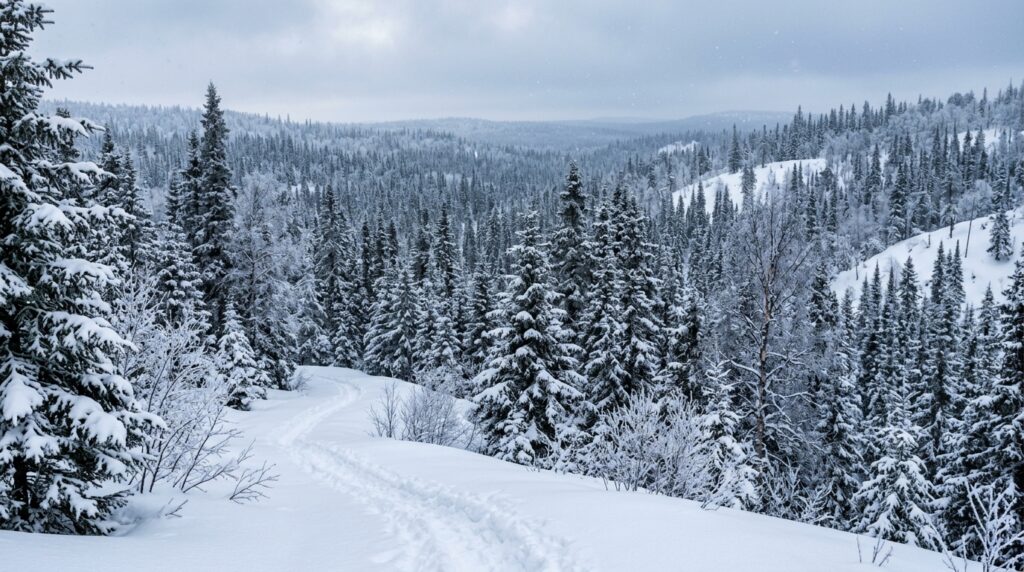
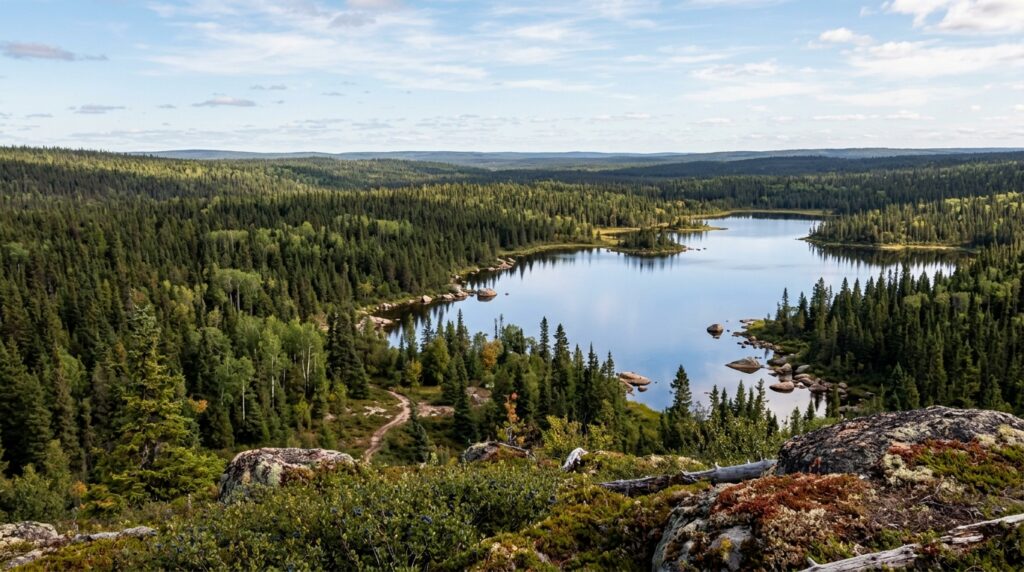
The Taiga, also known as the boreal forest, is the largest continuous land biome on Earth. Stretching like a massive green ribbon across the high northern latitudes of North America, Europe, and Asia, it covers roughly 11% of the planet’s total landmass. Defined by its dense forests of coniferous trees, bitterly cold winters, and short summers, the taiga is a harsh but incredibly vital ecosystem that plays a foundational role in regulating the Earth’s climate.
The Great Green Crown of the Earth
It is mesmerizing to imagine a forest so massive that it wraps around the entire top of our planet. Stretching across continents, this green crown is home to wildlife that has adapted to extreme cold and endless seasons of change. The resilience of these animals and plants shows the quiet strength of nature, surviving in conditions that many would find impossible.
Beyond its beauty, this vast forest plays a silent but vital role as a global climate guardian. It absorbs carbon, protects biodiversity, and helps regulate the Earth’s atmosphere. Protecting such a natural wonder is not just about saving trees it is about safeguarding the balance of life for the future of our planet.
| The Taiga (Boreal Forest) | |
|---|---|
| Biome Type | Subarctic Coniferous Forest |
| Global Coverage | ~17 Million Square Kilometers |
| Primary Regions | Russia, Canada, Alaska, Scandinavia |
| Dominant Flora | Spruce, Pine, Fir, and Larch trees |
| Average Winter Temp | -4°F to -40°F (-20°C to -40°C) |
| Key Predators | Wolves, Brown Bears, Siberian Tigers |
| Global Importance | Largest terrestrial carbon sink |
1. Geography: The Largest Forest on Earth
The sheer scale of the taiga is difficult to comprehend. It is the largest land biome in the world, stretching unbroken across the northern hemisphere just beneath the frozen tundra. The Russian taiga alone is larger than the entire continent of Australia or the United States.
Because the southern hemisphere lacks large landmasses at the same latitudes, the taiga is almost exclusively a northern phenomenon. It creates a vast, green crown around the globe, broken only by the Atlantic and Pacific oceans.
2. A Climate of Extremes
The taiga is defined by a subarctic climate, meaning it experiences some of the most extreme temperature fluctuations on the planet.
Winters are punishingly long, dark, and freezing, often lasting for six to seven months. During this time, temperatures can easily plummet below -40°F (-40°C). In contrast, the summers are incredibly short (only 50 to 100 frost-free days) but surprisingly warm and humid, triggering an explosive burst of plant growth and insect activity. Much of the ground in the northern taiga contains permafrost a layer of soil that remains permanently frozen year-round.
3. Flora and Fauna: Masters of Survival
Unlike the Amazon rainforest, which boasts millions of different plant species, the taiga has very low plant diversity. The forest is dominated almost entirely by coniferous trees (evergreens) like spruces, pines, and firs.
- Why Needles? Conifers have dark green, wax-coated needles instead of broad leaves. This design prevents water loss, allows them to absorb maximum sunlight, and lets heavy snow slide off without breaking their branches.
- Wildlife: The animals of the taiga are built for the cold. Large herbivores like moose, elk, and reindeer roam the forests, hunted by apex predators such as gray wolves, brown bears, and the endangered Siberian tiger. Many smaller animals, like the snowshoe hare, change their fur color to white in winter for camouflage, while millions of birds migrate south before the snow falls.
4. The Lungs of the North
The taiga is an ecological powerhouse. While tropical rainforests produce a massive amount of oxygen, the taiga’s true superpower lies in carbon storage. The cold temperatures slow down the decomposition of dead plants and trees. Because of this, the soil and peat bogs of the boreal forest store twice as much carbon as all the world’s tropical forests combined, keeping it out of the atmosphere and helping to cool the planet.
5. Modern Environmental Challenges
Despite its remote location, the taiga is facing severe existential threats due to human activity and shifting global climates:
- Massive Wildfires: While natural, small-scale fires are necessary to clear dead brush and open pinecones for seeds, rising global temperatures have led to unusually massive, uncontrollable mega-fires that destroy millions of acres annually.
- Thawing Permafrost: As the planet warms, the permafrost beneath the taiga is beginning to melt. This melting process releases trapped methane a greenhouse gas much more potent than carbon dioxide creating a dangerous warming loop.
- Industrial Logging: Clear-cutting for timber, paper products, and tar-sands mining (especially in Canada and Russia) permanently destroys ancient root networks and disrupts the migratory paths of wildlife.