The Solar System is the gravitationally bound system of the Sun and the objects that orbit it. Formed 4.6 billion years ago from the collapse of a giant interstellar molecular cloud, it is a vast, incredibly complex cosmic neighborhood. It encompasses eight major planets, dozens of moons, officially recognized dwarf planets, and millions of asteroids, comets, and meteoroids, all traveling together at 514,000 mph through the Orion Arm of the Milky Way galaxy.
Our Place in the Infinite
The sheer scale and diversity of our solar system is truly humbling. Earth, with all its life and beauty, is just one small rocky planet floating in a vast system filled with giant gas worlds, icy rings, and wandering comets. It feels incredible to realize that our planet happens to sit at the perfect distance from the Sun, making it possible for life to thrive here.
Thinking about the solar system reminds us how extraordinary the universe really is. Each planet has its own unique character, from Jupiter’s massive storms to Saturn’s shimmering rings, and together they form a cosmic neighborhood that stretches far beyond what we can see. It shows us that while Earth is special, it is also part of something much larger and endlessly fascinating.
| The Solar System | |
|---|---|
| Age | ~4.6 Billion Years |
| Location | Orion Arm (Milky Way) |
| Central Star | The Sun (G-Type Main-Sequence) |
| Planets | 8 (4 Terrestrial, 2 Gas Giants, 2 Ice Giants) |
| Dwarf Planets | Pluto, Ceres, Makemake, Haumea, Eris |
| Known Moons | 290+ |
| Farthest Spacecraft | Voyager 1 (Interstellar Space) |
1. The Birth of the Solar System
To understand the solar system, we must look at how it began. According to the Nebular Hypothesis, roughly 4.6 billion years ago, a massive cloud of interstellar gas and dust (a nebula) was disturbed, possibly by the shockwave of a nearby exploding supernova. This caused the cloud to collapse in on itself under its own gravity.
As it collapsed, it began to spin rapidly, flattening out into a rotating disk. The vast majority of the material was pulled into the center, where pressure and heat became so intense that nuclear fusion ignited, creating the Sun. The remaining material in the disk clumped together over millions of years, violently crashing into one another to form the planets, moons, and asteroids we see today.
2. Scale and the Atom Analogy
The solar system is mind-bogglingly vast. Its true boundary, the Oort Cloud, extends up to 100,000 Astronomical Units (AU) away from the Sun stretching nearly halfway to the next nearest star. To put that in perspective: if the Sun were the size of a standard front door, Earth would be the size of a nickel, and Pluto would be the size of a pinhead located over a mile away.
Because of this structure a massive center with smaller objects orbiting around it people often compare the solar system to an atom, with the Sun acting as the nucleus and the planets moving like electrons. While this classic “Bohr model” is a helpful visual aid, modern physics tells us they are fundamentally different. Planets follow strict, predictable gravitational paths, whereas electrons exist in unpredictable, blurry probability clouds governed by quantum mechanics.
3. The Sun: Our Nuclear Engine
The Sun is the undisputed anchor of our system. It is a Yellow Dwarf star that is so unimaginably massive it accounts for 99.8% of all the mass in the entire solar system. You could fit over 1.3 million Earths inside it.
The Sun is not a solid object; it is a sphere of electrically charged hot gas (plasma). In its core, temperatures reach 27 million degrees Fahrenheit (15 million degrees Celsius). At these temperatures, hydrogen atoms are crushed together to form helium in a process called nuclear fusion. This reaction releases the energy that radiates outward, providing the light and heat necessary to sustain life on Earth.
4. How the Planets Move: Kepler’s Laws
What keeps all these massive bodies moving in such perfect harmony? In the early 17th century, astronomer Johannes Kepler discovered three fundamental laws of planetary motion that explain how the solar system functions mechanically:
- Elliptical Orbits: Planets do not travel in perfect, flat circles around the Sun. Their paths are elongated ovals called ellipses, meaning there are times when a planet is closer to the Sun, and times when it is farther away.
- Changing Speeds: A planet doesn’t travel at a constant speed. As it gets closer to the Sun’s massive gravitational pull, it acts like a roller coaster going downhill, moving much faster. As it moves further away, it slows down.
- Orbital Distance: The farther a planet is from the Sun, the longer its orbit takes not just because it has a longer path to travel, but because the Sun’s gravitational grip is weaker, causing the planet to travel slower overall.
5. The Inner Terrestrial Planets
The four planets closest to the Sun are the terrestrial planets. During the solar system’s formation, the immense heat from the young Sun blew away lighter gases like hydrogen and helium in this region, leaving behind only heavy, rocky materials and metals. They all have solid surfaces, mountains, craters, and valleys.
- Mercury: The smallest and fastest planet, whipping around the Sun in just 88 days. Because it has almost no atmosphere to trap heat, it experiences extreme temperature swings baking at 800°F (430°C) during the day and freezing at -290°F (-180°C) at night.
- Venus: Often called Earth’s “evil twin,” it is covered in a thick, toxic atmosphere of carbon dioxide. The intense greenhouse effect makes it the hottest planet in the solar system. Strangely, Venus spins backward. This is because its axis is tilted at an extreme 177 degrees, meaning a massive ancient collision knocked it completely upside down!
- Earth: Our home. It sits perfectly in the “Goldilocks Zone,” allowing liquid water to pool on its surface. It boasts a nitrogen-oxygen atmosphere and a strong magnetic field. Due to its massive iron-nickel core, Earth holds the title as the most dense planet in the solar system.
- Mars: The “Red Planet,” colored by iron oxide (rust) dust on its surface. Though it is a freezing, barren desert today, rover missions have proven that ancient Mars was once warm and had rivers of flowing liquid water. It features the largest volcano in the solar system, Olympus Mons.
6. The Asteroid Belt and Ceres
Between the rocky orbits of Mars and the gas giants of Jupiter lies the Asteroid Belt. This region contains millions of irregularly shaped rocky bodies that failed to clump together to form a planet, largely due to Jupiter’s massive, disruptive gravitational pull. The largest object in the belt is Ceres, which is so massive its gravity pulled it into a sphere, earning it the classification of a dwarf planet.
7. The Outer Giants: Gas and Ice
Beyond the “frost line” (the point where it is cold enough for volatile compounds to condense into solid ice grains), the planets were able to sweep up massive amounts of gas, growing to gargantuan sizes.
- Jupiter (Gas Giant): The king of the planets. Jupiter is more than twice as massive as all the other planets combined. It is famous for the Great Red Spot, a colossal hurricane larger than Earth that has been raging for centuries.
- Saturn (Gas Giant): The jewel of the solar system, recognized for its breathtaking, complex ring system made of billions of chunks of ice and rock. Saturn is the least dense planet it would actually float if you could find a bathtub big enough.
- Uranus (Ice Giant): A freezing, pale blue world rich in water, ammonia, and methane ices. Like Venus, it suffered a massive ancient collision, but instead of being knocked upside down, Uranus’s equator is tilted at a nearly 98-degree angle, meaning it literally rolls around the Sun on its side.
- Neptune (Ice Giant): The outermost major planet. It is a dark, freezing world known for whipping supersonic winds that reach up to 1,200 mph (2,000 km/h) the fastest winds in the solar system.
8. Ocean Worlds and Remarkable Moons
Some of the most fascinating objects in the solar system aren’t planets at all, but their moons. Astrobiologists believe that if alien life exists in our solar system, it is likely hiding beneath the ice of these moons.
- Europa (Jupiter): Covered by a thick crust of ice, Europa harbors a massive, global saltwater ocean beneath its surface containing more liquid water than all of Earth’s oceans combined.
- Titan (Saturn): The second-largest moon in the solar system and the only one with a thick, dense atmosphere. Titan has lakes, rivers, and rain, but instead of water, it rains liquid methane and ethane.
- Enceladus (Saturn): A tiny, highly reflective icy moon that shoots massive geysers of water vapor and organic material out into space from its south pole.
9. The Trans-Neptunian Region (The Edge)
Beyond the ice giants lies the Kuiper Belt, a donut-shaped ring of icy bodies and comets. This is the domain of Pluto. For decades, Pluto was considered the ninth planet, but the discovery of similar-sized icy bodies in the Kuiper Belt forced astronomers to create the new “dwarf planet” category.
Even further out is the Oort Cloud, a theoretical, giant spherical shell of icy debris that completely surrounds the entire solar system. It is believed to be the birthplace of long-period comets and marks the absolute boundary where the Sun’s gravitational influence ends.
10. Modern Exploration & Discoveries
Humanity’s understanding of the solar system is advancing faster than ever thanks to modern astrophysics and robotics:
- The Artemis Era: Space agencies are actively working to return humans to the Moon to establish a sustainable lunar presence and build an orbiting space station (the Lunar Gateway) to serve as a staging ground for future Mars missions.
- Asteroid Sample Returns: Missions like OSIRIS-REx have successfully intercepted near-Earth asteroids, scooped up ancient dust and rocks, and parachuted the samples back to Earth. Studying these pristine fragments helps scientists understand the chemical building blocks that formed our planets.
- Hunting for Ocean Life: The discovery of subsurface oceans has fundamentally changed the search for extraterrestrial life. NASA’s Europa Clipper and similar probe missions are designed to perform dedicated flybys of Jupiter’s icy moons to scan for signs of biological habitability.
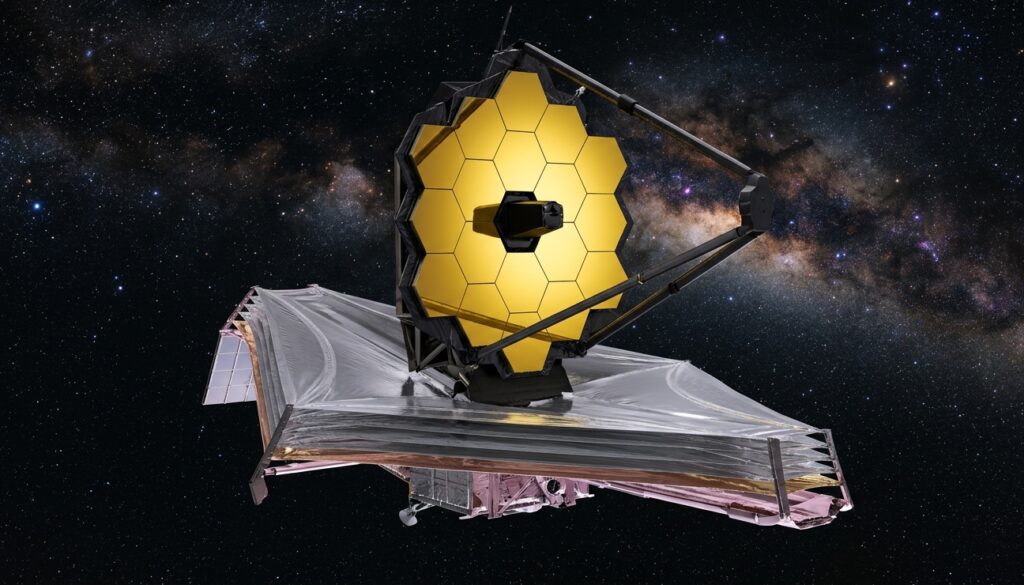
- Next-Gen Telescopes: The James Webb Space Telescope (JWST) is actively observing our own solar system. It has mapped unprecedented weather systems on Jupiter and revealed previously invisible, faint rings around Uranus and Neptune.