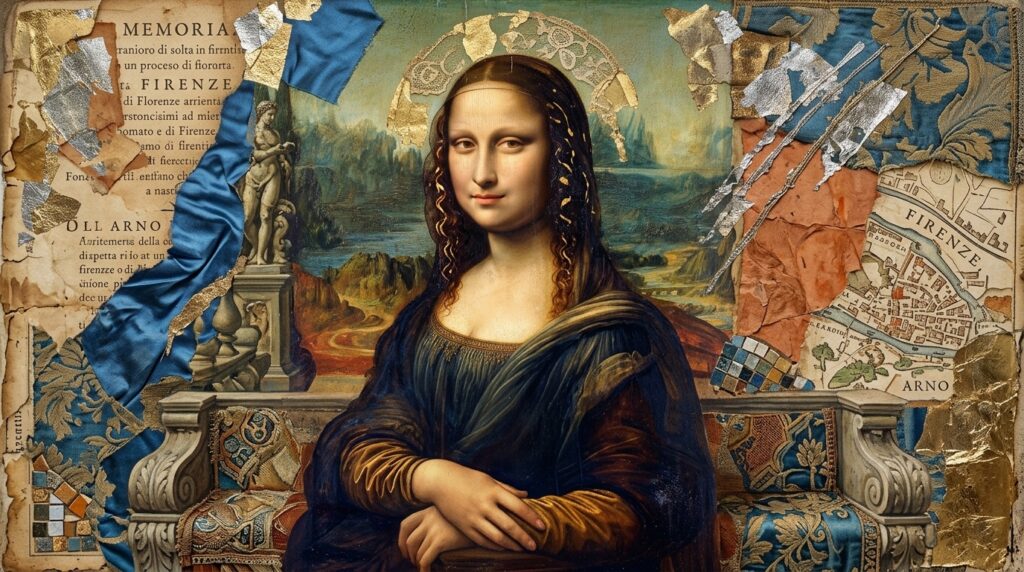
The Mona Lisa, painted by the Italian Renaissance polymath Leonardo da Vinci between approximately 1503 and 1517, stands as the undisputed archetypal masterpiece of Western art. Rendered in oil on a white poplar wood panel measuring 77 centimeters by 53 centimeters, it is universally recognized as the most written about, most visited, most sung about, and most intensely parodied artwork in human history. However, its global fascination transcends its foundational aesthetic value. The painting represents a profound, interdisciplinary convergence of Leonardo’s relentless studies in human anatomy, optical physics, geology, fluid dynamics, and psychology.
For centuries, the portrait’s enigmatic expression, its monumental compositional stability, its atmospheric illusionism, and its subtle modeling of human forms generated extensive scholarly debate that was largely relegated to romantic speculation. Today, the secrets of the Mona Lisa have transitioned from the realm of mythology into the rigorous domain of empirical science. Through the advent of modern multispectral imaging, neurobiological visual analysis, drone-assisted topographical mapping, and advanced historiography, we can finally deconstruct the myriad hypotheses regarding the subject’s identity, the hidden sub-surface iterations, the biophysics of its optical illusions, and the socio-cultural engineering of its modern psychological value following its infamous 1911 theft.
The Convergence of Art and Science
The Mona Lisa is one of the most fascinating creations in human history. It is incredible that a simple portrait of a merchant’s wife has transformed into a billion‑dollar cultural icon, admired and analyzed by millions. What makes it even more astonishing is how modern science, using tools like lasers and neurobiology, is now uncovering secrets hidden beneath its surface for over five centuries. Every brushstroke seems to hold a mystery that technology is only beginning to decode.
This painting is not just an artistic masterpiece but also a scientific experiment frozen in time. Leonardo da Vinci’s genius bridged art and science, blending anatomy, optics, and emotion into a single image that continues to challenge experts today. The Mona Lisa reminds us that true creativity lives at the intersection of imagination and inquiry, where beauty and discovery coexist.
| Mona Lisa (La Gioconda) | |
|---|---|
| Artist | Leonardo da Vinci |
| Year Created | c. 1503–1517 |
| Medium | Oil on white poplar wood panel |
| Dimensions | 77 cm × 53 cm (30 in × 21 in) |
| Subject Identity | Lisa Gherardini (Traditional Consensus) |
| Artistic Technique | Sfumato (Atmospheric blending without harsh lines) & Spolvero (Pouncing) |
| Scientific Analysis Tools | Layer Amplification Method (LAM), Multispectral Scanning, Drone Photogrammetry |
| Optical Illusions | Spatial frequency manipulation (The ephemeral smile), 3D Stereoscopic alignment |
| Proposed Geographic Matches | Ponte Romito (Laterina) or Lecco (Lake Como) |
| Sister Paintings | The Prado Mona Lisa (Simultaneous studio copy), The Isleworth Mona Lisa (Earlier iteration) |
| Famous 1911 Theft | Stolen by Vincenzo Peruggia; Pablo Picasso briefly implicated as a suspect. |
| Financial Valuation | Guinness World Record: Assessed at $100M in 1962 (Over $1 Billion today) |
| Current Location | The Louvre Museum (Paris, France) |
| Official Archive | Louvre Collections: Mona Lisa |
1. The Subject Identity Conundrum: Historiography vs. Genealogy
The foundational mystery of the Mona Lisa has historically centered on the physical identity of the sitter. The historiographical consensus, anchored largely by 16th-century Italian art historian Giorgio Vasari in his 1550 text Lives of the Most Excellent Painters, Sculptors, and Architects, posits that the subject is Lisa Gherardini, the wife of the Florentine silk merchant Francesco del Giocondo. This explicitly originated the painting’s alternative titles: La Gioconda (Italian) and La Joconde (French), which playfully translate to “she who brings joy.”
Because Leonardo never actually delivered the painting to the Giocondo family—instead keeping it in his personal possession until his death in France in 1519—critics long doubted Vasari’s account. However, modern research has solidified the traditional narrative. In 2004, historian Giuseppe Pallanti published archival evidence reinforcing the commission, and in 2005, academics at Heidelberg University discovered a marginalia note scribbled by Florentine clerk Agostino Vespucci. Dated October 1503, the note explicitly stated that Leonardo was actively working “on the head of Lisa del Giocondo,” providing definitive chronological proof. The historical reality of Lisa Gherardini was personalized further in 2007 when genealogist Domenico Savini successfully identified living descendants of the lineage (the Strozzi princesses), and archaeological excavations were even performed in 2011 at her final burial site beneath a Florentine convent.
2. Alternative Aristocrats and the Salaì Androgyny Hypothesis
Despite the Heidelberg manuscript, Leonardo’s prolonged execution of the painting—carried by the master from Florence to Milan, Rome, and eventually the French court of King Francis I—suggests the final visage evolved past the original Florentine merchant’s wife. Many historians propose alternative aristocratic subjects, including Cecilia Gallerani, Costanza d’Avalos, Caterina Sforza, and the aggressively ambitious patron Isabella d’Este (whom Leonardo had previously sketched in a similar oversized profile format).
A highly controversial revisionist theory posits that the Mona Lisa represents an idealized, androgynous amalgamation of male and female features. Italian art historian Silvano Vinceti argues the portrait exhibits heavy morphological influence from Leonardo’s longtime apprentice, studio assistant, and suspected lover, Gian Giacomo Caprotti (colloquially known as Salaì). Vinceti notes that the precise slope of the nose and the distinctive curve of the lips perfectly match Leonardo’s confirmed sketches of Salaì, such as the Angelo Incarnato. This synthesis aligns perfectly with Leonardo’s documented philosophical inquiries into dualism and divine androgyny.
| Identity Hypothesis | Primary Proponents & Evidence Base | Core Rationale |
|---|---|---|
| Lisa del Giocondo | Vasari (1550), Agostino Vespucci’s Heidelberg marginalia (2005) | Traditional historiography; documentary evidence of an actual 1503 commission by her husband, Francesco. |
| Salaì (Apprentice) | Silvano Vinceti, Morphological comparisons | Androgynous facial structure; identical proportions to the Angelo Incarnato drawings of the apprentice. |
| Leonardo (Self-Portrait) | Lillian Schwartz (Bell Labs), Digital Biometrics | Digital facial alignment showing a 98% dimensional match with Leonardo’s red chalk self-portrait. |
| Caterina (Mother / Slave) | Sigmund Freud (1910 Psychoanalysis), Angelo Paratico | Sublimated projection of a lost mother; localized archival records suggesting his mother was an Oriental/Arab slave. |
3. Computational Anthropometry, Freud, and Ethnic Origins
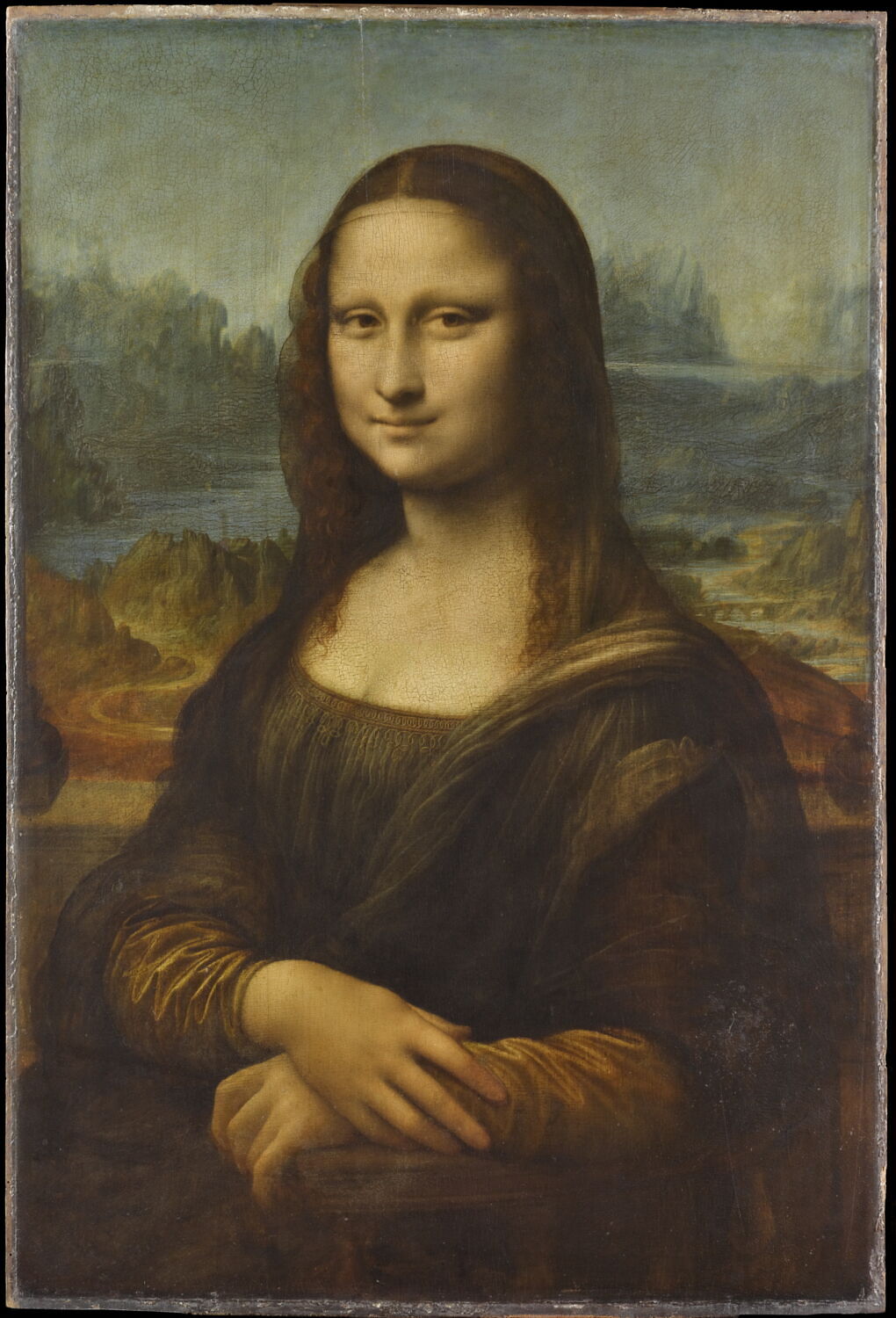
The integration of early digital biometrics introduced the radical hypothesis that the Mona Lisa functions as a covert, cross-dressing self-portrait. In the 1980s, computer scientist Lillian Schwartz utilized pioneering “pico” imaging software to execute a forensic facial alignment between the Mona Lisa and Leonardo’s Portrait of a Man in Red Chalk. The superimposition demonstrated an impossibly precise geometric congruence. The distances between the inner corners of the eyes—the most rigid characteristic of human facial geometry—aligned to within a 2% margin of error. Furthermore, Schwartz noted the Mona Lisa possesses a protruding cranial brow ridge and pronounced under-eye ptosis, masculine traits matching Leonardo’s own anatomical structure.
Beyond physical identity, the painting has undergone profound psychoanalytic and ethnic deconstruction. In his seminal 1910 essay Leonardo Da Vinci and a Memory of His Childhood, the founder of psychoanalysis, Sigmund Freud, theorized that the enigmatic smile was a sublimated, recovered memory of the approving smile of Leonardo’s biological mother, Caterina, from whom he was separated at a young age. Pushing past psychology, historian Angelo Paratico posited that Caterina was actually a Chinese or Oriental slave. This theory of non-European ancestry is somewhat corroborated by a 2007 dermatoglyphic study by the University of Chieti, which extracted Leonardo’s complete fingerprints and concluded the patterns strongly suggested Arab or Middle Eastern ancestry.
4. Beneath the Varnish: Multispectral Analysis and Hidden Layers
The visible surface of the Mona Lisa represents only the final chronological layer of a decades-long creative act. French optical engineer Pascal Cotte isolated the true stratigraphic complexity of the painting using his proprietary Layer Amplification Method (LAM). Cotte projected intense lights across 13 varying electromagnetic wavelengths, generating over 1,650 ultra-high-resolution scans to digitally peel back 500 years of aged varnish and oil binder.
Crucially, Cotte’s near-infrared photography revealed minute charcoal dots along the subject’s forehead and hand, proving definitively that Leonardo utilized the spolvero (pouncing) technique. This confirms the composition was first drafted on a separate preparatory paper cartoon, pricked with a pin, and transferred onto the wood with charcoal dust, grounding the artwork in rigorous geometric preparation.
| Stratigraphic Layer | Features Discovered via LAM Scanning |
|---|---|
| 1. The Foundational Sketch | The earliest layer containing the spolvero charcoal dots, foundational outlines, and initial sizing. |
| 2. The Pearl Headdress Variation | Reveals a female subject with a visibly larger head, different nose structure, and a delicate pearl hairpin completely absent from the final version. |
| 3. The Off-Center Gaze | The underlying model is looking off to the side, entirely devoid of the famous confrontational frontal gaze and enigmatic smile. |
| 4. The Final Sfumato Veil | The uppermost layer containing the heavy atmospheric rendering, dynamic gaze, and famous psychological engagement visible today. |
While Cotte argues these drastic alterations signify that the final painting is an idealized amalgamation rather than the original physical sitter, institutional critics like arts editor Will Gompertz maintain skepticism. Gompertz notes that it is perfectly common for Renaissance artists to overpaint images and iteratively adjust compositions through trial-and-error, meaning the underpaintings may simply be Leonardo perfecting a single subject rather than painting entirely different women.
5. The Neurobiology of an Illusion: Sfumato and the Elusive Smile
The Mona Lisa’s enduring psychological resonance is inextricably linked to its revolutionary technical execution. Leonardo’s profound anatomical knowledge—gained through illicit human dissections—allowed him to master sfumato, the technique of blurring outlines and blending flesh tones in a gradual, atmospheric haze without relying on harsh demarcation lines. However, the famous ephemeral smile is a highly calculated optical and biophysical illusion engineered to manipulate human neurobiology.
Harvard neurobiologist Dr. Margaret Livingstone decoded the biophysics of the smile by analyzing how the mammalian retina processes spatial frequencies. When a viewer looks directly at the subject’s mouth using their foveal (central) vision—which detects fine details and high spatial frequencies—they see a relatively neutral, flat line, causing the smile to effectively vanish. However, when the viewer’s gaze shifts to her eyes or the background, the mouth falls into the peripheral vision. The peripheral pathways are highly attuned to the low spatial frequencies (broad shadows) Leonardo meticulously pooled at the corners of her mouth, interpreting them as a distinct upward curve. The smile is a dynamic neuro-ophthalmological event: it physically manifests in the periphery and dissipates under direct foveal scrutiny.
Furthermore, vision scientists have studied the “Mona Lisa effect”—the perception that the eyes follow the viewer. Because Leonardo fixed a highly realistic, static 2D lighting scheme on the canvas, the observer’s brain processes the shadow cues as a constant. Since the light does not shift as the viewer walks past, the visual cortex logically concludes that the subject must be pivoting their gaze to maintain eye contact, creating the illusion of persistent ocular tracking.
6. Decoding the Landscape: Topographical and Geological Matches
While traditional art historians like Francesca Fiorani viewed the background as an imaginary, philosophical synthesis of nature—a meditation on the Earth’s enduring erosion—recent advancements in drone photogrammetry and geology have anchored the landscape to exact physical locations in Italy.
In 2023, Italian historian Silvano Vinceti utilized drone footage to assert the background bridge is definitively the Etruscan-Roman Ponte Romito di Laterina. By calculating the span of the Arno River, he proved the original structure held exactly four arches—perfectly mirroring Leonardo’s painting, completely disproving earlier theories advocating for the 6-arched Ponte Buriano.
Conversely, in 2024, geologist and art historian Ann Pizzorusso countered that architectural masonry is a flawed identifier. She utilized stratigraphic matching to identify the background as the municipality of Lecco on Lake Como. Pizzorusso proved that the specific grey-white hue of the rocks in the painting is a flawless lithological match for Lecco’s limestone formations, successfully aligning the Azzone Visconti bridge, the south-western Alps, and the massive presence of Lake Garlate, an area Leonardo extensively documented in his geological field notebooks.
7. Simultaneous Creation: The Prado Copy and the First 3D Image
The narrative of the Mona Lisa as a solitary creation was profoundly disrupted in 2012 when the Museo del Prado in Madrid restored their copy of the painting. Stripping away a thick, flat layer of black overpaint added in the 1750s revealed a vibrant Tuscan landscape painted on expensive, premium walnut wood, utilizing costly pigments like lapis lazuli and red lacquer. Infrared underdrawings proved definitively that the Prado version was a contemporary copy created simultaneously by a high-status pupil (likely Salaì or Francesco Melzi) sitting mere feet away from Leonardo in the same studio, copying the exact linear trajectory adjustments in real-time as the master worked.
This studio proximity birthed an extraordinary secondary hypothesis. Experimental psychologists Claus-Christian Carbon and Vera M. Hesslinger calculated the exact spatial coordinates of the two easels via a bi-dimensional regression algorithm. They discovered a horizontal deviation of approximately 6.9 centimeters between the master and the copyist (an angle of divergence of $1.9^\circ$). This measurement perfectly mirrors the average human interocular distance (the space between our left and right eyes). Consequently, when the Louvre and Prado versions are viewed dichoptically together, they form a unified stereoscopic pair, effectively rendering the Mona Lisa the world’s first engineered 3D image.
8. The Isleworth Precursor and Cryptic Hidden Codes
The chronological timeline is further complicated by the Isleworth Mona Lisa, a painting portraying a noticeably younger subject flanked by prominent architectural columns. Extensive X-ray analysis and examinations of the natural craquelure by experts like Dr. Maurizio Seracini build a robust argument that it is an authentic, earlier iteration executed by Leonardo himself prior to 1506. Crucially, the Isleworth version completely lacks the advanced sfumato glazes that define his late career, serving as an invaluable transitional artifact documenting his aesthetic evolution before he mastered atmospheric illusionism.
This intense, obsessive scrutiny often invites theories of esoteric symbology. In 2010, Silvano Vinceti posited that Leonardo embedded microscopic alphanumeric codes (like “S”, “CE”, “L”, and “72”) into the pigment matrix of the subject’s irises and the bridge. However, the Louvre museum thoroughly debunked this theory, noting that exhaustive laboratory testing yielded absolutely no hidden letters. Critics attributed the microscopic “codes” to mere pareidolia—optical illusions resulting from the natural, chaotic cracking (craquelure) of the 500-year-old oil medium over time.
9. The 1911 Heist: The Socio-Cultural Engineering of Value
While scientific brilliance established its academic importance, the Mona Lisa’s status as a peerless, priceless global icon was fundamentally cemented by a modern socio-cultural event: its brazen theft. On the morning of Monday, August 21, 1911, Italian handyman and former Louvre employee Vincenzo Peruggia stole the painting. Wearing a white maintenance apron, he removed the panel from its frame in a service stairwell, hid it beneath his smock, and waltzed directly out of the museum.
Indicative of its relatively standard profile at the time, the theft went entirely unnoticed for over 24 hours. However, once discovered, it triggered an explosive international media frenzy. The void on the wall became a destination in itself; massive crowds flocked to the Louvre simply to stare at the empty hooks. For over two years, the stolen image was reproduced relentlessly across global newspapers, briefly implicating avant-garde poet Guillaume Apollinaire and artist Pablo Picasso as suspects.
Peruggia kept the painting hidden in a trunk in his Paris apartment, mistakenly believing Napoleon had stolen it and justifying his crime as Italian patriotism. When he was finally caught in 1913 trying to sell the painting to an art dealer in Florence, the highly publicized recovery transformed the artwork from an esteemed Renaissance portrait into an icon of infinite public desire. This media-engineered supremacy resulted in the painting earning the Guinness World Record for the highest known painting insurance valuation in history, assessed at $100 million in 1962 (equivalent to over $1 Billion today).