
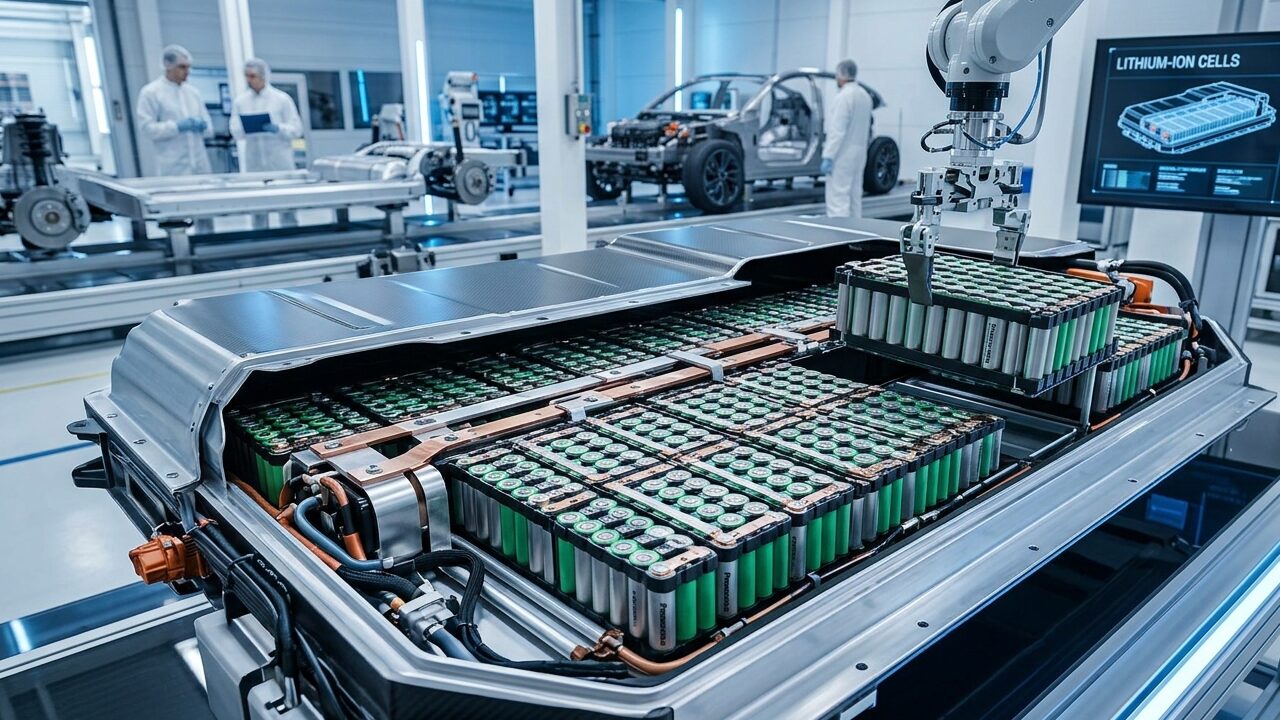
An Electric Vehicle (EV) battery is the beating heart of the modern transition away from fossil fuels. Replacing the traditional internal combustion engine and gas tank, the EV battery stores electrical energy chemically and delivers it to an electric motor to propel the vehicle. Over the last decade, rapid advancements in battery chemistry, energy density, and manufacturing have transformed electric cars from niche concepts into the global standard for the future of transportation.
Driving the Future of Transportation
It is amazing to see how quickly the world is moving away from fossil fuels and embracing electric vehicles. The batteries inside these cars are proof of how science and technology can change our daily lives. By storing energy and powering vehicles without harmful emissions, they show us that clean transportation is not just a dream—it is becoming reality.
Sustainable technology like EV batteries is important because it helps protect the planet for future generations. Every step toward clean energy reduces pollution and slows down climate change. The more we invest in renewable solutions, the closer we get to a healthier, greener world where progress and responsibility go hand in hand.
| Electric Vehicle (EV) Battery | |
|---|---|
| Primary Function | Energy storage for electric propulsion |
| Dominant Chemistry | Lithium-ion (Li-ion) |
| Measurement Unit | Kilowatt-hours (kWh) |
| Average Lifespan | 10 to 20 years (100k – 200k+ miles) |
| Major Manufacturers | CATL, BYD, Panasonic, LG Energy |
| Emerging Tech | Solid-State, Sodium-ion |
| Environmental Goal | Zero Tailpipe Emissions |
1. The Science: How Does an EV Battery Work?
Almost all modern electric vehicles rely on Lithium-ion (Li-ion) chemistry. An EV battery is not just one giant box of chemicals; it is a “pack” made up of thousands of individual, smaller battery cells wired together.
Inside each cell, there are three main components: the Anode (negative side), the Cathode (positive side), and a liquid Electrolyte that separates them. When you plug your car into a charger, electrical current forces lithium ions to swim through the liquid electrolyte from the cathode to the anode, where they are stored. When you press the accelerator pedal, the process reverses. The ions travel back to the cathode, releasing a steady stream of electrons (electricity) through a circuit, which powers the car’s electric motor.
2. Types of EV Battery Chemistries
While “lithium-ion” is the umbrella term, automakers use different chemical recipes for the cathode to balance cost, range, and safety. The three main types are:
- NMC (Nickel Manganese Cobalt): This chemistry offers high energy density, meaning it packs a lot of power into a small space. It is widely used in long-range vehicles, though cobalt is expensive and heavily scrutinized for mining ethics.
- LFP (Lithium Iron Phosphate): LFP batteries are cheaper, use no cobalt or nickel, and are incredibly durable. While they are slightly heavier and hold less energy per pound than NMC, they can be charged to 100% daily without degrading quickly. Automakers like Tesla and Ford increasingly use LFP for standard-range models.
- Solid-State Batteries (The Future): Currently in advanced development, solid-state batteries replace the liquid electrolyte with a solid material (like glass or ceramic). This virtually eliminates fire risks, cuts charging times to minutes, and massively increases driving range.
3. Who Actually Makes the Batteries?
While car brands like Tesla, Ford, and Hyundai sell the vehicles, the battery cells inside them are predominantly manufactured by a few massive tech and chemical giants. The global market is dominated by Chinese companies CATL and BYD, who lead the world in LFP battery production. South Korea’s LG Energy Solution and SK On, alongside Japan’s Panasonic (a legacy partner for Tesla), are the primary producers of high-performance NMC cells. As the market grows, automakers are increasingly investing in joint ventures to build their own gigafactories and bring cell manufacturing in-house.
4. The Solid-State Race and the “Donut Lab” Controversy
Solid-state batteries are widely considered the “holy grail” of the EV industry. At CES 2026, a Finnish-Estonian startup named Donut Lab shocked the world by claiming they had achieved the impossible: the world’s first mass-production-ready solid-state battery. They announced unbelievable specifications, including 400 Wh/kg of energy density, a 5-minute full charge, and a staggering 100,000-cycle lifespan, initially powering Verge motorcycles.
However, the truthfulness of these claims immediately faced intense global scrutiny. Executives from rival giants like CATL and SVOLT, along with prominent university researchers, called the claims “fake” or a “scam.” In an effort to prove critics wrong, Donut Lab commissioned the VTT Technical Research Centre of Finland for independent testing, releasing the results in a series called “I Donut Believe.” While the tests confirmed extreme fast-charging and survival at 100°C temperatures, independent battery analysts pointed out that the cell’s voltage curves strongly resembled conventional lithium-NMC technology. Furthermore, experts noted that critical data regarding long-term capacity degradation and commercial pack-level performance remains unverified, leaving Donut Lab as one of the most polarizing mysteries in modern tech.
5. Capacity, Range, and Charging
An EV battery’s size is measured in Kilowatt-hours (kWh). Just as a larger gas tank holds more gallons of fuel, a higher kWh rating means the battery stores more electricity, resulting in a longer driving range. An average EV today features a battery between 60 kWh and 100 kWh, offering 250 to 400 miles of range.
Charging speed depends on both the car’s hardware and the charger used. Level 1 and Level 2 chargers use AC power (like a home wall outlet) and take several hours to recharge a vehicle. DC Fast Chargers (Level 3) bypass the car’s onboard converter, pumping direct current straight into the battery, allowing it to charge from 10% to 80% in just 15 to 30 minutes.
6. Lifespan and Degradation
One of the biggest concerns for new EV buyers is battery lifespan. Like a smartphone, EV batteries slowly lose capacity over time—a process called degradation. However, thanks to advanced thermal management systems (liquid cooling and heating) built into the battery packs, EV batteries last much longer than electronics.
Federal law in the U.S. requires manufacturers to warranty EV batteries for at least 8 years or 100,000 miles. Data shows that most modern lithium-ion packs will outlast the chassis of the car itself, easily exceeding 15 to 20 years of viable use before dropping below 70% of their original capacity.
7. Environmental Impact and Recycling
While EVs produce zero tailpipe emissions, the batteries themselves have an environmental footprint. Mining raw materials like lithium, cobalt, and nickel requires significant energy and water, raising ecological and human rights concerns in resource-rich nations.
To solve this, the industry is rapidly scaling up Battery Recycling. Companies are now capable of recovering up to 95% of the critical metals from dead EV batteries, processing them into “black mass,” and reusing them to build brand new batteries. This creates a circular economy, drastically reducing the need to mine new materials from the Earth.