In less than a decade, India has transformed from a cash-heavy economy into the undisputed global leader in real-time digital payments. This monumental shift was driven by a single, revolutionary technology: the Unified Payments Interface, commonly known as UPI. Today, scanning a QR code to pay for everything—from a cup of tea at a roadside stall to a luxury car—has become second nature for over a billion Indians. But UPI is no longer just a domestic success story; it is rapidly expanding across the globe, challenging the dominance of traditional Western payment networks.
Using UPI has completely changed the way we handle money. Earlier, we carried thick wallets filled with cash and cards whenever we traveled. Now, all we need is our phone. It feels lighter, safer, and far more convenient.
One of the best parts is how quick it is. At grocery shops, we simply scan a QR code and the payment is done in seconds. No waiting for change, no counting notes—just smooth and fast. It saves time and makes shopping stress‑free.
UPI also makes traveling easier. Whether we are buying a train ticket, paying for food, or sending money to a friend, everything happens instantly. No more worrying about carrying enough cash or finding an ATM.
| Unified Payments Interface (UPI) | |
|---|---|
| Developed By | National Payments Corporation of India (NPCI) |
| Launch Year | April 2016 |
| Key Feature | Real-time, zero-fee inter-bank transfers |
| Global Reach | Singapore, UAE, France, Sri Lanka, Mauritius, Nepal |
| Monthly Volume | Over 13 Billion transactions |
1. The Pre-UPI Era: A Cash-Driven Society
Before 2016, India was largely a cash-driven society. Digital payments were cumbersome, requiring users to add “beneficiaries” using long bank account numbers and IFSC codes through NEFT or RTGS, often followed by a waiting period of several hours. Digital wallets existed, but they lacked interoperability—meaning a user with money in one wallet could not directly send it to a different wallet or a direct bank account without paying hefty convenience fees.
2. The Birth of UPI and the Catalyst of 2016
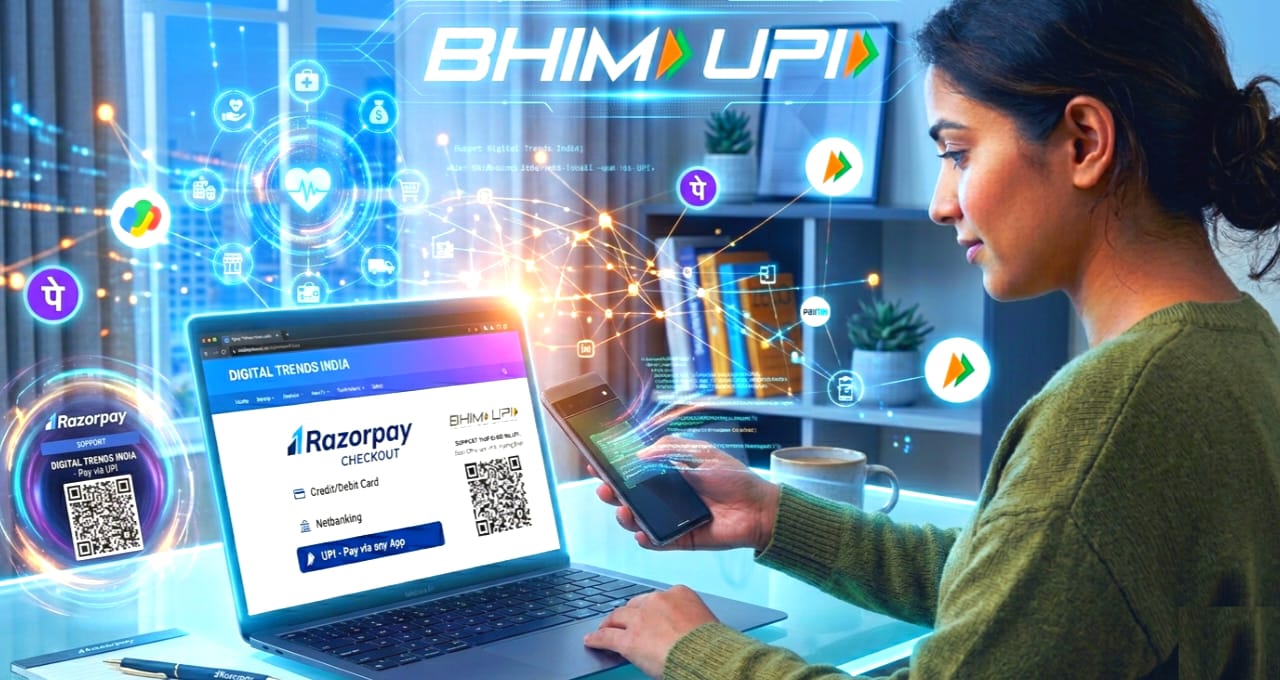
To solve these bottlenecks, the National Payments Corporation of India (NPCI), backed by the Reserve Bank of India (RBI), launched UPI in April 2016. UPI was designed as an interoperable, real-time payment system that allowed users to link multiple bank accounts into a single smartphone application. The true turning point, however, occurred in November 2016 during India’s demonetization. With cash suddenly scarce, millions of citizens and merchants downloaded UPI-enabled apps like BHIM, Google Pay, and PhonePe, accelerating digital adoption by years in just a few months.
3. The Magic Behind the Tech: How UPI Works
The genius of UPI lies in its simplicity and security. It eliminates the need to share sensitive bank account details. Instead, users create a Virtual Payment Address (VPA) or UPI ID, which acts as an email address for money. By simply entering this ID or scanning a standardized QR code, funds are transferred directly from one bank account to another in milliseconds, 24/7, 365 days a year, completely free of charge for consumers.
4. The Current Position: Breaking All Records
Today, UPI’s scale is virtually unmatched globally. It handles over 13 billion transactions every single month, accounting for nearly half of all global real-time digital payments. From street vendors selling vegetables to high-end shopping malls, the UPI QR code is ubiquitous. The NPCI has also continuously upgraded the system, introducing UPI Lite for small offline transactions without internet, and allowing RuPay credit cards to be linked directly to UPI, further reducing the need for traditional plastic cards.
5. Going Global: India’s Digital Diplomacy
Having conquered the domestic market, UPI is now stepping onto the world stage. India is utilizing UPI as a powerful tool of digital diplomacy. The system has successfully integrated with Singapore’s PayNow, allowing seamless cross-border remittances. Indian tourists can now use their UPI apps to make payments at the Eiffel Tower in France, and across retail stores in the UAE, Mauritius, Sri Lanka, and Nepal. Negotiations are actively underway with countries in Europe, Africa, and South America to establish an alternative to the SWIFT network and international card giants like Visa and Mastercard.
6. The Future of Global Payments
The success of UPI has proven that digital public infrastructure (DPI) can be highly efficient, secure, and inclusive. As India continues to export this technology to developing nations, UPI is not just facilitating money transfers—it is democratizing global finance, offering a cheaper, faster, and more transparent way for the world to transact.