We spend roughly one-third of our lives doing it, yet for centuries, sleep remained one of biology’s greatest mysteries. Historically viewed as a passive state of “turning off,” modern neuroscience has revealed that sleep is actually a highly active, dynamic, and vital process. It is not merely a luxury for feeling rested; it is a fundamental biological necessity. Without adequate sleep, our physical health deteriorates, our cognitive functions collapse, and our emotional stability crumbles. But what exactly happens inside our brains when we close our eyes?
The Importance of a Good Night’s Rest
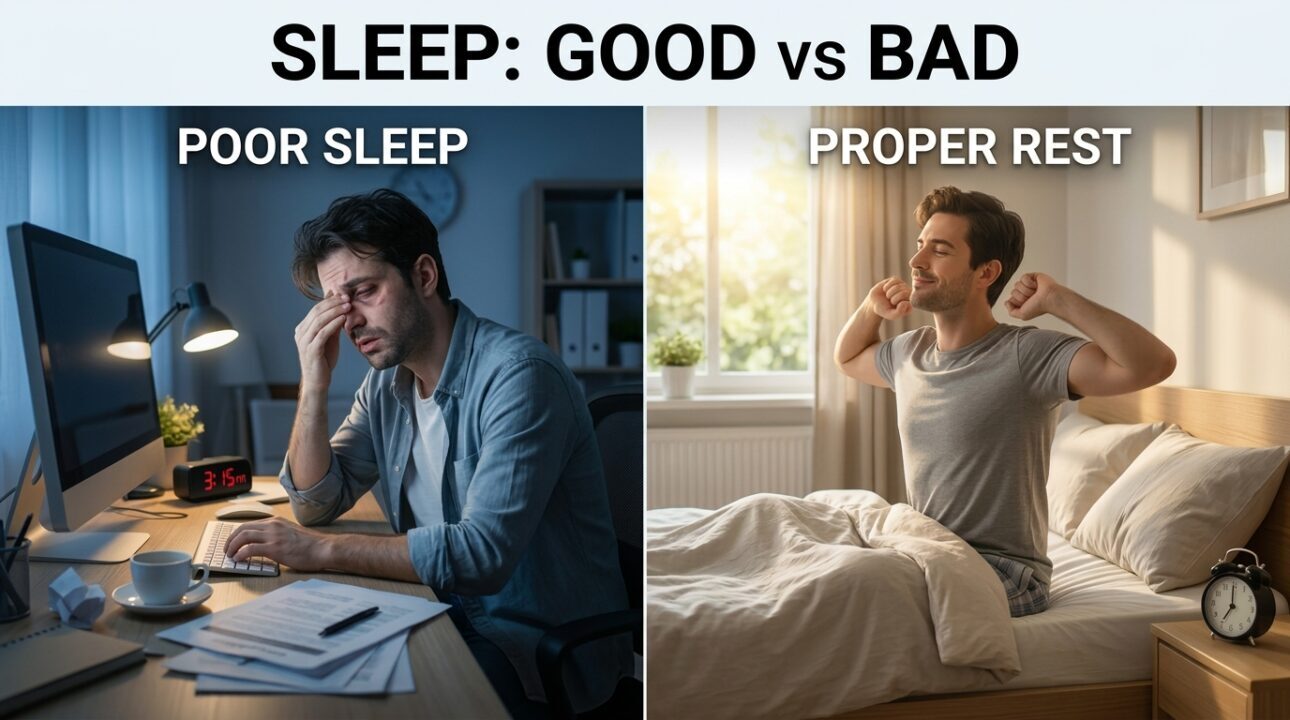
A good night’s sleep makes us feel fresh, focused, and ready to take on the day. When we sleep well, it becomes easier to concentrate on work or studies, and even small tasks feel lighter. Rest gives our mind and body the energy they need to stay healthy and productive.
On the other hand, a bad night’s sleep leaves us tired and distracted. It becomes harder to focus, and even simple jobs feel heavy. Lack of sleep can affect our mood and make the day feel longer than it really is. That is why proper rest is so important—it is the foundation for clear thinking, good health, and a balanced life.
| The Biology of Sleep | |
|---|---|
| Core Function | Neurological and physical restoration |
| Key Stages | NREM (Deep Sleep) and REM (Dreaming) |
| Regulator | Circadian Rhythm & Melatonin plus the Homeostatic Sleep Drive (adenosine buildup) |
| Recommended Duration | 7 to 9 hours (for adults) |
| Major System | The Glymphatic System (Brain cleaning) |
1. The Architecture of Sleep: NREM and REM
Sleep is not a uniform state; it is divided into a continuous cycle of two main phases: Non-Rapid Eye Movement (NREM) and Rapid Eye Movement (REM). When we first fall asleep, we enter NREM sleep, which progressively deepens. The deepest stage of NREM (often called “slow-wave sleep”) is when the body repairs tissues, builds bone and muscle, and strengthens the immune system. After about 90 minutes, we shift into REM sleep. During REM, our brain activity skyrockets to levels similar to when we are awake. This is the stage where most vivid dreaming occurs, and it is crucial for emotional regulation and memory consolidation.
How Sleep Is Regulated: The Two-Process Model
Sleep isn’t just switched on by tiredness or a clock—it’s controlled by two powerful systems working together:
- The homeostatic process (Process S): This is your body’s “sleep debt” system. While you’re awake, a chemical called adenosine builds up in the brain as a natural byproduct of energy use. The longer you stay awake, the stronger the pressure to sleep becomes. Deep sleep clears this adenosine, which is why a good night’s rest truly refreshes you.
- The circadian process (Process C): Your internal 24-hour body clock (driven by the suprachiasmatic nucleus in the brain and melatonin release) times when sleep pressure is highest and lowest. It explains why you naturally feel sleepy at night and alert in the morning—even if you’ve had enough rest.
These two processes interact to keep you awake and productive during the day while ensuring restorative sleep at night. Disruptions (like irregular schedules or all-nighters) throw both out of sync.
2. The “Brain Washing” Process
One of the most groundbreaking discoveries in recent sleep science is the role of the Glymphatic System. While we are awake, the cellular activity in our brain produces toxic metabolic waste products, including a protein called beta-amyloid (which is strongly linked to Alzheimer’s disease). During deep sleep, the brain’s cells actually shrink slightly, allowing cerebrospinal fluid to rush in and wash away these toxic proteins. In essence, sleep acts as a literal power-wash for the brain, protecting us from neurodegenerative diseases.
Recent studies have confirmed that the glymphatic system also efficiently clears tau proteins (another key player in Alzheimer’s) and that poor sleep weakens its connection to brain networks involved in memory—directly contributing to cognitive decline in older adults.
3. Memory Consolidation and Learning
If you want to learn a new skill or memorize information for an exam, pulling an “all-nighter” is the worst thing you can do. During sleep, particularly in the REM and deep NREM stages, the brain acts like a file organizer. It takes short-term memories gathered throughout the day from the hippocampus and transfers them to the prefrontal cortex, locking them into long-term storage. Without sleep, the brain’s “inbox” becomes full, making it nearly impossible to absorb new information.
4. The Severe Cost of Sleep Deprivation
In today’s fast-paced, screen-heavy world, chronic sleep deprivation has become a global epidemic. The consequences are severe. Short-term effects include impaired judgment, memory issues, and emotional volatility. Long-term sleep deprivation is a major risk factor for chronic diseases such as type 2 diabetes, obesity, cardiovascular disease, and severe depression. Furthermore, a lack of sleep drastically reduces the effectiveness of the immune system, making the body highly vulnerable to infections.
Chronic short sleep doesn’t just make you tired—it shortens life. Research consistently shows that getting fewer than 7 hours of sleep per night is linked to reduced life expectancy across populations, independent of other lifestyle factors. In short, sleep is one of the most powerful modifiable factors for living longer and healthier.
5. How to Improve Sleep Hygiene
To optimize brain health, scientists recommend practicing good “sleep hygiene.” This involves:
- maintaining a consistent sleep schedule (going to bed and waking up at the same time every day, even on weekends);
- limiting exposure to blue light from smartphones and computers at least an hour before bed, as blue light severely suppresses the production of melatonin, the hormone that tells our brain it is time to sleep;
- keeping the bedroom cool, dark, and quiet;
- getting bright natural daylight in the morning (even 10–15 minutes outdoors). This strengthens your circadian rhythm, boosts evening melatonin, and makes it easier to fall asleep at night;
- cutting caffeine by early afternoon (it blocks adenosine receptors and can linger in your system for 8+ hours);
- taking a warm shower or bath 1–2 hours before bed. It raises then drops your core body temperature, signaling “sleep time” to the brain and improving deep sleep.