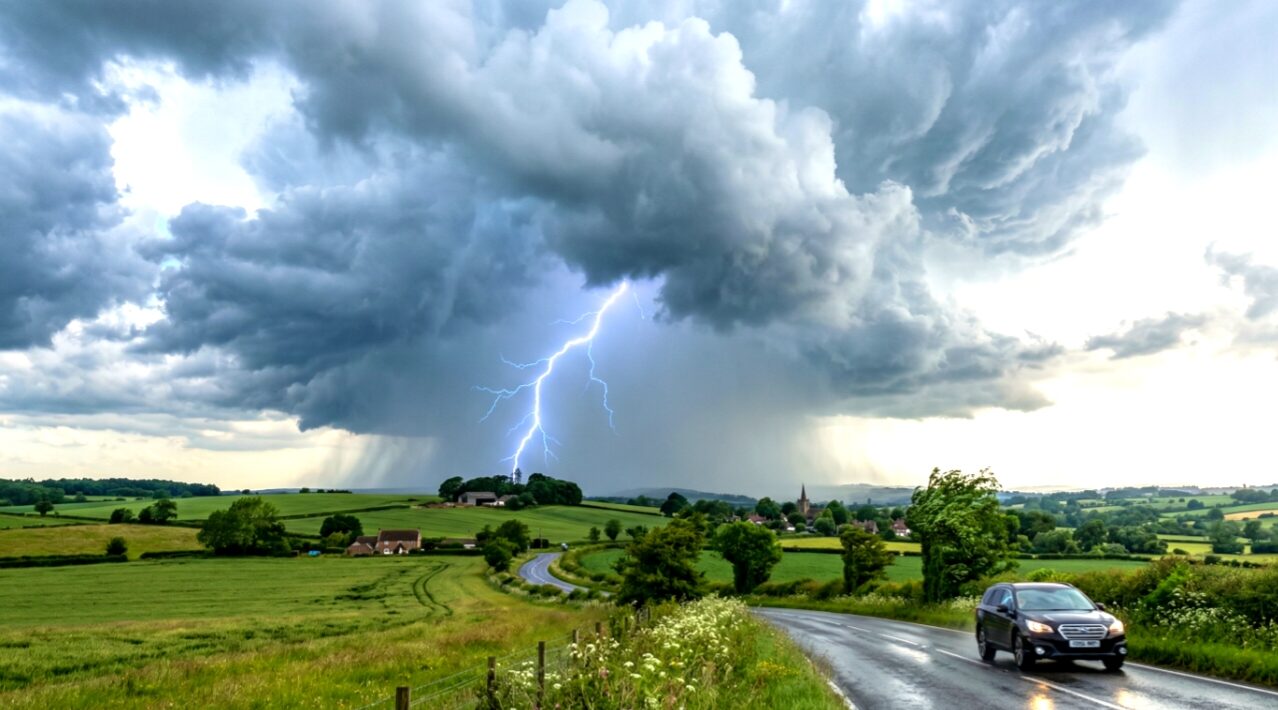
A thunderstorm is a localized storm characterized by the presence of lightning and its acoustic effect on the Earth’s atmosphere, known as thunder. Often accompanied by strong winds, heavy rain, and sometimes hail, thunderstorms are powerful atmospheric events that act as nature’s way of balancing excess heat and moisture. While they can be intensely destructive, they are also a vital component of the global water cycle.
The Core Definitions
To understand the science, we must first separate the storm into its three distinct components, clearing the common misconception that these terms are interchangeable:
- Lightning: A transient, high-current electrostatic discharge. It is the visual element.
- Thunder: The acoustic consequence of lightning. It is a sound wave caused by the rapid expansion of air.
- Thunderstorm: The meteorological system (specifically a Cumulonimbus cloud) that produces both of the above.
The Power of the Skies
A thunderstorm is one of nature’s most awe‑inspiring displays. You can feel the air drop in temperature as dark clouds roll in, signaling that something powerful is about to happen. The rumble of thunder builds anticipation, and then lightning flashes across the sky, lighting up the world in an instant.
The sheer, raw energy of a storm reminds us how small we are compared to nature’s force. Yet, it also fills us with wonder, showing the beauty hidden in power. Thunderstorms are not just weather events they are dramatic performances that connect us to the rhythms of the Earth.
| Thunderstorms | |
|---|---|
| Primary Ingredients | Moisture, Instability, Lift |
| Key Characteristics | Lightning, Thunder, Cumulonimbus clouds |
| Global Frequency | ~16 million storms per year |
| Active at any moment | ~2,000 worldwide |
| Types | Single-cell, Multi-cell, Squall line, Supercell |
| Associated Hazards | Flash floods, Hail, High winds, Tornadoes |
1. The Recipe for a Thunderstorm
Not every cloudy day results in a thunderstorm. For a storm to develop, the atmosphere requires three highly specific meteorological ingredients:
- Moisture: Plentiful moisture in the lower levels of the atmosphere is required to form clouds and precipitation. This is why thunderstorms are incredibly common in humid summer months.
- Instability: The air needs to be unstable. This means that if you push a pocket of air upward, it will continue to rise on its own because it is warmer (and lighter) than the cold air surrounding it.
- Lift: There needs to be a “trigger” to push the moist air upward. This lift can be caused by cold fronts, sea breezes, or even air being forced up the side of a mountain.
2. The Three Stages of a Storm’s Life
Every thunderstorm follows a distinct, three-stage life cycle, which usually lasts between 30 minutes to an hour for standard storms:
1. The Cumulus Stage: As the sun heats the Earth, warm, moist air rises in an updraft. As it rises, it cools and condenses into a fluffy cumulus cloud. At this stage, there is no rain, but the cloud grows rapidly into a towering cumulonimbus cloud.
2. The Mature Stage: This is the most dangerous phase. The water droplets in the cloud become too heavy for the updraft to hold, and they begin to fall as rain or hail. The falling rain creates a powerful downdraft of cold air. The simultaneous presence of an updraft and downdraft causes severe turbulence, lightning, and heavy precipitation.
3. The Dissipating Stage: Eventually, the cold downdraft overtakes the warm updraft. Without the warm air rising to fuel it, the storm chokes itself out. The rain becomes lighter, and the cloud begins to evaporate from the bottom up.
3. Types of Thunderstorms
Meteorologists classify thunderstorms into several categories based on their structure and severity:
- Single-Cell (Pop-up Storms): These are brief, weak storms that typically pop up on hot summer afternoons and rarely produce severe weather.
- Multi-Cell Storms: The most common type. As one storm cell dies, its cold downdraft pushes more warm air upward, creating a new storm cell nearby. They often move in large clusters.
- Squall Lines: A massive, continuous line of thunderstorms that can stretch for hundreds of miles, usually forming along a strong cold front. They are notorious for producing destructive straight-line winds.
- Supercells: The most severe and highly organized type of thunderstorm. Supercells contain a deep, continuously rotating updraft called a mesocyclone. While rare, they are responsible for nearly all significant tornadoes and giant hail.
4. The Science of Lightning and Thunder
Lightning is a giant spark of static electricity. Inside a storm cloud, rising ice crystals crash against falling hail. These collisions strip electrons from the ice, creating a massive electrical charge positive at the top of the cloud and negative at the bottom.
When the electrical tension becomes too great, nature forcefully balances the charge by firing a bolt of lightning. This bolt can heat the surrounding air to 50,000°F (27,000°C), which is roughly five times hotter than the surface of the Sun.
This intense, instantaneous heat causes the air to expand explosively and then rapidly contract. That shockwave breaking the sound barrier is what we hear as thunder. Because light travels nearly a million times faster than sound, you always see the lightning before you hear the thunder.
5. Why We Need Thunderstorms
Despite their destructive potential, thunderstorms are essential for the survival of life on Earth. They are a vital part of the global water cycle, delivering massive amounts of fresh water to agricultural lands and reservoirs.
Furthermore, lightning plays a crucial role in the nitrogen cycle. The extreme heat of a lightning strike breaks down the strong bonds of nitrogen gas in the atmosphere, allowing it to mix with oxygen and rain. This creates natural nitrates that fall to the Earth, acting as an essential, natural fertilizer for plants and forests.
6. Frequently Asked Questions (FAQs)
Example: If you count 10 seconds between the flash and the bang:
• 10 ÷ 5 = 2 miles away.
• 10 ÷ 3 = 3.3 kilometers away.