
The presence of hair is a defining biological characteristic of all mammals. It is a highly complex epidermal structure that fundamentally serves to facilitate thermoregulation, physical protection, and sensory reception across diverse ecological niches. While early hominids possessed hair densities comparable to modern apes, human hair became profoundly miniaturized across the body. Today, it stands as an exceedingly complex, metabolically active micro-organ that provides profound insights into the physiological, neuroendocrine, and nutritional status of the human body.
Simultaneously, the socioeconomic footprint of human hair is staggering. It rests at the center of a rapidly expanding $93.9 billion global industry that drives advanced cosmetic chemistry, biotechnology, and international trade. This comprehensive report deconstructs the morphogenesis of human hair, analyzing its evolutionary biology, extreme biomechanical strength, the reversibility of stress-induced graying, modern pathological treatments, and the deeply complex realities of the synthetic wig and extension supply chain.
The Intersection of Biology and Culture
Human hair is truly fascinating when you stop to think about it. A single strand of keratin can hold an incredible amount of biological data, revealing information about diet, health, and even environmental exposure. At the same time, hair carries immense cultural and financial weight across the globe, shaping identities, traditions, and entire industries. It is wild that something so ordinary can be both a scientific record and a symbol of beauty, status, and self-expression.
To really understand hair, you need to look through both a scientific and sociological lens. Science explains its structure, growth, and the secrets it can reveal, while sociology shows how it influences fashion, culture, and economics. Hair is not just biology—it is history, culture, and commerce woven together, making it one of the most remarkable features of human life.
| Comprehensive Profile: Human Hair | |
|---|---|
| Evolutionary Function | Thermoregulation and protection from solar radiation |
| Primary Composition | Keratinized Proteins (Intermediate filaments) |
| Tensile Strength | 200 to 260 MPa (Comparable to commercial steel) |
| Growth Phases | Anagen (Growth), Catagen (Regression), Telogen (Resting) |
| Primary Androgen | Dihydrotestosterone (DHT) |
| Typology System | Andre Walker System (Types 1A to 4C) |
| Global Market Value | $93.9 Billion in 2024 (Projected $128.7B by 2034) |
| Primary Alopecias | Androgenetic Alopecia (AGA), Alopecia Areata (AA), CCCA |
| Biomimetic Treatments | Redensyl, Procapil, K18, Olaplex |
| Hazardous Synthetics | Kanekalon (Modacrylic), PFAS, Phthalates, Organotins |
| Largest Human Hair Exporter | India (Sri Venkateswara Temple Tonsure Auctions) |
| Longest Hair Record | 5.627 meters (Xie Qiuping, China, 2004) |
| Longest Hair (Living Record) | 257.33 cm (8 ft 5.3 in) (2024 in Milan, Italy. Surpasses Smita Srivastava’s 236.22 cm) |
| Largest Afro Record | 190 cm circumference (Jessica Martinez, 2025) |
| Most Expensive Hair Sold | $115,120 (Elvis Presley’s hair lock, 2002) |
1. Evolutionary Biology and Historical Significance
In non-human primates, dense pelage acts as a vital insulator in cold climates while shielding the skin from the intense heat and ultraviolet damage inherent to extreme environments. Furthermore, mammalian hair serves as a camouflage mechanism against predators, a sexual attractant during mating rituals, and a crucial tactile interface. Specialized vibrissae, or tactile hairs found on the snouts and lips of many nocturnal mammals, contain over two thousand sensory nerve endings, functioning almost as secondary eyes in the dark.
The evolutionary trajectory of human hair diverges significantly from that of our primate ancestors. While early hominids possessed hair densities comparable to modern apes (approximately 60 hairs per square centimeter on human skin), human hair became profoundly miniaturized and lost much of its pigmentation across the body. This systemic reduction of body fur is widely attributed by evolutionary anthropologists to the adaptive advantages of bipedalism and evaporative cooling. As primitive humans transitioned from the dense forests to the high temperatures of the African savanna mosaic habitat, the ability to sweat profusely without the physical barrier of thick fur proved critical for foraging and survival.
Simultaneously, bipedal posture radically reoriented the body’s exposure to solar radiation, rendering the top of the head the most vulnerable biological surface. Scalp hair was retained and evolved as a direct evolutionary shield. Empirical research utilizing thermal manikins reveals that terminal scalp hair drastically minimizes heat gain from solar radiation, thereby reducing the metabolic demand for sweat production. Furthermore, this research demonstrates that tightly curled hair structures provide the most effective thermal and solar protection, trapping a boundary layer of air while preventing direct radiation penetration into the scalp.
2. Debunking the Aquatic Ape Hypothesis
Alternative evolutionary paradigms, most notably the Aquatic Ape Hypothesis (AAH), have attempted to explain human hairlessness by proposing a distinct aquatic phase in hominid evolution. Proponents of the AAH suggest that human hairlessness, the presence of subcutaneous fat, and purported webbed digits are indicative of marine adaptation.
However, this hypothesis is widely challenged by the broader scientific community due to a lack of empirical substantiation. Morphological and physiological comparisons reveal that humans lack the fundamental cardiovascular adaptations of true marine mammals. For instance, seals possess a 60% higher percentage of hemoglobin and twice the blood volume per kilogram compared to humans. Furthermore, widespread subcutaneous fat is a trait shared by many terrestrial primates, and human interdigital skin bears no structural or functional resemblance to genuine aquatic webbing.
3. Cultural, Religious, and Sociological Significance
Beyond its evolutionary utility, human hair has held profound cultural, religious, and sociological significance throughout recorded history. From ancient civilizations to the modern era, hairstyles have evolved from displays of aristocratic power to expressions of individual rebellion and identity. In ancient Egypt, elaborate braids were highly symbolic, adorning the heads of both elite men and women. The early Romans favored modest tresses bound with bands before transitioning into highly complex, architectural updos. Throughout the Elizabethan and Victorian eras, hair was frequently utilized to signify social status; commoners wore utilitarian trims, while the aristocracy deployed voluminous wigs and hairpieces to broadcast wealth.
In many indigenous and religious traditions, hair is considered a direct manifestation of the spirit and a conduit to the divine. In Native American cultures, such as the Waccamaw Siouan Tribe which has stewarded the Cape Fear Region for over a millennium, long hair is deeply sacred, representing strength, wisdom, and a profound connection to the earth. Within these communities, cutting the hair is historically reserved for specific rites of mourning or extreme transformation. Consequently, forced haircuts (whether deployed historically as a weapon of cultural assimilation or currently enforced by rigid school grooming standards) inflict profound psychological and spiritual harm.
Similarly, in Sikhism, the practice of Kesh requires adherents to maintain uncut hair out of respect for God’s creation. For these populations, the involuntary loss of hair, whether through discriminatory policies or medical interventions like chemotherapy, represents an acute spiritual wound, making the preservation of hair intrinsic to overall well-being. The act of mourning itself is heavily tied to hair across diverse cultures; ancient Greek widows buried their cut hair with their husbands, and in Hindu families, the chief mourner traditionally shaves their head three days following a death.
4. Anatomical Structure and Biomechanics of Hair
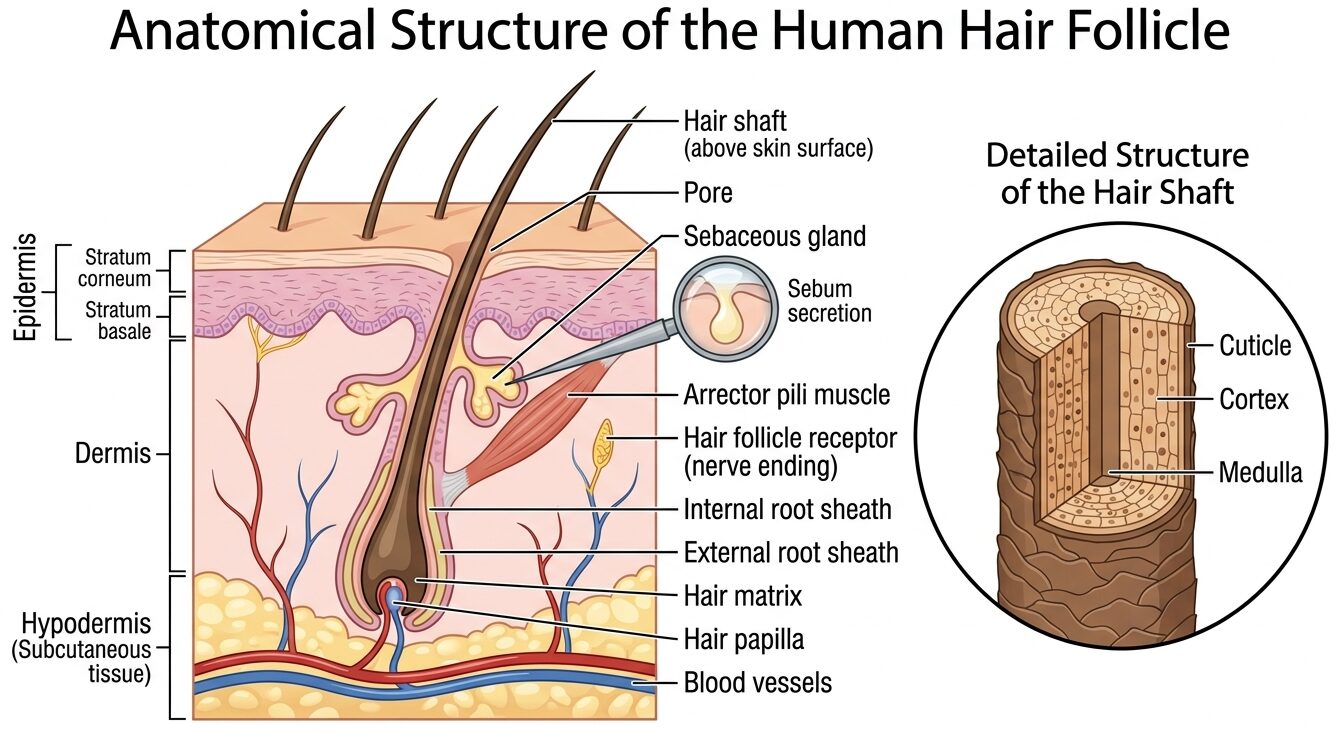
The anatomical architecture of human hair is a marvel of biological engineering, comprising a highly organized composite of keratinized proteins generated within the hair follicle. The hair is anchored below the epidermis by a root situated within a specialized dermal sheath, while the visible shaft extends outward. The follicle complex is highly integrated, containing sebaceous glands that secrete natural oils to trap moisture and lubricate the shaft, as well as the arrector pili, a small smooth muscle responsible for piloerection during moments of cold or stress.
The hair shaft itself is stratified into distinct structural zones. The outermost layer, the cuticle, consists of overlapping, scale-like cells that protect the inner integrity of the hair. Beneath the cuticle lies the cortex, the primary structural component of the hair, composed of parallel keratin fibrils. These fibrils are approximately 5 micrometers in diameter and 100 micrometers in length. Within these structures exist even smaller threads (0.2 to 0.4 micrometers in diameter), which are further built from 7.5 nm intermediate filaments linked by robust chemical bonds, most notably disulfide bridges. An amorphous inner matrix surrounds these crystalline structures, contributing to the hair’s unique structural properties.
From a biomechanical perspective, human hair exhibits extraordinary strength, boasting a tensile strength of 200 to 260 MPa, which yields a strength-to-weight ratio comparable to that of commercial steel. A single healthy strand of human hair can be stretched up to 1.5 times its original length before structural failure, and a bundle of 500 to 1,000 hairs is theoretically capable of suspending an adult human.
5. Stress Mechanics and Diameter Tension
The mechanical resilience of hair is highly strain-rate dependent. When hair is stretched rapidly, the amorphous matrix behaves like a highly viscous fluid that becomes instantly stiff, increasing the hair’s resistance. Conversely, when stretched slowly, the proteins yield and pour fluidly, allowing for significant elongation. Interestingly, empirical biomechanical testing indicates an inverse relationship between hair diameter and tensile resistance.
Material scientists analyzing hairs from humans, boars, bears, capybaras, and elephants discovered that thinner hairs are actually capable of enduring greater relative tension before snapping. When subjected to extreme stress, thin hairs tend to shear off gradually. In contrast, thick hairs (such as those of an elephant measuring over 350 micrometers in diameter) fracture cleanly and suddenly.
Clinical biomechanical studies utilizing 50 N load cell devices on human volunteers confirm that hairs with a diameter equal to or greater than 51 micrometers exhibit a significantly different break force than those measuring 50 micrometers or below, demonstrating that human hair fracture mechanics are dictated primarily by diameter and strain rate rather than age or gender. Animal hair morphology varies significantly to meet environmental demands; for instance, the defensive hair of the javelina features a closed-cell foam-like cortex rather than a fibrillar one, drastically increasing its stiffness for piloerection.
6. The Hair Growth Cycle and Molecular Regulation
Unlike continuously growing tissues, human hair undergoes a tightly regulated, lifelong cycle divided into three primary phases: anagen, catagen, and telogen. The human scalp sheds approximately 100 to 200 follicles per day, while active follicles grow at an average rate of 0.35 mm per day, culminating in roughly 1 cm per month or 15 cm per year. The initiation, maintenance, and regression of these phases are governed by a highly complex molecular network of epithelial-mesenchymal-neuroectodermal interactions.
The anagen (growth) phase is the period of intense cellular proliferation where the hair matrix actively produces the structural shaft. This phase is fundamentally driven by the WNT signaling pathway. Primary WNTs (such as WNT3, WNT4, and WNT6) are critical for inducing hair follicle development, while secondary WNTs regulate the formation of the basal plate. WNT3a expression within the follicular bulge decreases progressively during the regression phase and disappears entirely during the resting phase. Concurrently, the Sonic hedgehog (Shh) pathway, secreted from perifollicular nerve endings, is vital for maintaining the population of stem cells that support ongoing anagen maintenance and postnatal epidermal healing.
The catagen phase marks the cessation of active growth. During this apoptosis-driven regression, cell proliferation within the matrix halts, and the lower portion of the hair follicle rapidly degenerates. The transition from anagen to catagen is determined by a biological tipping point wherein inhibitory factors (including DKK1, DKK4, and Bone Morphogenetic Proteins like BMP2, BMP4, BMP7) overpower the promotive signals generated by WNT/beta-catenin, Noggin, and LEF1.
Following this regression, the follicle enters telogen, a phase of extreme biological quiescence during which the dormant hair shaft is loosely anchored before eventually shedding to allow the cycle to recommence. MicroRNAs (miRNAs) have emerged as crucial epigenetic regulators of this cycle. For example, miR-24 targets Tcf-3 to influence stem cell differentiation, miR-125b inhibits Blimp1 to promote stem cell renewal, and miR-21 suppresses the inhibitory effects of BMP4, thereby facilitating follicle development.
7. Biological Dimorphism and Typological Classification
While the basic biochemical structure of the hair shaft remains consistent across genders, human hair exhibits profound biological and phenotypic dimorphism driven primarily by the endocrine system. At birth, the human body is uniformly covered with fine, non-pigmented vellus hairs, with thicker terminal hairs restricted to the scalp, eyebrows, and eyelashes.
During the onset of puberty, a dramatic divergence occurs. In males, high systemic levels of androgens (specifically testosterone and its highly active derivative dihydrotestosterone or DHT) trigger the differentiation of vellus hairs into thick, pigmented terminal hairs across the face, trunk, axillae, and genital regions. Conversely, in individuals with lower circulating androgen levels, this transformation is localized and less severe. Paradoxically, the exact same androgens that stimulate terminal hair growth on the body are responsible for the miniaturization of terminal scalp hairs in genetically susceptible individuals, leading to the sexually dimorphic presentation of Androgenetic Alopecia (AGA).
Societal and cultural factors heavily influence the perception and treatment of hair across genders. Historically, rigid gender norms dictated that masculinity was closely associated with shorter, utilitarian hair lengths, while femininity was inextricably linked to long, elaborate hairstyles. While modern society continues to challenge and deconstruct these traditional gender expectations, the differing chemical treatments, heat styling protocols, and traction-inducing hairstyles preferred by various demographics significantly impact the physical integrity of the hair cortex over time.
8. The Andre Walker Hair Typing System
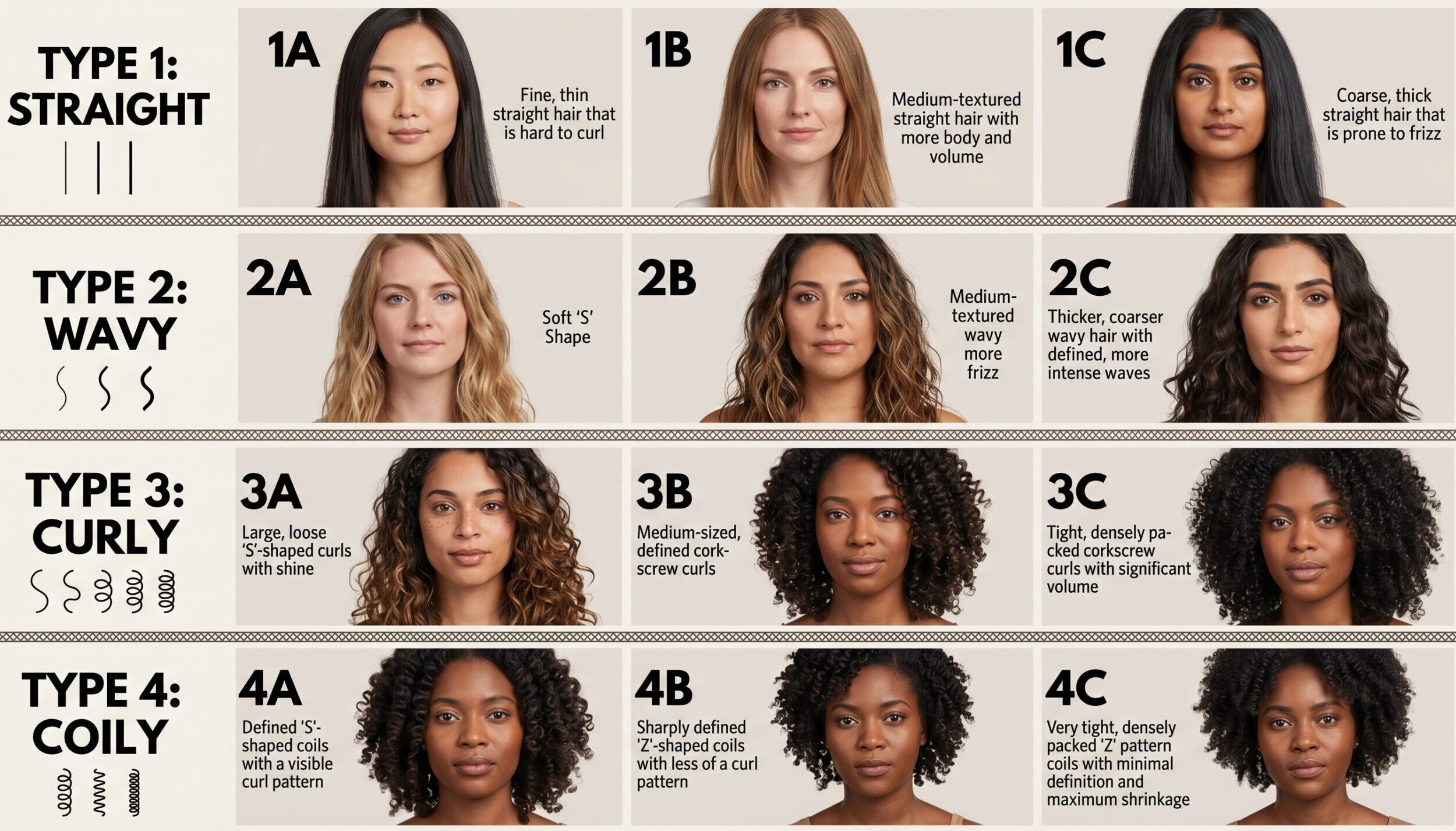
To systematically categorize the vast phenotypic diversity of human hair texture, the Andre Walker Hair Typing System is widely utilized by both consumers and cosmetic formulation scientists. This taxonomy classifies hair into four numerical categories based on the natural curl pattern, with alphabetical sub-categories detailing the density and behavioral characteristics of the strands.
| Category | Type | Texture Classification | Structural & Behavioral Characteristics |
|---|---|---|---|
| Type 1 | 1A, 1B, 1C | Straight (Fine to Coarse) | Highly resistant to holding a curl; sebum travels effortlessly down the straight shaft, making the hair highly prone to oiliness and resilient against mechanical damage. |
| Type 2 | 2A, 2B, 2C | Wavy (Loose to Wide) | Characterized by a definitive “S” pattern; moderate resistance to styling, with varying degrees of volume and a predisposition toward frizz. |
| Type 3 | 3A, 3B, 3C | Curly (Loose to Corkscrew) | Definite, round, structural curls; thick and voluminous but highly prone to frizz and dryness, as the structural curves impede the transit of natural lipids from the scalp. |
| Type 4 | 4A, 4B, 4C | Coily / Kinky | Extremely tight, zig-zag, or corkscrew patterns; highly susceptible to severe shrinkage, tangling, and mechanical fragility due to extreme dryness at the hair ends. |
While the Andre Walker system is highly effective for tailoring hydration routines and product selection, hair typing possesses a dark socio-historical context. Historically, typological hair classifications were weaponized as tools of pseudoscientific racism and systemic oppression. In 1908, the Nazi scientist Eugen Fischer invented the “hair gauge” to systematically determine the proximity of Namibian populations to whiteness based purely on hair texture.
Similarly, the Apartheid regime in South Africa notoriously utilized the “pencil test” (wherein individuals whose hair could hold a pencil were legally classified as non-white) to dictate systemic disenfranchisement. Parallels have also been drawn between rigid hair typing and the “Brown Paper Bag test” used historically in America. The modern reclamation of hair typing in the natural hair community represents a massive paradigm shift toward individualized care, moving away from historical marginalization.
9. Melanogenesis, Hair Color, and Pigmentation
The visible hue of the mammalian hair shaft is a direct consequence of melanogenesis, a sophisticated biochemical process executed by melanocytes situated within the hair bulb. As the hair shaft is constructed during the anagen phase, these follicular melanocytes actively synthesize melanin pigment and inject it into the adjacent keratinocytes. Because the melanocyte activation is cyclically coupled with the active growth phase, the pigmented hair shaft serves as a long-lived, visible record of complex neuroectodermal and metabolic interactions.
Chronological aging induces fundamental changes in the epidermal and follicular microenvironments, leading to a natural reduction in melanin synthesis. Over decades, melanocyte stem cells undergo senescence or apoptosis, leading to hair graying (canities) and, eventually, a completely white, unpigmented shaft.
10. The Reversibility of Stress-Induced Graying
The anecdotal correlation between extreme psychological stress and rapid hair graying (famously attributed to historical figures like Marie Antoinette and John McCain) has recently been empirically validated, revealing highly complex physiological mechanisms.
Initial research on murine (mouse) models suggested that stress-induced graying was an irreversible process. When mice are subjected to severe stress, the sympathetic nervous system initiates a fight-or-flight response, releasing neurotransmitters that over-activate melanocyte stem cells. This hyper-activation drives the stem cells to rapidly differentiate and migrate out of the follicular niche, permanently depleting the reserve pool and resulting in irreversible white hair. Researchers confirmed this pathway by demonstrating that graying persisted even when the adrenal gland (which produces the stress hormone cortisol) was surgically removed, proving that the sympathetic nerve network, not circulating cortisol, was the primary culprit.
However, groundbreaking research from Columbia University Vagelos College of Physicians and Surgeons indicates that human follicular biology differs profoundly from the murine model. Utilizing highly precise, single-hair high-resolution proteomics and hair pigmentation (HPP) profiling, researchers mapped protein expressions along individual hair shafts and correlated these timelines with patient stress diaries.
This analysis revealed that stress-induced graying in humans is characterized by the upregulation of proteins associated with mitochondrial energy metabolism and antioxidant defenses, rather than immediate stem cell apoptosis. Crucially, the researchers documented that when the acute psychological stressor was lifted (such as a patient taking an extended vacation), the affected gray hairs synchronized in time and naturally regained their original dark pigmentation. This discovery confirms that human hair graying is controlled by a threshold-based metabolic mechanism and underscores that biological aging is not a strictly linear process, but rather highly malleable and temporarily reversible.
11. Hair Loss Pathologies: Nonscarring Alopecias
Disorders of the hair follicle resulting in alopecia represent a significant global medical challenge, inflicting severe psychosocial distress and fundamentally altering patients’ quality of life. The clinical approach to hair loss divides the etiology into nonscarring (reversible) and scarring (cicatricial and largely irreversible) conditions.
- Androgenetic Alopecia (AGA): AGA is the most ubiquitous form of hair loss worldwide, characterized by a polygenic inheritance pattern. The pathogenesis is driven by the sensitivity of hair follicles to dihydrotestosterone (DHT). In both men and women, DHT binds to androgen receptors, progressively shortening the anagen phase and leading to the miniaturization of thick terminal hairs into fine vellus hairs that eventually atrophy. The clinical presentation is highly dimorphic; men typically experience classic bitemporal recession and vertex thinning, whereas women generally present with diffuse thinning over the crown while maintaining the frontal hairline.
- Alopecia Areata (AA): An unpredictable autoimmune disorder in which the body’s cellular and humoral immune systems aberrantly target and attack active anagen hair follicles. It manifests clinically as sharply demarcated, circular patches of complete baldness on the scalp or body. A hallmark diagnostic sign is the presence of “exclamation point” hairs at the periphery of the expanding lesions.
- Telogen and Anagen Effluvium: These conditions represent massive disruptions of the hair growth cycle. Telogen effluvium is triggered by severe physical or psychological shock (such as major surgery, extreme weight loss, severe illness, or childbirth), forcing a disproportionate number of follicles prematurely into the resting (telogen) phase, resulting in diffuse shedding months later. Anagen effluvium occurs when a toxic insult abruptly halts cellular proliferation during the active growth phase, causing the hair shaft to fracture. This is most classically associated with radiation therapy and cancer chemotherapy, resulting in the rapid shedding of 80% to 90% of scalp hair within weeks of exposure.
- Traumatic and Infectious Alopecias: Continuous tension applied to the hair through tight styling (e.g., braids, cornrows, heavy extensions) causes Traction Alopecia, which is localized to the areas under the greatest mechanical stress, typically the scalp margins. Trichotillomania is a psychiatric hair-pulling disorder linked to anxiety, leading to patchy, irregular baldness. Tinea capitis, a dermatophyte fungal infection, compromises the structural integrity of the hair shaft, presenting with scaling, inflammation, and localized breakage. Similarly, Trichorrhexis nodosa involves hair breakage secondary to congenital fragility or excessive thermal and chemical trauma.
12. Scarring (Cicatricial) Alopecias
Scarring alopecias involve the permanent destruction of the follicular stem cell niche, which is subsequently replaced by fibrous scar tissue. These conditions are highly prevalent and disproportionately affect women of African descent.
Central Centrifugal Cicatricial Alopecia (CCCA): CCCA is the most common scarring alopecia among Black women, typically initiating in the second or third decade of life. The condition begins as a thinning area at the vertex or crown and spreads symmetrically and centrifugally outward. In advanced stages, the affected scalp becomes irreversibly smooth and shiny, with a complete loss of visible follicular ostia, frequently accompanied by localized pain and pruritus.
Frontal Fibrosing Alopecia (FFA): Historically documented primarily in postmenopausal Caucasian women, FFA is now increasingly recognized among patients of African descent. Accepted as a clinical variant of lichen planopilaris, FFA causes the progressive, bilateral recession of the frontotemporal hairline, and may also affect the eyebrows. In Black women, FFA presents unique diagnostic challenges, as it often clinically mimics traction alopecia or androgenetic alopecia. However, hallmark signs such as perifollicular hyperpigmentation along the hairline and concomitant facial hyperpigmentation can aid in accurate diagnosis.
13. Medical Treatments and Established Pharmacotherapies
The clinical management of alopecia ranges from palliative cosmetic therapies to advanced pharmacological and surgical interventions. For autoimmune conditions, national health services occasionally offer systemic immunotherapy tablets, targeted light therapy using ultraviolet radiation, and micropigmentation (medical tattooing) to camouflage bare scalp areas. However, the majority of therapeutic research focuses on halting AGA and stimulating follicular regeneration.
| Intervention | Mechanism of Action | Clinical Indications | Common Adverse Effects |
|---|---|---|---|
| Minoxidil (Topical/Oral) | Functions as a potassium channel opener; upregulates Vascular Endothelial Growth Factor (VEGF) to enhance perifollicular blood flow; shortens telogen and prolongs anagen phase. | AGA, Telogen Effluvium, Alopecia Areata, Chemotherapy-induced shedding. | Pruritus, contact dermatitis, hypertrichosis, initial paradoxical shedding. |
| Finasteride (Oral/Topical) | A competitive inhibitor of the 5α-reductase enzyme, blocking the localized conversion of testosterone into DHT. | AGA (Primarily male pattern). | Decreased libido, weight gain, breast tenderness, erythema. |
| Clascoterone (Topical) | Acts as a localized androgen receptor inhibitor within the skin. | AGA (Experimental applications). | Localized irritation and erythema. |
| Prostaglandin Analogs (Bimatoprost, Latanoprost) | Stimulates follicular activity to prolong the active anagen growth phase. | AGA (Experimental), eyelash hypotrichosis. | Scalp irritation, localized hyperpigmentation. |
14. Advanced Biomimetic Peptides and Botanical Complexes
As the limitations and side-effect profiles of systemic and legacy topical treatments become apparent, the industry has shifted heavily toward targeted, plant-derived, and peptide-based regenerative serums designed to operate safely at the cellular level.
Redensyl has emerged as a premier alternative to minoxidil. It is formulated from camellia sinensis leaf extract and larch tree extract, featuring powerful polyphenolic antioxidants: dihydroquercetin-glucoside (DHQG) and epigallocatechin gallate glucoside (EGCG2). Redensyl targets outer root sheath stem cells, decreasing cellular apoptosis via BCL2 activation and initiating the anagen phase through the WNT/β-catenin pathway. In randomized controlled trials comparing a combined Redensyl/Capixyl/Procapil formulation to 5% Minoxidil, the peptide group demonstrated significantly higher researcher scores (64.7% vs. 25.5%) and global photographic recovery (88.9% vs. 60%). While Minoxidil yields faster visible results (2-4 months) due to rapid vasodilation, Redensyl focuses on sustainable, long-term cellular regeneration, typically requiring 3-6 months for visible efficacy.
Other notable complexes include Procapil, which utilizes Biotinyl-GHK peptides combined with oleanolic acid and apigenin to simultaneously inhibit 5α-reductase and increase follicular adhesion proteins. Capixyl utilizes Acetyl tetrapeptide-3 and Biochanin A from red clover extract to modulate the extracellular matrix for superior hair anchoring. Anagain, derived from pea sprouts, supplies massive doses of L-arginine and isoflavones to increase the Noggin protein, thereby actively limiting the telogen phase.
15. The Evolution of Molecular Bond-Building Technology
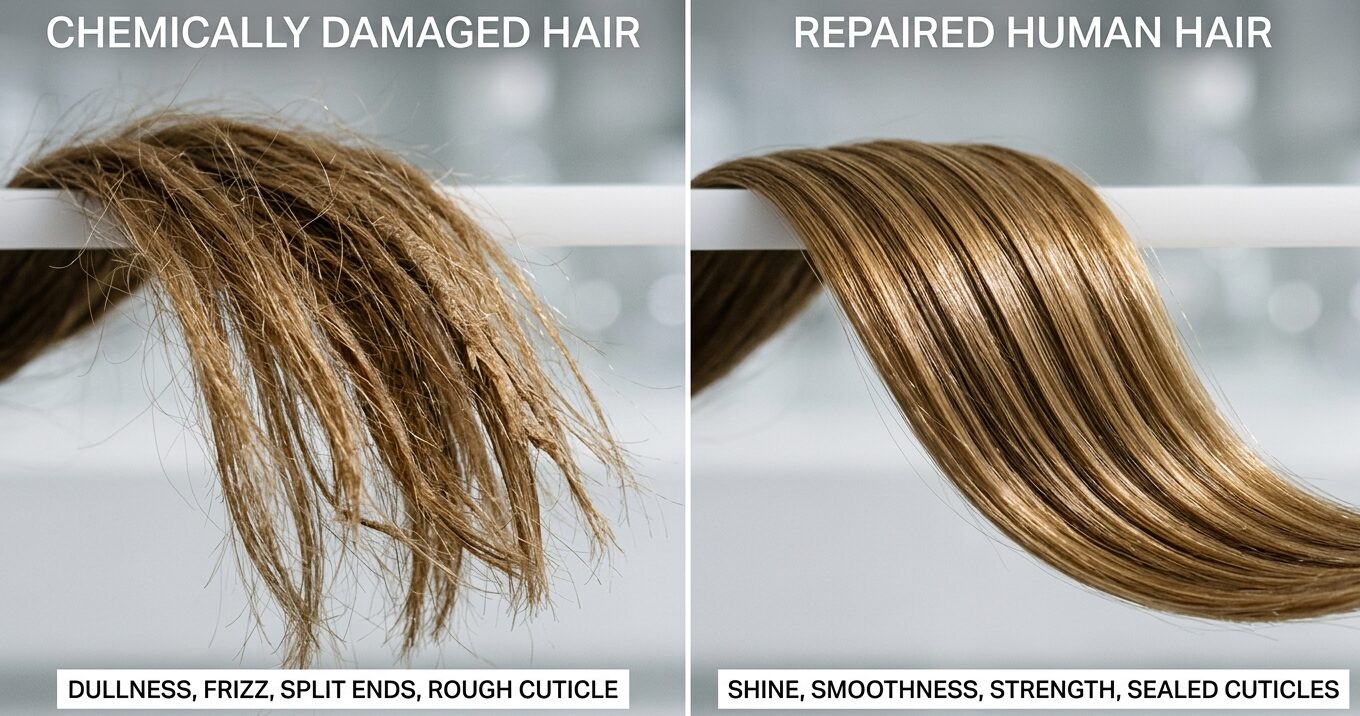
The most revolutionary advancement in cosmetic chemistry has been the development of molecular bond builders. Rather than superficially masking damage with heavy conditioning lipids, these technologies penetrate the cuticle to chemically repair the structural integrity of the cortex, which is routinely compromised by high-heat styling, chemical relaxers, and oxidative bleaching.
Olaplex pioneered this category utilizing a patented active ingredient: Bis-Aminopropyl Diglycol Dimaleate. When hair undergoes chemical damage, its strong disulfide (S-S) bonds are cleaved into single sulfur-hydrogen bonds. Olaplex operates by artificially cross-linking these broken sulfur bonds, physically bridging the gap and restoring the structural scaffold from the inside out. Spectroscopic analysis (including Raman spectroscopy and Ellman’s tests) reveals that Olaplex efficiently promotes the formation of unspecific sulfur-radical (S-R) bonds rather than true S-S bonds. While highly effective at reducing breakage and improving manageability, this artificial scaffold requires continuous reapplication to maintain its tensile benefits, as the effects naturally dilute over time.
K18, a more recent innovation, utilizes a completely different mechanism grounded in biomimetic peptide science. K18 employs a patented, bioactive oligopeptide sequence designed to perfectly mimic the internal structure of human keratin. Rather than just targeting the disulfide bridges, K18 targets the inner polypeptide chains of the hair core. It acts as a molecular reset, seamlessly fitting into the exact geometric spaces of broken keratin chains to reform both disulfide bonds and essential hydrogen bonds simultaneously. Because the peptide sequence is biologically recognized, it integrates permanently into the hair strand, providing immediate, lasting structural repair in a single leave-in application without requiring extensive salon processing time.
16. Surgical Restoration and Future Technologies
For patients with advanced, permanent alopecia, hair transplantation remains the most viable, long-lasting solution. Recent technological leaps have refined Follicular Unit Extraction (FUE) methodologies. Automated and robotic-assisted FUE systems can now harvest and implant thousands of individual follicular units in a fraction of the time required for manual extraction, ensuring unprecedented accuracy and highly natural visual outcomes while minimizing tissue trauma.
The future of hair restoration lies firmly in regenerative biology. Current limitations regarding the availability of donor hair may soon be circumvented by hair cloning (multiplying a patient’s dermal papilla cells in a laboratory setting to create a virtually unlimited supply of transplantable follicles). Furthermore, targeted antibody therapies are under development to precisely block molecular pathways implicated in autoimmune alopecia, while the localized injection of stem cell-derived extracellular vesicles (exosomes) offers tremendous potential to jumpstart cellular communication and reactivate dormant follicles without the systemic risks of traditional pharmacology. Researchers are also successfully constructing bioengineered hair follicle organoids in vitro, providing perfect physiological models for future drug testing and transplantation.
17. Diet and Nutrition for Optimal Hair Health
The hair follicle is one of the most metabolically active mini-organs in the human body. As famously noted by Jerome Groopman of Harvard Medical School, the broader medical establishment often underestimates the profound physiological effects of targeted nutrition, focusing primarily on extreme deficiencies like scurvy. However, the reality is that the volume, tensile strength, and quality of human hair are inextricably linked to a patient’s nutritional state. The immense biosynthetic activity required to generate a keratin shaft demands a continuous and balanced supply of proteins, calories, vitamins, and trace elements.
A high mitotic rate within the hair matrix is directly sensitive to the calorific value of the diet, which is primarily supplied by complex carbohydrates.
- Proteins and Amino Acids: Because the hair shaft is constructed almost entirely of structural keratin, adequate protein intake is non-negotiable. Lean meats, chicken, fish, lentils, beans, and tofu provide the essential amino acid building blocks for hair synthesis. Eggs are an exceptional dietary inclusion, providing high-quality protein combined with abundant biotin.
- Trace Minerals (Iron and Zinc): Iron is a critical component of hemoglobin, ensuring that maximum oxygen is delivered through the microvasculature to the highly proliferative hair roots. Zinc is a fundamental catalyst for cellular regeneration and tissue repair. Deficiencies in either mineral are primary physiological triggers for telogen effluvium and generalized thinning. Spinach (rich in iron and folate), red meat, and oysters (an immense source of zinc) are highly recommended.
- Vitamin A: Promotes the regulation of sebum production, which naturally moisturizes the scalp and prevents shaft brittleness. Sweet potatoes are rich in beta-carotene, an optimal precursor converted into Vitamin A by the body.
- Vitamin C: An essential antioxidant that stimulates collagen production (the structural framework surrounding the follicle) and fundamentally improves the body’s absorption of non-heme iron. Citrus fruits, bell peppers, and berries are prime sources.
- Vitamin E: Provides potent protection against oxidative stress and lipid peroxidation within the follicle. Avocados and various nuts supply exceptional levels of Vitamin E combined with healthy fats.
- Biotin (Vitamin B7): Acts as a critical enzymatic cofactor for carboxylases involved in the synthesis of fatty acids and keratin.
- Lipids and Fatty Acids: Omega-3 fatty acids possess highly effective anti-inflammatory properties that reduce perifollicular inflammation and maintain scalp barrier integrity. Fatty fish (salmon, mackerel, herring), flaxseeds, and chia seeds are optimal dietary inclusions. Emerging research also points to spermidine, found in soybeans, as a promoter of the anagen phase.
18. Innovations in Hair Care Formulation and Molecular Repair
The consumer hair care industry has recently undergone a profound paradigm shift, pivoting away from harsh, stripping chemicals toward biocompatible, reparative formulas that respect the biological integrity of the scalp and hair fiber.
Traditional formulations were historically reliant on harsh anionic surfactants, specifically Sodium Laureth Sulfate (SLS) and related sulfates. While sulfates provide the voluminous, sudsy lather consumers expect, they are overly aggressive detergents that completely strip the scalp of its natural sebum and degrade structural proteins. This chronic lipid removal leads to severe contact dermatitis, scalp irritation, and paradoxical overproduction of oil.
Furthermore, legacy formulations frequently utilized parabens as cost-effective biocides to prevent bacterial and fungal proliferation. However, extensive toxicological scrutiny has linked parabens, alongside synthetic phthalates, to significant endocrine and hormone disruption upon transdermal absorption. Silicones represent another controversial ingredient class. While first and second-generation water-insoluble silicones form an excellent protective film over the hair shaft (drastically reducing friction, sealing moisture, and imparting high shine), they result in intractable hydrophobic buildup. This buildup severely weighs down the hair and necessitates the use of harsh clarifying sulfates for removal, perpetuating a cycle of mechanical damage.
The modern scientific consensus advocates for the utilization of mild, sulfate-free surfactant systems paired with natural, biocompatible alternatives. Formulators increasingly rely on natural humectants like aloe vera and coconut oil to draw moisture into the cortex, botanical seed oils (jojoba, avocado) for lightweight lipid replenishment, and unrefined butters (shea, tamanu) to provide structural conditioning without clogging the follicular ostia. To mitigate scalp infections without harsh biocides, natural anti-infectants such as tea tree and lemongrass oils are highly effective. When synthetic protection is required, the industry is transitioning to advanced fourth-generation silicones, including nano-encapsulated and water-dispersible variants that offer superior thermal protection without persistent buildup.
19. The Global Hair Care Economy and Market Trends
The global hair care market is a rapidly expanding colossus within the fast-moving consumer goods (FMCG) sector. In 2024, the global market valuation reached USD 93.9 billion, and it is projected to grow to an astonishing USD 128.7 billion by 2034, registering a steady compound annual growth rate (CAGR) of 3.2%.
North America remains a dominant revenue engine, capturing approximately 79% of the regional market share with the United States alone generating USD 22.2 billion in 2024. However, the Asia Pacific region currently controls the largest global volume share at 37.51%, driven by rapid urbanization, expanding middle-class demographics, and increased discretionary spending. By distribution channel, traditional brick-and-mortar retail remains supreme; the supermarket/hypermarket segment dominated with a 35.82% market share, favored for convenience and vast brand selection. Demographically, women represent the overwhelmingly dominant end-user segment, accounting for 66.89% of market consumption. In terms of product formats, shampoos remain the foundational staple, generating USD 36.4 billion in 2024, while hair oils represent the second most critical segment, bolstered by consistent clinical recommendations for dry scalp management and massive adoption in professional spa environments.
| Major Conglomerate | Origin / Establishment | Global FMCG Scale | Subsidiary Brands |
|---|---|---|---|
| Procter & Gamble Co. | 1837, USA | Large (>$10B) | Pantene, Head & Shoulders, Herbal Essences |
| Unilever PLC | 1929, UK | Large (>$10B) | Dove, TRESemmé, Sunsilk |
| L’Oréal S.A. | 1909, France | Large (>$10B) | L’Oréal Paris, Kérastase, Redken |
| Henkel AG & Co. KGaA | 1876, Germany | Mid-Large | Schwarzkopf, Syoss |
| Coty Inc. | 1904, USA | Mid ($1-10B) | Select styling and color brands |
The industry structure is characterized by intense consolidation, with massive multinational conglomerates controlling vast portfolios that span from mass-market hygiene to prestige salon treatments. Presently, synthetically formulated products dominate the revenue landscape due to mass scalability, prolonged shelf life, and extreme cost-efficiency. However, consumer psychology is rapidly shifting. The fastest-growing market segment is the natural and clean personal care category. Driven by acute awareness of the toxicological concerns surrounding sulfates and parabens, eco-conscious consumers are aggressively demanding products utilizing bio-catalytic processes, microbial fermentation, and ethically sourced vegetable oils that offer high hydration capability with minimal environmental degradation.
20. False Hair and Wigs: Manufacturing, Ethics, and Ecological Impact
Parallel to the chemical hair care market is the multi-billion dollar secondary market for wigs, weaves, and hair extensions. This sector is fueled by diverse consumer demands, ranging from aesthetic fashion trends and cultural protective styling to medical necessities for individuals suffering from alopecia or undergoing oncology treatments. The demographic utilization of false hair is highly stratified; statistical analysis indicates that over 70% of Black women report wearing hair extensions annually, compared to less than 10% of women from other racial and ethnic groups. The industry operates heavily on two distinct material foundations: synthetic plastic fibers and natural human hair.
The Chemistry and Environmental Hazards of Synthetic Hair
Due to the constraints of scalability and the high cost of human hair, synthetic fibers dominate global volume. The manufacturing of these fibers is heavily concentrated in the Asia-Pacific region, which holds 48% of the global synthetic market and houses 54% of manufacturing capacity.
| Fiber Type | Composition & Characteristics | Market Positioning |
|---|---|---|
| Kanekalon | A modacrylic fiber; flame-retardant, lightweight, and heat-resistant. Extremely durable, capable of lasting 4-6 weeks in braided protective styles. | Premium synthetic choice for longevity. |
| Toyokalon | Flame retardant but softer and silkier than Kanekalon; highly effective at holding tight curls, but prone to tangling and degrades within 2-3 weeks. | Mid-range; ideal for loose extensions. |
| PBT (Polybutylene Terephthalate) | Emerging alternative; offers extreme heat resistance up to 320°F (160°C). | High-heat performance styling. |
Despite their popularity, synthetic hair extensions represent a massive, unregulated public health and environmental crisis. Modacrylic fibers like Kanekalon are polymerized from acrylonitrile and vinyl chloride, both of which are highly toxic chemicals classified by the Environmental Protection Agency (EPA) as probable human carcinogens. A comprehensive, peer-reviewed study conducted by the Silent Spring Institute analyzed 43 popular synthetic hair extensions using non-targeted mass spectrometry. The researchers detected an astonishing 933 unique chemical signatures, explicitly identifying 169 distinct chemicals. At least one chemical linked to cancer or reproductive harm was detected in 91% of the samples tested.
These included styrene, naphthalene, and dibutyl phthalate (a known endocrine disruptor listed on California’s Proposition 65). Nearly 10% of samples contained highly toxic organotin compounds at levels exceeding European Union safety limits, alongside elevated fluorine levels indicative of PFAS (“forever chemicals”). Because these synthetic plastics are worn tightly against the scalp for weeks at a time, the continuous transdermal absorption and inhalation of off-gassing chemicals represent a profound health disparity for the Black women who are the primary consumers.
Ecologically, synthetic hair is an absolute disaster. It is entirely non-biodegradable, composed of acrylic or polyester resins. When synthetic hair is washed, it rapidly sheds microplastics that bypass filtration systems and enter marine environments. Upon disposal in landfills, the toxic flame retardants, plasticizers, and synthetic dyes leach directly into groundwater. Initiatives like the ReNew Hair project at the University of California, Santa Barbara, are actively researching non-toxic, eco-friendly base fibers to disrupt this hazardous industry.
21. The Ethics and Supply Chain of Human Hair
For consumers seeking superior styling versatility, longevity, and biodegradability, 100% human hair is the ultimate luxury standard. The manufacturing of a premium human hair wig is an incredibly labor-intensive process. After rigorous sorting and chemical processing, the cap is constructed using lace fronts or monofilament meshes. Highly skilled artisans then perform “ventilation,” a painstaking process of hand-tying individual hair strands into the cap to create an impeccably natural, fluid hairline. A single custom piece can take up to eight weeks to fabricate and retail for over $4,000.
Elite extension brands heavily utilize human hair, with companies like Bellami, Great Lengths, Indique, and Hairdreams dominating the luxury market with premium Remy hair (hair featuring fully aligned, intact cuticles). The global supply chain for this raw material, however, reveals profound socio-economic complexities, with India acting as the undisputed nucleus of the trade. India controls over 60% of the global market for human hair, exporting over $400 million annually.
The vast majority of this high-quality “virgin” hair is sourced via the ancient Hindu religious practice of tonsure. At shrines such as the Sri Venkateswara Temple in Tirumala, over 20 million pilgrims visit annually, with massive percentages voluntarily shaving their heads as an act of profound devotion and sacrifice. Temple authorities harvest this pristine, single-donor hair and conduct highly transparent e-auctions to global exporters, generating over $30 million annually in revenue for the Tirumala temple alone. This revenue is purportedly cycled back into charitable infrastructure, funding free meals, hospitals, and educational facilities.
In stark contrast to this ethically sourced temple hair is the sprawling “waste hair” black market. As global demand outstrips temple supply, independent hair pickers from marginalized communities (such as the Waddars and Vedhwa Waghris) travel through low-income neighborhoods in Asia, bartering cheap plastic toys or sweetmeats in exchange for loose hair that families have meticulously collected from their daily combs. This waste hair is heavily tangled and its cuticles are misaligned; factories must subject this hair to brutal acid baths to strip the cuticle entirely, subsequently coating it in heavy silicones to simulate a healthy texture before exporting it to massive manufacturing hubs in China.
22. Forensic Trichology and World Records
Beyond its physiological and socio-cultural implications, human hair serves as an incredibly stable biological matrix utilized extensively in forensic science and toxicology. Because the hair shaft acts as an inert trap, circulating drugs, toxins, and metabolites are locked into the keratin structure as the hair grows. Utilizing advanced liquid chromatography-mass spectrometry (LC-MS), forensic scientists can analyze these biomarkers to establish highly precise, longitudinal timelines of drug or alcohol abuse. While blood and urine analyses offer only a narrow detection window of hours to days, forensic hair analysis can definitively chart exposure patterns spanning several months.
However, morphological hair analysis has a deeply flawed history in criminal justice. For decades, the FBI and global law enforcement relied heavily on microscopic hair comparison, matching suspect hair to crime scene samples based purely on subjective visual characteristics. This pseudo-scientific practice resulted in catastrophic miscarriages of justice. With the advent of advanced DNA profiling, it was revealed that over 300 individuals who were wrongfully convicted and subsequently exonerated by DNA had been originally convicted based, in part, on false microscopic hair matches. This prompted a massive reckoning; the FBI initiated a review of over 21,000 cases and abandoned visual microscopy in favor of mitochondrial DNA testing, a revolutionary technique capable of extracting highly accurate DNA sequences directly from the hair shaft, even in the absence of a cellular root tag.
Physiological Extremes and World Records
The maximum structural and physiological capabilities of human hair are documented meticulously through global world records, highlighting the extreme biological potential of the follicle.
- Maximum Terminal Length: The ultimate length of human hair is strictly dictated by the biological duration of the individual’s anagen phase. The absolute record for the longest documented female hair is held by Xie Qiuping of China. Verifiably measured on May 8, 2004, her hair reached an astonishing 5.627 meters (18 ft 5.54 in), nearly the height of an adult male giraffe. This extraordinary length was the result of continuous, unbroken anagen growth initiated when she stopped cutting her hair in 1973.
- Largest Afro: The extreme structural integrity and coiled geometry of Type 4 hair allow it to defy gravity and sustain immense volume. The Guinness World Record for the largest afro (female) was claimed by Jessica Martinez in New York City on October 23, 2025. Taking the crown from the previous 15-year record holder, Aevin Dugas, Martinez’s afro achieved staggering dimensions: 29 cm (11.42 in) tall, 31 cm (12.2 in) wide, and an incredible circumference of 190 cm (6 ft 2.87 in).
- Economic Extremes: Demonstrating the bizarre economic value placed on historical artifacts, a single lock of Elvis Presley’s hair achieved the record for the most expensive hair ever sold, fetching $115,120 from an anonymous bidder at auction in 2002.