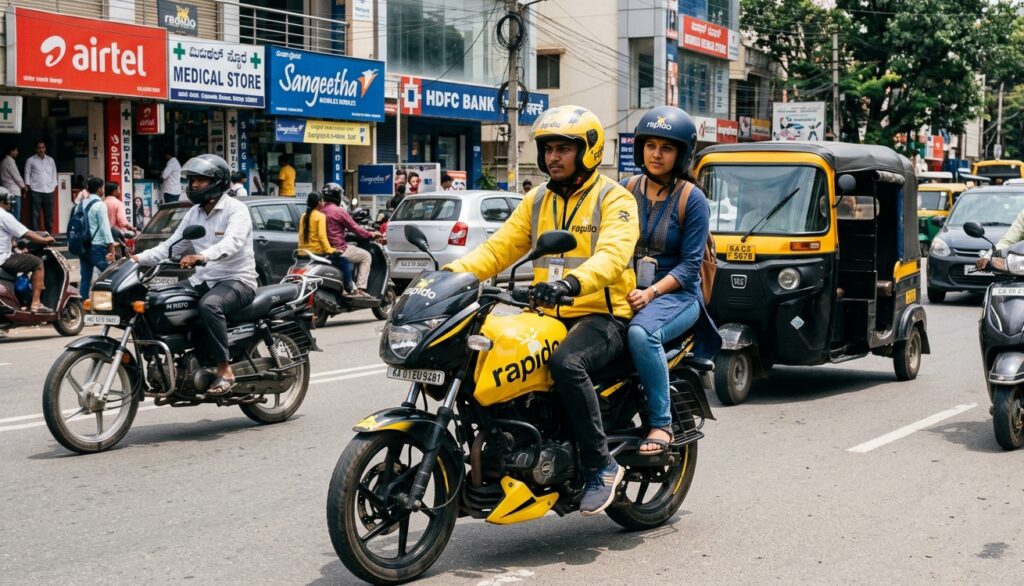
The Indian electric vehicle market has unequivocally entered a transformative epoch in 2026, transitioning rapidly from an era characterized by experimental early adoption to a period of entrenched mass-market integration. As the world navigates a complex macroeconomic landscape and escalating climate imperatives, India’s strategic pivot toward electric mobility represents one of the most consequential industrial shifts in the global automotive sector. The broader domestic passenger vehicle market has witnessed record dispatches, yet it is the electric segment that fundamentally redefines the operational and commercial paradigms of the industry.
This transition is not merely a technological upgrade but a system-wide reorientation of mobility, encompassing manufacturing realignments, new energy integration, and sophisticated digital connectivity architectures. A granular analysis reveals an industry experiencing exponential expansion. In 2024, the Indian electric vehicle market generated revenues of approximately $14.17 billion. Projections indicate that this valuation will catapult to an astounding $101.4 billion by the year 2030, driven by a Compound Annual Growth Rate (CAGR) of 38.8% spanning the forecast window. This comprehensive report deconstructs the market dynamics, legislative policies, and infrastructure bottlenecks defining the Indian EV sector.
The Intersection of Ecology and Economics
The rise of the Indian EV market is truly remarkable. It is incredible that electric vehicles have shifted from being a luxury for the wealthy to becoming a daily necessity for millions of commercial drivers. This transformation reflects not only technological progress but also a major change in how India approaches mobility and sustainability. Charging stations, battery innovation, and government incentives are turning clean transport into a practical reality rather than a distant dream.
Understanding this market means looking through both ecological and economic lenses. On one side, EVs represent a crucial step toward reducing pollution and dependence on fossil fuels. On the other, they are driving new business models, job creation, and investment opportunities. The Indian EV revolution is not just about cleaner roads—it is about reshaping the nation’s economy and redefining what progress looks like in the modern world.
| Indian EV Market Profile (2026) | |
|---|---|
| Market Revenue (2024) | $14.17 Billion |
| Projected Value (2030) | $101.4 Billion (38.8% CAGR) |
| FY26 Registrations | 2.45 Million units |
| Overall EV Penetration | 6% to 7% of total automotive registrations |
| Top Passenger EV Brand | Tata Motors (~39.2% market share) |
| Top Two-Wheeler EV Brand | TVS Motor (24.36% market share) |
| Primary Government Policy | PM E-DRIVE Scheme (₹10,900 Crore) |
| Total Public Chargers | 29,277 stations by early FY26 |
| Key Foreign Investment | Tesla Gigafactory in Maharashtra |
| Highest Volume Segment | Two-wheelers (58% of annual EV sales) |
1. Exponential Volumetric Growth and Global Context
In terms of volumetric growth, the conclusion of the 2025 to 2026 financial year (FY26) marked a historic milestone, with total electric vehicle registrations reaching approximately 2.45 million units across all form factors. This represents a robust 24.6% year‑on‑year expansion from the preceding fiscal year, signaling that the transition is highly substantive. Consequently, overall electric vehicle penetration reached approximately 6% to 7% of total automotive registrations in India, indicating a steady climb toward the government’s ambitious target of achieving 30% EV penetration by the end of the decade. Beyond the numbers, this growth reflects rising consumer confidence, expanding charging infrastructure, and the increasing role of EVs in commercial fleets, which together highlight the depth of India’s transformation.
To fully contextualize India’s trajectory, it is highly instructive to view it through a global lens. Emerging and developed economies are increasingly embracing electrification at scale, but their adoption models differ vastly. While nations like Norway dominate the globe with over 90% EV penetration due to massive tax incentives, and China leads pure volume with a monopolized battery supply chain, India’s strategy diverges significantly. India is prioritizing deep localization and domestic manufacturing over import reliance, choosing to build a robust domestic ecosystem rather than relying solely on foreign imports, which currently dominate emerging markets like Brazil and Thailand. This approach not only strengthens India’s economic resilience but also ensures long‑term sustainability by creating jobs, fostering innovation, and reducing dependence on volatile global supply chains. As battery recycling, rural adoption, and renewable energy integration accelerate, India’s EV journey is poised to become a model of how ecological responsibility and economic pragmatism can move hand in hand.
| Global Market | EV Sales Penetration | Key Market Characteristics & Strategies |
|---|---|---|
| India | ~6% to 7% | High 2W/3W volume, intense localization focus, and massive infrastructure capital expenditure. |
| China | ~35% to 40% | Undisputed global leader in manufacturing volume; complete monopoly over the lithium-ion supply chain. |
| Norway | ~90%+ | Aggressive tax exemptions; the first country to almost completely eradicate new ICE passenger car sales. |
| United States | ~8% to 9% | Dominated by Tesla; high consumer focus on heavy electric trucks and luxury SUVs. |
| Germany | ~18% to 20% | Legacy automaker transition (VW, BMW, Mercedes) supported by dense European charging networks. |
| Thailand | 13% | Rapid regional adoption, but heavily dominated by direct Chinese imports (BYD, MG). |
| Brazil | 6.5% | Flex-fuel integration, high import reliance with emerging local assembly incentives. |
| Vietnam | ~6% | Driven by domestic champion VinFast, rapidly expanding its global export footprint. |
| Indonesia | ~2% to 3% | Massive nickel reserves; leveraging natural resources to force OEMs to build local battery plants. |
2. Market Catalysts: Ecology and Economics
The factors driving this exponential EV adoption in India are highly synergistic. At the foundational level, escalating fossil fuel costs and acute environmental concerns (particularly air quality deterioration in metropolitan hubs like Delhi) have primed the consumer mindset. However, the true catalyst has been the formidable array of government initiatives. The market has been heavily subsidized through demand-generation mechanisms like the FAME-II scheme and its highly capitalized successor, the PM E-DRIVE scheme, which explicitly targets localized manufacturing and the rapid deployment of charging infrastructure.
Furthermore, the economic calculus for consumers has fundamentally inverted. The Total Cost of Ownership (TCO) for electric vehicles, particularly in the high-utilization two-wheeler and three-wheeler segments, now dramatically undercuts traditional internal combustion engine vehicles, rendering electrification an economic necessity. Two-wheelers remain the vanguard of this transition, accounting for nearly 58% of annual EV sales. Meanwhile, the passenger car segment stands as the most lucrative revenue-generating category.
3. Competitive Landscape: Passenger Electric Vehicles
The competitive architecture of the Indian electric vehicle market in 2026 is characterized by intense volatility and a decisive pivot from startup dominance toward legacy manufacturer consolidation. In the passenger electric four-wheeler domain, domestic manufacturers continue to command the largest market shares.
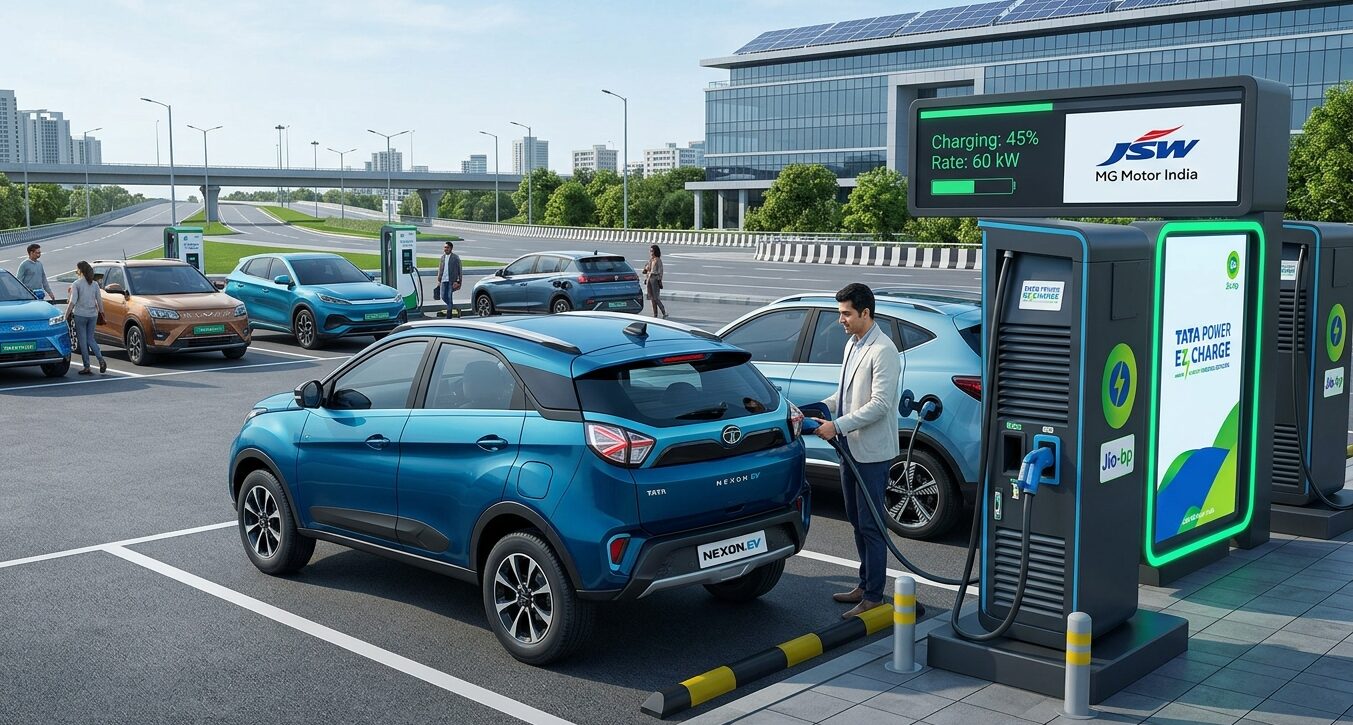
Tata Motors has historically been the undisputed pioneer of India’s EV revolution. In FY26, Tata Motors retained its leadership position, retailing approximately 78,811 units. The automaker retained a commanding passenger EV market share stabilizing around 39.2%. The most formidable challenger disrupting this status quo is JSW MG Motor India. Capitalizing on aggressive pricing strategies, JSW MG Motor captured a robust market position in FY26, moving approximately 53,089 units and securing around 26.4% of the market (an impressive 74% year-on-year sales growth). Mahindra & Mahindra secured the third position with a rapidly rising market share of around 21.2%, translating to approximately 42,721 units sold, underscoring the success of its dedicated electric platforms.
| Passenger EV Manufacturer | FY26 Sales (Units) | YoY Growth | Market Share (FY26) |
|---|---|---|---|
| Tata Motors | ~78,811 | +13% | ~39.2% |
| JSW MG Motor | ~53,089 | ~+74% | ~26.4% |
| Mahindra & Mahindra | ~42,721 | +369% | ~21.2% |
| Hyundai | 6,726 | +637% | 3.80% |
4. The Electric Two-Wheeler Revolution and Market Ranking
The electric two-wheeler market witnessed a profound structural realignment. FY26 marked the decisive return of traditional automotive titans, resulting in total retail sales crossing the 1.4 million unit threshold. TVS Motor emerged as the undisputed segment leader, retailing 341,513 units to capture a 24.3% market share, fueled by an impressive 43% year-on-year expansion. Bajaj Auto followed closely in second place, selling over 289,300 units for a 20.6% share. Ather Energy demonstrated remarkable resilience, securing the third position with a 17.0% share.
Conversely, Ola Electric, which previously dictated market terms, experienced a severe contraction. Ola’s sales plummeted by approximately 52% year-on-year to 164,215 units, reducing its market share to 11.7%. This decline highlights the critical importance of after-sales service; as Ola faltered with service backlogs, consumers rapidly migrated to the trusted dealership networks of legacy brands. Hero MotoCorp also demonstrated extreme velocity, recording a 196% growth to capture 10.3% of the market. Furthermore, specialized motorcycle brands like Revolt Motors and Oben Electric are rapidly carving out valuable niches in the performance segment.
| Rank | Electric 2W Manufacturer | FY26 Sales (Units) | YoY Growth | Market Share (FY26) |
|---|---|---|---|---|
| 1 | TVS Motor | 341,513 | +43.0% | 24.36% |
| 2 | Bajaj Auto | 289,349 | +25.7% | 20.64% |
| 3 | Ather Energy | 238,461 | +82.3% | 17.06% |
| 4 | Ola Electric | 164,215 | -52.2% | 11.72% |
| 5 | Hero MotoCorp | 144,330 | +196.1% | 10.30% |
| 6 | Revolt Motors | 10,444 | Surging Q4 Volume | ~0.74% (Leader in Motorcycles) |
| 7 | Oben Electric | Est. ~3,500+ | 10X Revenue Growth | Emerging (Pre-Series B scale-up) |
5. The Rise of Electric Motorcycles
While scooters dominate the broader two-wheeler volumes, the electric motorcycle niche is rapidly taking shape as a battleground for performance and urban commuting, driven by specialized startups.
Revolt Motors: Acquired by RattanIndia Enterprises, Revolt remains a highly influential player in the electric motorcycle category. While its full-year FY26 sales stood at 10,444 units, the brand witnessed a massive 3X month-on-month sales surge in March 2026, driven by the launch of the RV BlazeX and expanding adoption across Tier-2 and Tier-3 cities. Revolt recently celebrated a major milestone by rolling out its 50,000th motorcycle from its Manesar plant, which plans to expand to over 300,000 units annually.
Oben Electric: Oben Electric represents a new wave of R&D-driven startups focusing heavily on deep vertical integration. Designing and manufacturing its lithium-iron-phosphate (LFP) batteries and motors entirely in-house at its 40,000-unit capacity Jigani facility in Bengaluru, Oben maintains strict control over its supply chain. Demonstrating a 10X revenue growth over the past 12 months, Oben is targeting ₹100 crore in revenue for FY26 and aiming for EBITDA break-even by 2027.
6. Commercial Three-Wheelers and L5 Consolidation
In the electric three-wheeler sector, which commands a massive 60.9% penetration rate within its broader automotive category, steady sales were recorded in FY26. The high-speed L5 auto segment saw intense consolidation. Mahindra secured the leadership position with a 35% market share, closely trailed by Bajaj Auto at 33%. Piaggio saw its market share erode from 11.5% in FY25 to nearly 5% in FY26. Together, the top three players (Mahindra, Bajaj, and TVS) now control nearly 80% of the lucrative L5 volumes.
7. Pricing Strategies: Premiumization vs. Battery as a Service
The underlying dynamics of this competition are rooted in sophisticated pricing strategies. In the passenger vehicle segment, the traditional approach has been to offer distinct battery electric vehicle platforms at a premium to their internal combustion engine counterparts. Tata Motors has successfully utilized this strategy by offering a broad, laddered portfolio ranging from the accessible Tiago.ev to the premium Curvv.ev.
However, JSW MG Motor India disrupted this paradigm by introducing the Battery-as-a-Service (BaaS) model. By decoupling the battery cost from the vehicle purchase price, MG aligned the initial acquisition cost of its EVs directly with comparable internal combustion engine vehicles. This strategy effectively neutralized the primary barrier to EV adoption and catalyzed their massive sales surge. Mahindra & Mahindra has leaned heavily into premiumization, targeting the high-margin demographic that prioritizes advanced software integration via its “Born Electric” INGLO architecture.
8. Foreign Investments and the Tesla Gigafactory
Foreign involvement in the Indian EV ecosystem has transitioned from exploratory imports to massive capital deployments aimed at localized manufacturing. The Indian government’s stringent import tariffs have successfully compelled international automakers to shift their focus toward domestic production.
The most highly anticipated foreign development in 2026 is the finalized entry strategy of Tesla. After years of negotiations, Tesla committed to establishing a Gigafactory in Satara, Maharashtra. This venture represents a potential $30 billion long-term ecosystem investment, commencing with an immediate $2-3 billion direct capital injection to construct the facility. Crucially, Tesla’s strategy centers on producing a newly engineered, smaller-battery midsize SUV tailored specifically for developing nations, with local assembly expected by March 2026.
Another paradigm-shifting foreign intervention involves the restructuring of MG Motor India. Facing increased regulatory scrutiny regarding Chinese investments, SAIC Motor diluted its controlling stake, entering into a strategic joint venture with the Indian conglomerate JSW Group. Under the new structure, SAIC retains a 49% stake, while JSW Group holds 35%. Additionally, Vietnamese automaker VinFast has initiated a phased ₹16,000 crore investment for a new manufacturing facility in Tamil Nadu.
9. The Luxury Electric Vehicle Market
In the luxury EV segment, foreign OEMs maintain an absolute monopoly, but the internal pecking order has shifted dramatically. BMW established unquestioned dominance in FY26, retailing 3,537 electric vehicles (a monumental 124% year-on-year growth), capturing over 65.4% of the entire luxury EV market. BMW’s success is directly attributable to the local assembly of its iX1 LWB model in Chennai.
Mercedes-Benz held the second position with a 19.3% share but struggled to scale its volumes due to its reliance on highly expensive, fully imported models like the EQS SUV. Audi experienced a near-total collapse in the segment, recording an 87% sales decline to just 17 units due to severe supply chain pipeline gaps.
| Luxury EV Brand | FY26 Sales (Units) | YoY Growth | Market Share (FY26) | Strategic Position |
|---|---|---|---|---|
| BMW | 3,537 | +124% | 65.45% | Strong local assembly (iX1 LWB) |
| Mercedes-Benz | 1,047 | – | 19.35% | High-priced import reliance |
| Volvo | 382 | – | 7.06% | Steady lower-premium tier |
| Tesla | 342 | N/A | 6.32% | Direct imports pending local plant |
| Audi | 17 | -87% | 0.31% | Supply chain pipeline collapse |
10. Manufacturing Strategies and Massive Capex
To navigate the hyper-competitive 2026 landscape, original equipment manufacturers are executing complex market strategies encompassing massive capacity expansions and the reimagining of the retail customer experience. Tata Motors launched a network of exclusive “Tata.ev” showrooms in tier-1 and tier-2 hubs to cultivate a high-involvement community atmosphere.
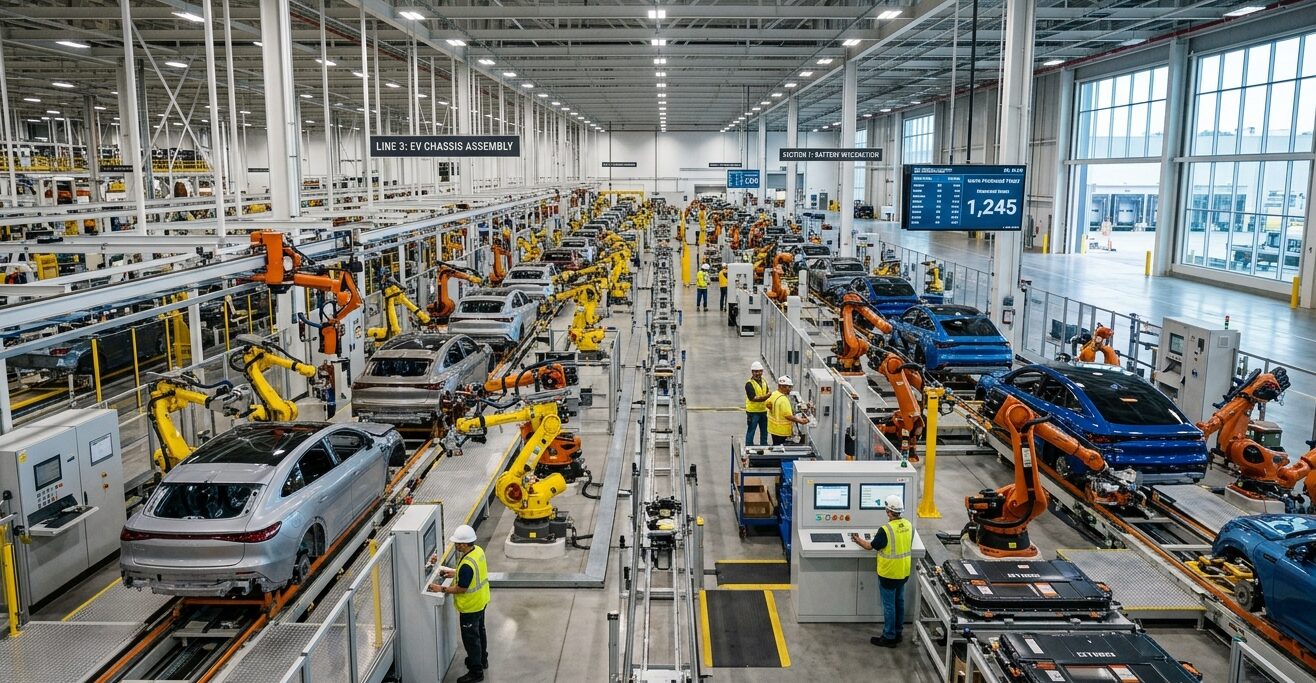
On the manufacturing front, the demand for capacity has necessitated aggressive investments. Tata Motors executed an operational pivot by acquiring Ford India’s defunct facility in Sanand, Gujarat, for ₹725.7 crore. Following a comprehensive ₹1,300 crore retooling exercise, Tata unlocked an immediate manufacturing capacity of 300,000 units per annum. Mahindra & Mahindra inaugurated a dedicated EV manufacturing ecosystem within its Chakan hub in Pune, supported by an immense ₹16,000 crore investment cycle. JSW MG Motor India is mirroring this expansion, committing an additional ₹3,000 crore to construct a second plant adjacent to its Halol facility.
11. Financial Performance and Unit Economics
The trajectory of Ola Electric serves as a profound indicator of the challenges inherent in scaling pure-play EV manufacturing. In the third quarter of FY26, Ola reported a severe financial contraction, with revenues declining by 49.1% year-on-year to ₹1,988 crore, and a net loss of ₹487 crore. However, this turbulence was self-inflicted as part of a strategic “operating reset.” Ola successfully slashed its quarterly operating expenses, improving its consolidated gross margin dramatically to 34.3%. Ola also achieved a defining milestone by commercializing its in-house manufactured “4680 Bharat cells,” integrating them directly into customer vehicles to insulate from supply chain shocks.
Conversely, traditional manufacturers like TVS and Bajaj, unburdened by the capital expenditure required to build entirely new dealer networks, demonstrated stellar performance. TVS’s 43% year-on-year volume growth highlights the immense latent value of legacy trust in the mass market.
12. National Government Policy: The PM E-DRIVE Scheme
The regulatory architecture established by the central government functions as the primary determinant of EV market velocity. The historical bedrock of India’s EV subsidization was the FAME-II scheme, which successfully incentivized the sale of over 1.6 million electric vehicles. Recognizing the need for an ecosystem-driven approach, the Ministry of Heavy Industries replaced FAME with the PM E-DRIVE (Prime Minister Electric Drive Revolution in Innovative Vehicle Enhancement) Scheme.
Effective from October 2024 to March 2026, the PM E-DRIVE scheme boasts a massive financial outlay of ₹10,900 crore ($1.28 billion). The scheme allocates ₹3,679 crore to subsidize electric two-wheelers, three-wheelers, e-trucks, and e-ambulances. Notably, electric passenger cars are entirely excluded from direct consumer subsidies under this scheme. Furthermore, the scheme allocates ₹4,391 crore for public transport electric buses, and ring-fences ₹2,000 crore for charging infrastructure to deploy 72,300 new public chargers.
13. Aggressive State-Level Phase-Out Mandates
While the central government provides overarching financial frameworks, state-level regulations deploy highly coercive policy levers. The Delhi Electric Vehicle Policy 2.0 (2026-2030) is a prime example. The policy grants a 100% exemption on road tax and registration fees for all electric vehicles priced up to ₹30 lakh.
Crucially, the government has mandated that from January 1, 2027, only electric three-wheelers will be permitted for new registration. Even more drastically, the registration of all new internal combustion engine (petrol) two-wheelers will be entirely banned starting April 1, 2028. In eastern India, West Bengal offers a 100% waiver on registration fees for early buyers, alongside a capital subsidy of 25% for fast-charging stations and waived electricity duty for EV manufacturing units.
14. The Transition of Traditional ICE Giants
The period leading up to 2026 is defined by the profound transformation of traditional internal combustion engine (ICE) manufacturing titans.
Maruti Suzuki India Limited: Operating deliberately as an “early follower,” Maruti unveiled its first mass-market electric offering, the eVitara. Manufactured on a dedicated EV assembly line at the Suzuki Motor Gujarat plant, the eVitara utilizes a robust 60kWh battery pack delivering a 550 km range. Maruti has committed to establishing over 100,000 charging points across India by 2030, integrated via its ‘e for me’ application.
Honda Motorcycle & Scooter India (HMSI): Honda officially entered the electric arena with the launch of the Activa e. The Activa e is powered by twin 1.5kWh removable battery packs supported by Honda’s proprietary “e: Swap” network, aiming to entirely eradicate range anxiety in dense urban environments.
Hero MotoCorp: The world’s largest two-wheeler manufacturer by volume recorded an astounding 196% year-on-year growth in its EV sales, highlighting the immense power of its rural and semi-urban dealership penetration.
15. Total Cost of Ownership (TCO) Analysis
A granular comparison between traditional petrol offerings and their EV counterparts illustrates the strategic advantages of this transition. In the passenger car segment, the Tata Nexon Petrol and the Tata Nexon EV highlight an extreme divergence in TCO. While the upfront acquisition cost of the Nexon EV (approx. ₹14.5 lakh) is higher than the petrol version (approx. ₹11.0 lakh), the operational economics are radically different.
Based on a 5-year financial analysis assuming 90,000 km of driving, the running cost of the Nexon Petrol equates to ₹7.50 per km (fuel expenditure of ₹6,75,000). Conversely, the Nexon EV operates at a mere ₹1.32 per km (running cost of just ₹1,18,800). When factoring in lower maintenance variables, the EV results in net savings of over ₹1.2 lakh compared to the petrol variant.
16. The Charging Infrastructure Bottleneck
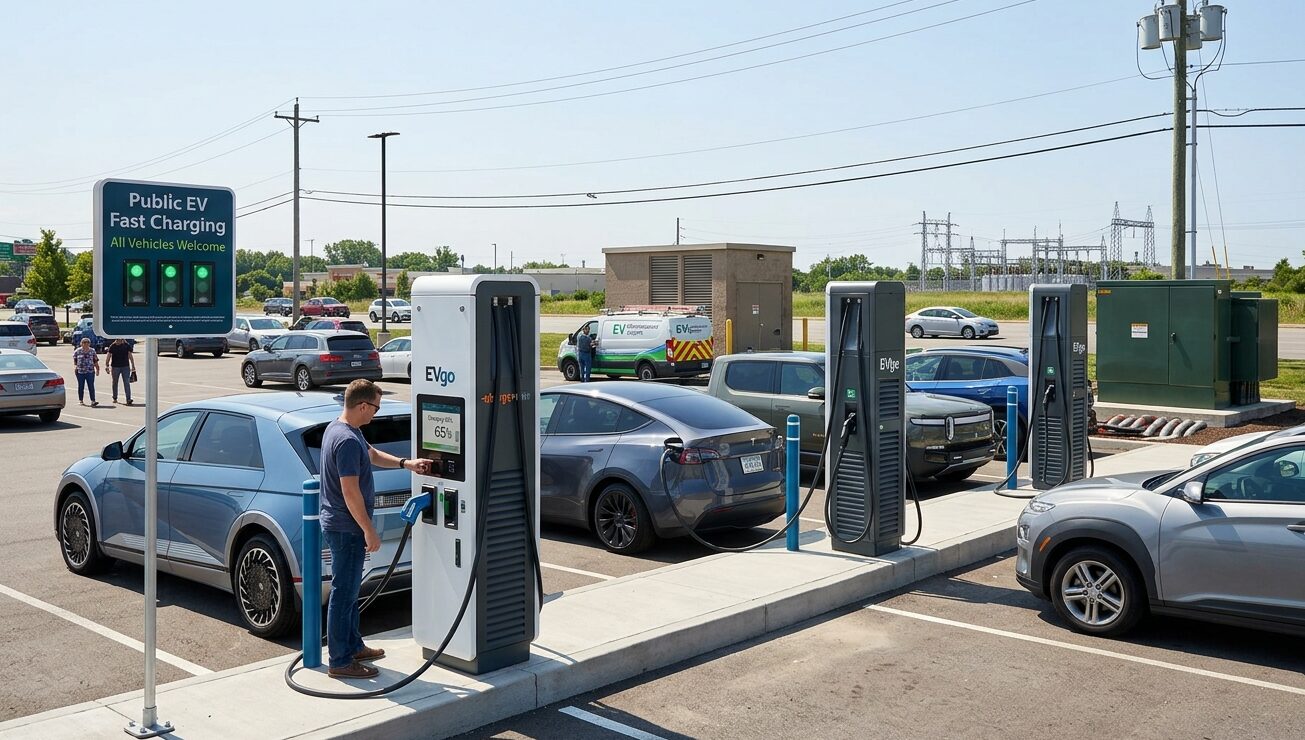
The ultimate success of India’s electric vehicle transition is intrinsically linked to its public charging infrastructure. Driven by private investments and the PM E-DRIVE scheme, public charging stations surged at a phenomenal 72% CAGR, expanding to nearly 29,277 operational stations by early FY26. Major operators include Tata Power EZ Charge, ChargeZone, and Statiq.
Despite this rapid expansion, the primary obstacle has evolved from “range anxiety” to “charger reliability anxiety”. An industry analysis revealed that 88% of EV owners identified locating a functioning charging station as their primary source of stress due to frequent software glitches, connector faults, and poor maintenance. Furthermore, the infrastructure is heavily concentrated, with just five states hosting over 55% of all public chargers. Industry projections indicate that India requires the establishment of 1.32 million charging stations by 2030 to support the projected EV fleet.
17. Top Selling Models and Commercial Viability
Consumer behavior heavily favors models offering an optimal balance of utilitarian features and aggressive TCO metrics. In the passenger car segment, Tata Motors’ Nexon.ev, Punch.ev, and Tiago.ev dominate sales volumes, while the MG Windsor EV disrupted the market with its Battery as a Service pricing structure. The electric three-wheeler segment is critical for urban logistics.
| Top Selling Electric 3W Model | Category Focus | Ex-Showroom Starting Price |
|---|---|---|
| Mahindra Treo / Treo Yaari | Passenger | ₹1.96 Lakh to ₹3.23 Lakh |
| Kinetic Safar Smart | Passenger | ₹2.18 Lakh |
| Piaggio Ape e-city | Passenger / Cargo | ₹2.89 Lakh |
| Bajaj RE E-TEC 9.0 | Passenger | ₹3.27 Lakh |
| Euler HiLoad EV | Heavy Commercial Cargo | ₹3.94 Lakh |
The success of models like the Mahindra Treo is driven by transformative operational economics. Transitioning from CNG to electric propulsion slashes operational costs down to a mere ₹0.50 per kilometer. Over a 5-year lifecycle, this equates to savings of up to ₹4.4 Lakh for auto-rickshaw drivers.
18. Conclusion and Future Outlook
The comprehensive analysis of the Indian electric vehicle market in 2026 reveals a profoundly matured industrial ecosystem. The market has successfully transitioned from an era of theoretical environmental policy to one anchored firmly in pragmatic, mass-market consumer economics. With the total cost of ownership matrices unequivocally favoring electric propulsion, consumer demand is driven by financial logic rather than mere ecological altruism.
The competitive landscape proves that legacy manufacturers (armed with vast distribution networks and supply chain leverage) have aggressively reclaimed market leadership. The strategic entry of traditional ICE giants like Maruti Suzuki and Honda indicates the technology has been standardized for mass-scale deployment. Furthermore, the influx of foreign capital, highlighted by Tesla’s imminent manufacturing presence in Maharashtra, confirms India’s emerging status as a pivotal global hub for EV production.
However, the trajectory toward the projected $101.4 billion market valuation by 2030 is not without friction. The primary systemic risk has shifted away from vehicle technology toward grid stability and charger reliability. Policymakers and private operators must prioritize software interoperability and renewable grid integration. Ultimately, the Indian EV sector in 2026 stands as a testament to rapid, forced technological adoption driven by economic necessity, stringent government mandates, and immense industrial resilience.
19. Frequently Asked Questions (FAQs)
Explore More:
- Discover more about advanced battery technology in Science & Technology
- Read about global automotive supply chains in History & Events
- NITI Aayog – India’s EV Policy Roadmap
- Ministry of Heavy Industries – PM E-DRIVE & FAME Schemes
- International Energy Agency – Global EV Outlook
- VAHAN Dashboard – EV Registration Data
Explore: official