
Bilibili Inc., a dual-listed entity on the NASDAQ (ticker: BILI) and the Hong Kong Stock Exchange (ticker: 9626), represents a singular and highly complex phenomenon within the global digital entertainment landscape. Headquartered in the Wujiaochang commercial district of Shanghai, specifically at Building 3, Guozheng Center, No. 485 Zhengli Road, the company has evolved from a niche subcultural haven into a comprehensive, pan-entertainment digital video community. As articulated in its mission statement, Bilibili seeks to enrich the everyday lives of young generations in China by providing an ecosystem built around high-quality content, talented creators, and profound emotional bonds among users.
The fiscal year 2025 marked a historic inflection point for the company’s financial trajectory. Filing its annual report on Form 20-F with the Securities and Exchange Commission on April 16, 2026, the company reported total annual revenues of RMB 30.347 billion (approximately $4.2 billion), representing a robust 13% year-over-year growth. More critically, the company achieved its first-ever full year of non-GAAP profitability, delivering an adjusted net profit of RMB 2.588 billion with an 8.5% margin, a dramatic recovery from the RMB 39 million loss recorded in 2024. This financial turnaround, supported by legal counsel Skadden, Arps, Slate, Meagher & Flom LLP and depositary bank Deutsche Bank Trust Company Americas, validates the platform’s long-term strategy of prioritizing user stickiness and community trust over rapid, low-quality traffic acquisition.
The Architect of China’s Youth Culture
Bilibili’s evolution is truly impressive. It is incredible that a platform which began as a niche space for anime fans has transformed into a financial powerhouse influencing the consumption habits of millions of young people in China. What started as a small community has grown into a cultural force, shaping trends, entertainment, and even commerce, while still holding on to its unique identity.
Unlike YouTube, Bilibili is not just a video platform but a highly gated, deeply emotional community. Entry once required passing a quiz, and even today the sense of belonging and shared culture sets it apart. This emotional bond between creators and audiences has allowed Bilibili to thrive as more than a business—it is a social ecosystem where loyalty, creativity, and identity converge. Its journey shows how digital communities can evolve into powerful engines of both culture and economics.
| Bilibili Inc. Corporate Profile (2026) | |
|---|---|
| Company Name | Bilibili Inc. (Originally Mikufans.cn) |
| Founding Date | June 26, 2009 (by Xu Yi / “bishi”) |
| Chief Executive Officer | Chen Rui (Since Nov 2014) |
| Executives | Carly Li (COO), Sam Fan (CFO) |
| Stock Tickers | NASDAQ: BILI | HKEX: 9626 |
| Global Headquarters | Building 3, Guozheng Center, Wujiaochang, Shanghai |
| Total Employees | 8,088 (As of Dec 2024) |
| Annual Revenue (2025) | RMB 30.347 billion ($4.2 billion) |
| Adjusted Net Profit | RMB 2.588 billion (8.5% Margin) |
| Monthly Active Users (MAU) | 366 Million |
| Daily Active Users (DAU) | 113 Million |
| Monthly Paying Users (MPU) | 36 Million |
| Average Daily Watch Time | 107 Minutes per user |
| Premium Subscribers | Over 30 Million (Big Member) |
| Core Demographic | Generation Z and Gen Z+ (Avg age: 26) |
| Primary Algorithm Metric | Interaction Density |
| Creator Network Size | Over 4 Million active “UP owners” |
| App Package Names | tv.danmaku.bili (Domestic) com.bstar.intl (Global) |
| Strategic Alliances | Sony, Tencent, Taobao, JD.com, Pinduoduo |
| Official Platforms |
bilibili.com (Main) bilibili.tv (Global) manga.bilibili.com (Manga) bilibilicomics.com (Comics) studio.bilibili.tv (Creators) |
1. Workforce, ESG, and Unprecedented User Engagement
As of December 31, 2024, the company maintained a massive workforce of 8,088 employees, reflecting its immense operational scale. Furthermore, the company places a significant emphasis on sustainable growth, publishing comprehensive Environmental, Social, and Governance (ESG) reports to reinforce its commitment to responsible business practices.
By the fourth quarter of 2025, Bilibili’s user engagement metrics had achieved unprecedented scale, driven by an overarching corporate ethos that values “interaction density” over passive consumption. The platform reported 113 million Daily Active Users (DAUs), a 10% year-over-year increase, and 366 million Monthly Active Users (MAUs), alongside 36 million monthly paying users (MPUs). The average daily time spent per user surged to an astonishing 107 minutes, representing a substantial increase from the 99 minutes recorded in the prior year and serving as a testament to the platform’s profound behavioral grip on the Chinese demographic.
2. Digital Infrastructure and Official Ecosystem
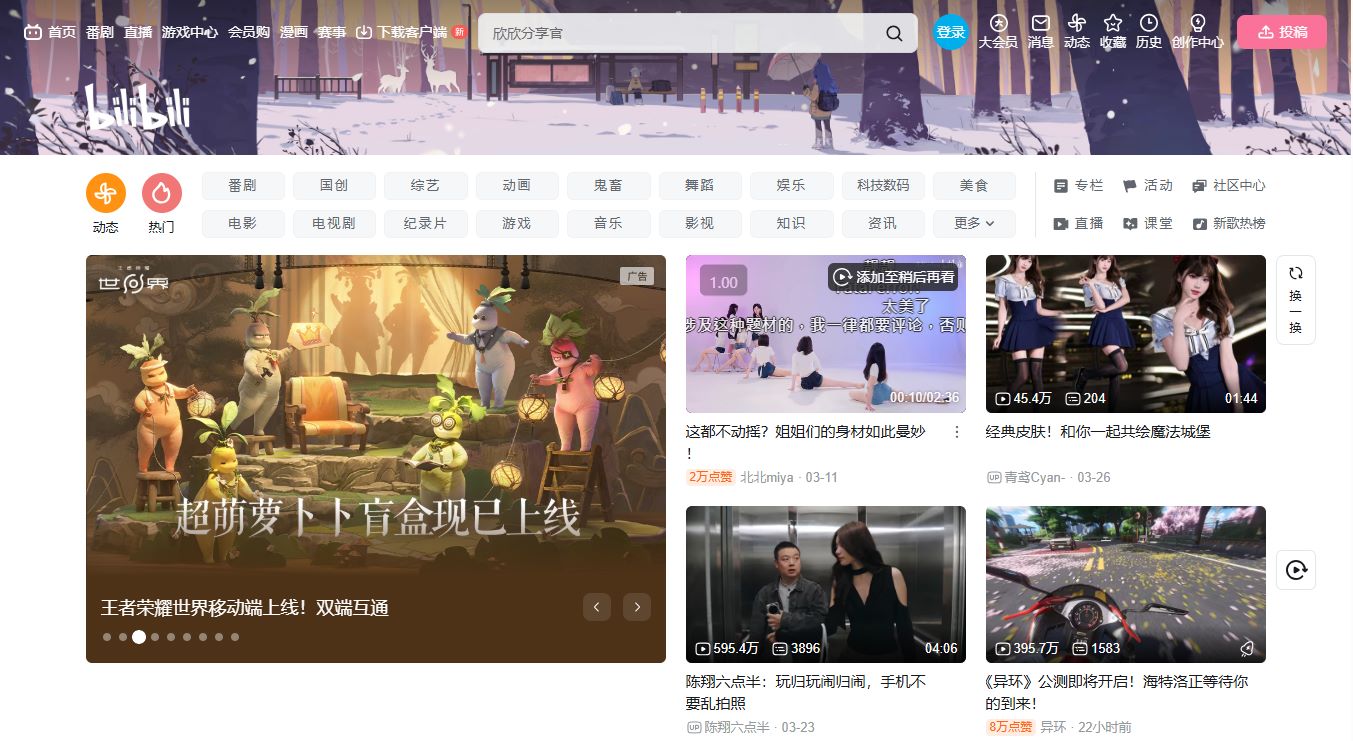
To satisfy the complex operational demands of its vast user base, Bilibili maintains a sprawling, multi-platform digital infrastructure. This official ecosystem is segmented to serve domestic audiences, international markets, and highly specific content verticals. The primary nexus of Bilibili’s operations in mainland China is hosted at its flagship domain, bilibili.com. This Chinese edition requires registration to unlock core functionalities, including uploading content, engaging in the platform’s signature bullet chat system, liking videos, and accessing full High-Definition (HD) and 4K playback features. Historically, the company utilized the bilibili.us domain until 2011, when regulatory enforcements necessitated a shift. Furthermore, to signal its affiliation with state-owned broadcasting entities and share content provider licenses to mitigate regulatory risks, Bilibili utilizes the bilibili.smgbb.cn subdomain, linked to the Shanghai Media Group Broad Band subsidiary.
For its burgeoning global audience, Bilibili operates bilibili.tv, a dedicated international portal. This global edition is highly localized, offering user interfaces, dubbing, and subtitle support in a multitude of languages, including English, Indonesian, Thai, Vietnamese, Malay, and Arabic. In the realm of static media, Bilibili maintains a formidable presence in the comic and manga industries. The official site for original Chinese manga (raws) is hosted at manga.bilibili.com, while official English translations and localized comic content are distributed globally through bilibilicomics.com.
3. Mobile Applications and Desktop Client Software
Bilibili’s mobile application strategy is similarly bifurcated to address regional specificities and regulatory environments. The official domestic application for Android and iOS is identified by the package name tv.danmaku.bili. This application is deeply integrated into the Chinese digital ecosystem, offering users a comprehensive suite of features ranging from competitive esports broadcasts and in-depth tech unboxings to multi-cultural performing arts and anime edits.
Conversely, the international application, operating under the package name com.bstar.intl, positions itself as the premier anime platform in Southeast Asia, offering over 2,000 licensed anime titles and hundreds of high-quality short dramas with robust multilingual support. For users demanding peak audio-visual fidelity, Bilibili provides a dedicated PC client. This desktop software supports multiple resolutions, including uncompressed 1080p and true 4K for select premium content, utilizing adaptive streaming technologies to ensure crisp playback. The PC client is particularly favored by hardcore gamers and cinephiles who engage with long-form documentary content and high-fidelity gameplay walkthroughs.
4. Creator Tooling: Bilibili Link and Bilibili Studio
The backbone of Bilibili’s Professional User Generated Video (PUGV) ecosystem is its proprietary creator software. The Bilibili Link mobile application and the Bilibili Studio desktop software (studio.bilibili.tv) serve as comprehensive control centers for global content creators. These tools offer an array of sophisticated features designed to lower the barrier to entry and maximize audience reach.
Most notably, Bilibili Studio includes a free Artificial Intelligence (AI) translation engine capable of automatically generating highly accurate Chinese subtitles for international video uploads within minutes, thereby allowing foreign creators to seamlessly penetrate the massive Chinese online market. Furthermore, these platforms provide massive traffic distribution analytics, commercial realization tools linking creators to global payment services, and real-time management of bullet chats.
5. Historical Trajectory: The Prototype Era (2009 to 2014)
The evolutionary trajectory of Bilibili provides a profound case study in platform economics within emerging digital markets. Unlike platforms engineered from inception by massive technology conglomerates, Bilibili’s genesis was entirely organic, driven by the intense devotion of a highly specialized subculture.
The platform was initially conceptualized and launched on June 26, 2009, by Xu Yi (known within the community by the moniker “bishi”). Originally named Mikufans.cn, it served as a non-profit, volunteer-run fandom community specifically dedicated to the vocaloid character Hatsune Miku. As the user base expanded rapidly (fueled by users seeking a more stable and aesthetically refined alternative to existing Animation, Comics, and Games (ACG) sites like AcFun), the platform was officially rebranded as Bilibili in January 2010. During this nascent phase, the platform instituted a high-entry community gatekeeping model, deliberately prioritizing cultural purity, inside jokes, and shared esoteric interests over mass market adoption.
The pivotal transition toward a formal, scalable corporate structure occurred when Chen Rui, who had provided early angel investment in 2011, formally assumed the role of Chief Executive Officer in November 2014. Under Chen Rui’s leadership, Bilibili transitioned away from its volunteer-run origins, establishing professional corporate operations, robust legal compliance frameworks, and early monetization pipelines.
6. Capital Markets and Pan-Entertainment Expansion (2016 to 2021)
Bilibili’s entry into mobile game publishing served as its first major financial engine, providing the capital necessary to subsidize its video hosting infrastructure. The September 2016 launch of the Chinese localized version of the Japanese mobile game Fate/Grand Order (FGO) generated massive, highly predictable cash flow from a deeply invested fan base. This financial stabilization paved the way for Bilibili’s Initial Public Offering (IPO) on the Nasdaq in March 2018, marking its transition into the global public markets.
The post-IPO phase was characterized by aggressive content diversification. Recognizing the inherent demographic ceiling of pure ACG content, Bilibili’s management facilitated an organic expansion into technology reviews, lifestyle vlogs, educational content, and professional development resources. This expansion was validated by major institutional support; in April 2020, a strategic $400 million investment from Sony Corporation accelerated Bilibili’s access to premium global anime and entertainment assets, further cementing its industry dominance. By 2021, to defend against the rising tide of short-video competitors that threatened to monopolize fragmented user attention, Bilibili secured a secondary listing on the Hong Kong Stock Exchange and introduced “Story Mode,” a vertical short-video feed integrated directly into its application.
| Year | Strategic Milestone | Impact on Ecosystem |
|---|---|---|
| 2009 | Launch of Mikufans.cn by Xu Yi | Established the foundational ACG user base and core community ethos. |
| 2010 | Rebranded as Bilibili | Formalized the brand identity and the iconic “bullet comment” system. |
| 2014 | Chen Rui appointed CEO | Initiated professional management, moving away from a non-profit model. |
| 2016 | Launch of Fate/Grand Order | Fueled a massive new revenue stream, stabilizing infrastructure costs. |
| 2018 | Nasdaq IPO (Ticker: BILI) | Raised critical capital; began structural shift toward diversified revenue. |
| 2020 | Sony invests $400 Million | Secured access to premium global entertainment IP. |
| 2021 | HKEX Listing & “Story Mode” | Defended against short-video apps; increased daily sessions and DAU engagement. |
| 2024 | 100M DAU Milestone | Validated the mainstream appeal of the platform beyond niche audiences. |
| 2025 | First Full-Year Non-GAAP Profitability | Proved the viability of the PUGV model coupled with AI-driven advertising. |
7. The Drive to Profitability (2022 to 2026)
Between 2022 and 2026, the macroeconomic environment and shifting investor sentiment mandated a profound strategic pivot from growth-at-all-costs to sustainable unit economics. Management, led by CEO Rui Chen, COO Carly Li, and CFO Sam Fan, focused intensely on margin expansion. Through rigorous cost control and the optimization of high-margin revenue streams, Bilibili improved its gross profit margin for 14 consecutive quarters, ultimately reaching 37.0% by the fourth quarter of 2025.
This drive occurred against the backdrop of a broader “videolization” trend in China, where total video-based industry revenue is projected to grow from RMB 1,242 billion in 2023 to an astounding RMB 2,940 billion by 2030, providing massive macroeconomic tailwinds for the platform.
8. Architectural Core: The PUGV Model and Danmaku Paradigm
Bilibili’s formidable competitive moat is not defined solely by its vast content inventory, but rather by its unique socio-technical architecture. It explicitly rejects the passive consumption models of traditional streaming platforms in favor of a highly participatory, high-friction ecosystem.
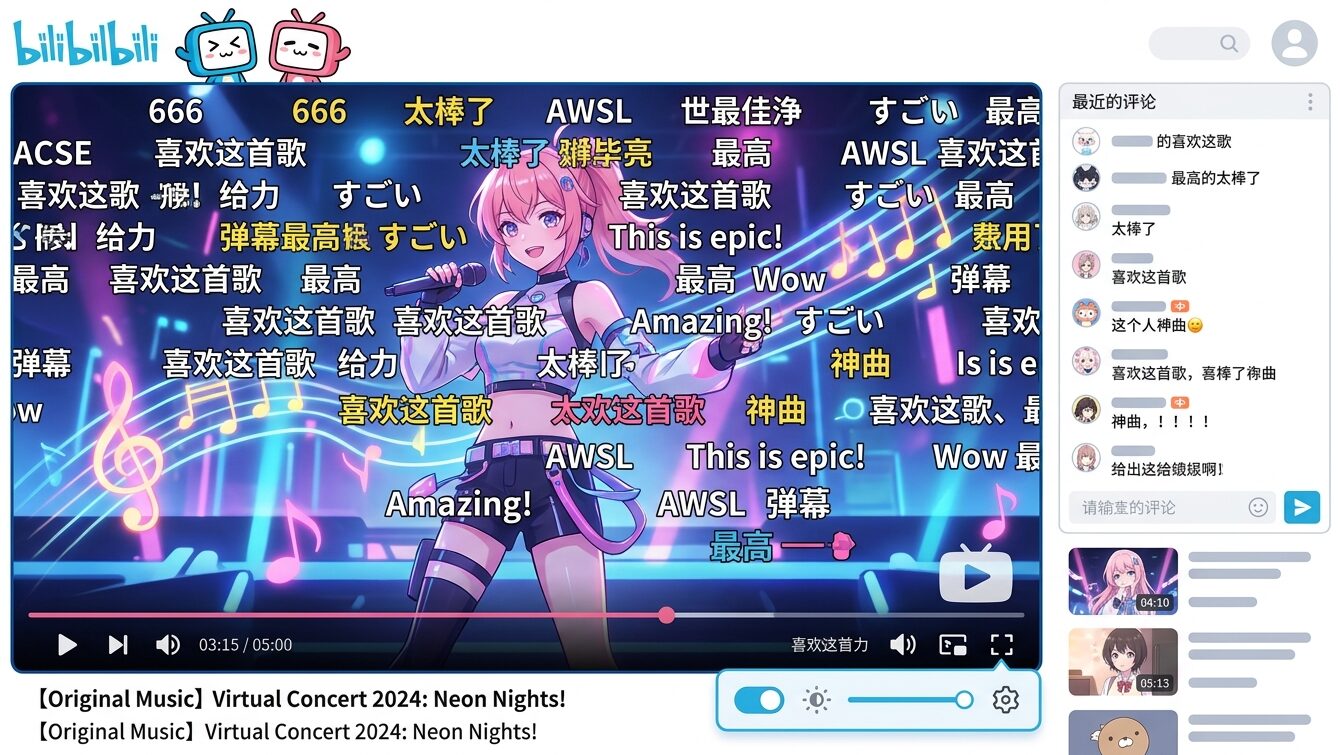
Bilibili pioneered and popularized the “danmaku” (bullet chatting) feature within the Chinese digital landscape. This system superimposes real-time, user-generated comments directly across the video frame, synchronized to specific timestamps rather than relegated to a static comment section beneath the player. From a behavioral economics perspective, danmaku fundamentally transforms asynchronous viewing into a synchronous, communal event. It fosters an intense sense of co-presence among geographically dispersed users, simulating the experience of watching a highly anticipated premiere in a crowded theater.
The architectural genius of the danmaku system lies in its facilitation of collective symbols and localized humor. Discourse analysis of Bilibili’s comments reveals that users employ highly contextual, referential humor to create inside jokes that form the very boundaries of the community. These collective symbols are fully legible only to the initiated, thereby reinforcing a profound sense of in-group identity and pride. When a user watches a highly emotional narrative beat or a climactic gaming moment, the screen fills with synchronized, overlapping reactions. This generates a level of emotional resonance and retention that vastly outperforms traditional social media interaction.
9. Community Gatekeeping: The 100-Question Membership Exam
Whereas conventional social media platforms engineer their onboarding processes to eliminate friction and maximize immediate user acquisition, Bilibili introduces deliberate, high-friction cognitive gating. To become an “official member” capable of posting danmaku, leaving comments, and interacting fully with the community, a registered user must pass a stringent 100-question examination, scoring a minimum of 60 points. This examination tests a user’s knowledge across two primary domains: community etiquette (rules of engagement, anti-spam policies, reporting mechanisms) and deep ACG content trivia.
This structural barrier serves multiple critical strategic functions. First, it operates as a rigorous quality control mechanism, inherently filtering out casual trolls, automated spam bots, and low-effort participants, thereby preserving the cultural integrity and high discourse quality of the community. Second, it leverages the sunk cost fallacy; users who invest the cognitive effort and time required to pass the exam demonstrate a psychological commitment to the platform. Consequently, official members exhibit an extraordinary 12-month retention rate exceeding 80%.
For users entirely unable to pass the test, Bilibili offers an alternative mechanism: purchasing an invitation code using community coins from an existing high-level user (LV5 or above), a system that inherently ties platform access to internal economic networks and social vouching.
10. The User Level System (LV0 to LV6) and Community Privileges
Bilibili further gamifies user participation through a sophisticated, multi-tiered leveling system ranging from LV0 to LV6, creating a clear status hierarchy within the ecosystem.
- LV0 (Registered User): Registration is completed using a mobile phone number, granting the basic ability to watch videos, but prohibiting interactive features.
- LV1 (Official Member): Achieved upon successfully passing the 100-question membership test. This status unlocks the ability to post danmaku, leave comments, and begin accumulating “Coins” (硬币), a vital platform currency.
- Experience Points (EXP) Mechanics: Progression through the ranks requires sustained engagement. Users earn EXP through highly specific daily actions: logging in yields 5 EXP, watching a video yields 5 EXP, and sharing a video to external applications yields 5 EXP. Furthermore, users can donate coins to creators to earn 10 EXP per coin, with a daily cap of 50 EXP.
Bilibili incentivizes account security and compliance by awarding substantial one-time EXP bonuses: 20 EXP for binding an email, 100 EXP for binding a mobile phone, 30 EXP for setting security questions, and 50 EXP for completing real-name authentication. Completing real-name verification (which requires uploading a valid government ID) is a critical threshold, unlocking the ability to initiate live-streaming broadcasts, opening a “Shell” (贝壳) account to cash out virtual earnings into Chinese Yuan, and permitting entry into the Discipline Management Committee to serve as a community moderator.
Furthermore, achieving the “Verified Influencer” (UP Badge) status requires passing the test, real-name verification, publishing content, and reaching 100,000 followers, which subsequently grants higher search visibility and priority access to the platform’s commercial advertising accounts.
11. Algorithm Weighting: Interaction Density Over Pure Watch Time
The core recommendation algorithm of Bilibili diverges sharply from pure short-video platforms like Douyin. Instead of optimizing strictly for infinite scrolling, dopamine loops, and sheer watch time, Bilibili’s algorithm heavily weights “interaction density”.
This composite metric meticulously evaluates the frequency of danmaku activity, the volume of coin donations (virtual tipping), and user collection rates (saving videos to curated playlists). This methodology creates a powerful flywheel effect where community-validated, high-quality PUGV content gains disproportionate algorithmic visibility. By prioritizing videos that elicit deep cognitive and emotional engagement rather than passive viewing, the platform sustains its reputation as a premier destination for complex, long-form content.
12. User Demographics: The Gen Z and Gen Z+ Dominance
Bilibili represents the digital epicenter of China’s youth culture. The platform’s demographic positioning is arguably its most potent commercial and strategic asset. As of early 2026, empirical data demonstrates that seven out of every ten Generation Z and Generation Z+ individuals in China actively use Bilibili. The user base skews toward a highly balanced gender ratio, with females representing 49% and males 51% of the audience. Geographically, the demographic is heavily concentrated in affluent regions, with 60% of users residing in high-income Tier-1 and Tier-2 cities, translating to substantial purchasing power.
In total, nearly 70% of Chinese late millennials (born after 1990) and Gen Z (born after 2000) are active on the platform, accounting for 78.67% of the total user base. Crucially, the platform is undergoing a highly advantageous demographic maturation. In 2018, the average active user age was 21 years old. By April 2025, data from MoonFox revealed that the average age had increased to 26, with 62.25% of all users aged between 16 and 35.
This “aging up” signifies that the cohort that initially joined Bilibili during high school or university has seamlessly transitioned into the professional workforce. They have brought with them rising disposable incomes, financial independence, and expanding consumption capacity, making them an ideal target for high-ticket advertisers in the automotive, real estate, and premium consumer electronics sectors.
13. Content Consumption Patterns and “Intellectual Boiling”
The evolving consumption logic of this maturing demographic has been incisively categorized as “Intellectual Boiling” in Bilibili’s collaborative 2026 Young Consumer Trends Report, co-authored with China Central Television Market Research (CTR). Today’s Chinese youth leverage consumption not merely for utilitarian purposes, but as a sophisticated mechanism for self-value reconstruction and emotional compensation. Armed with clear self-awareness and abundant emotional depth, they cast votes with their capital for values they identify with, driving trends such as “Cyber Synergy” and “Rebellious Co-creation”.
This psychological shift is clearly reflected in platform consumption metrics. Technology, science communication, and knowledge-based content views have skyrocketed. Over 200 million users actively engage with tech-related videos, driving total views in the tech sector to exceed 24 billion in 2024 alone. The platform’s PUGV model excels in these areas; for instance, the top physics explainer “Teacher Li’s Science Workshop” amassed 4.3 million followers purely through dense, 15-minute deep dives into complex quantum mechanics concepts.
Overall, educational and how-to content accounted for an impressive 30% of all views in 2025. Furthermore, the desire for young people to regain control over their lives has fueled trends like “partial space makeovers,” which saw a 434% increase in content volume as users meticulously invested in creating “Flow Comfort Zones” in bedrooms and car interiors.
14. Market Landscape and the Competitive Oligopoly
To fully understand Bilibili’s market position, it is essential to contextualize it within the broader Chinese digital media oligopoly, which features massive, heavily capitalized entities.
| Platform | Parent Company | Estimated MAU (Millions) | Core Content Format | Primary Demographic / Strategic Focus |
|---|---|---|---|---|
| WeChat (Video) | Tencent | ~1,380 (Total App) | Social / Short-form | Universal, semi-closed loop social network. |
| Douyin | ByteDance | 766 – 1,000 | Algorithmic Short-form | Universal, broad consumer base, viral trends. |
| Kuaishou | Kuaishou Tech | 711 – 714 | Short-form / Live | Lower-tier cities, rural integration, high creator interaction. |
| Tencent Video | Tencent | 597 | Professional Long-form | 25-34 age group, affluent VIP subscribers. |
| Bilibili | Bilibili Inc. | 366 | PUGV / Mid-to-Long-form | Gen Z, Tier 1/2 cities, ACG/Tech, bullet comments. |
| Xiaohongshu | Xiaohongshu | ~320 | Lifestyle / Image | Female-skewed, urban luxury, blended e-commerce. |
15. Strategic Differentiation: Bilibili vs. Douyin and Kuaishou
While Douyin and Kuaishou dominate in terms of absolute user numbers, Bilibili commands the high-trust, high-engagement quadrant of the market. Douyin operates on an aggressive, centralized recommendation algorithm designed to serve public traffic and optimize for immediate dopamine responses. Its content is overwhelmingly short-form, highly fashionable, and easily imitable, focusing on viral dances, lip-syncing, and humor. Interaction on Douyin is relatively shallow, with users strongly preferring to “like” rather than engage in deep commentary.
Kuaishou, conversely, maintains a stronger focus on the social relationships between creators and users, resulting in highly diversified, life-oriented content that resonates deeply in China’s lower-tier cities and rural areas. The platform facilitates extensive interactions, with top content focusing on beauty, humor, and daily life.
Bilibili stands apart by relying on a decentralized, creator-driven community model focused on PUGV. The content requires active cognitive engagement. Rather than swiping mindlessly through a feed, Bilibili users deliberately search for specific creators, deep-dive reviews, and complex cultural analysis. The interaction is defined by the bullet comments, making the platform a bastion for non-mainstream users and profound subcultural expression.
16. The Defensive Integration of “Story Mode”
To mitigate the existential threat of Douyin and Kuaishou monopolizing user fragmentation time (e.g., commuting, waiting in lines), Bilibili strategically launched “Story Mode” in 2021. This vertical, short-video feed was initially viewed with skepticism by platform purists who feared a dilution of Bilibili’s long-form identity.
However, strategically, Story Mode proved to be an essential defensive maneuver. It functions as a highly effective acquisition funnel; the algorithm serves low-barrier short videos to hook users, who then naturally transition to the creator’s longer, higher-margin PUGV content. By 2025, this hybrid approach had successfully lifted average daily watch times and deepened session metrics across all demographics without cannibalizing the core PUGV ecosystem.
17. The Creator Economy: The Bilibili Power Up 100
The lifeblood of Bilibili is its network of over 4 million active creators, colloquially referred to as “UP owners” or “UPzhu”. Bilibili’s business model fundamentally acts as a facilitator and tax-collector on the interaction between these creators and their fanbases.
Since 2018, Bilibili has hosted the prestigious annual “Power Up 100” awards, recognizing the platform’s elite creators based on a rigorous evaluation of their professionalism, influence, and innovation. A meticulous analysis of the January 18, 2026 release of the top 100 list reveals profound maturation, professionalization, and consolidation within the creator economy.
Consolidation of Power and Longevity: The 2025-2026 list featured the fewest first-time winners in the platform’s history, with only 27 new entrants, indicating a calcification of top-tier creator dominance. Over 60% of the winners have been creating content continuously for more than five years. Astoundingly, 18 creators have been active for over a decade, and two veterans reached the 15-year milestone. Four “super-top” creators (Fanshi, Laofanqie, Xiaoyao Sanren, and Muyu Shuixin) have maintained their status on the list for eight consecutive years since its inception. Furthermore, for the first time, zero winners possessed fewer than one million followers, highlighting the immense scale required to compete at the top level.
Industrial-Scale Production: The top 100 owners collectively produced an overwhelming 49,000 videos in 2025, exceeding 990,000 minutes of content. The sports creator Xu Jingyu (Yushuo Sports) ranked first in raw output with 6,334 videos, while Yishu ranked first in total annual duration with 18,000 minutes.

18. High-Cost Content, Team Expansion, and Video Podcasts
Top creators now operate as mid-sized media companies. In the Technology section, the interaction leader @Yingshi Jufeng received 2.37 million bullet-screens and 9.05 million coin-tosses, supported by a production team that has expanded to over 100 people to generate high-cost, professional content. Similarly, the “Best Work of the Year” was awarded to He Tongxue (“Teacher, Hello, My Name Is He Tongxue”) for a highly complex video documenting the creation of a custom one-handed keyboard for people with disabilities.
In the Lifestyle and Travel sectors, creators are “burning funds” to achieve unparalleled quality; for instance, @Jieke Xiaotu went viral documenting a 74,000 yuan-per-night journey on the Orient Express, while “Yuge Daochu Pao” invested approximately 2 million yuan to produce co-created variety shows like Youth Travel Group. Hardcore Knowledge content also thrived, exemplified by @Lugedunum’s Augustine, who produces dense, 20-minute historical treatises on medieval church schisms.
The Rise of Video Podcasts: Recognizing shifting consumption habits, Bilibili officially validated “video podcasts” as an emerging, high-growth category. The “Best Newcomer of the Year Award” went to celebrities Yu Qian and Luo Yonghao, both operating in this format. In the same week the list was released, Bilibili announced that the audience for video podcasts had exceeded 65 million users, signaling a successful expansion into long-form audio-visual intellectual discourse dominated by media professionals and opinion leaders.
19. Creator Monetization and the 2023 “Stop Updating” Crisis
Bilibili creators monetize their followings through multiple avenues: the Bilibili “Charging Plan” (direct fan donations via virtual “Batteries”), live stream virtual gifts, the Video Creation Incentive Program, and lucrative commercial sponsorships. However, balancing corporate profitability with creator compensation is a delicate high-wire act.
In early 2023, as Bilibili aggressively prioritized margin expansion, it altered its incentive algorithms, effectively cutting the baseline subsidy paid directly to creators for raw video views. This triggered a highly publicized “Stop Updating” wave, wherein prominent vloggers ceased content production in protest, sparking widespread internet discourse regarding the fragility of creator livelihoods. Textual analysis of user reactions during this crisis identified five core dimensions of response: attitudes toward the platform ecosystem, attitudes toward Bilibili management, views on advertising loads, empathy for vloggers, and inter-user conflict.
To resolve this tension and build a sustainable economic model, Bilibili drastically scaled and optimized its official commercial matching platforms:
- Huahuo (Spark): This is Bilibili’s formalized KOL (Opinion Leader) selection platform, designed to connect advertisers directly with creators for sponsored content. To encourage compliance and keep transactions from occurring entirely off-platform, Bilibili takes a remarkably low 5% commission rate on these deals, one of the lowest take-rates in the global industry.
- Qifei: Recognizing that the 5% Huahuo commission was insufficient to drive massive corporate revenue, Bilibili launched Qifei, a sophisticated traffic-boosting ad system. Advertisers now routinely employ a dual-pronged strategy: they pay creators directly via Huahuo for the content production, and simultaneously pay Bilibili via Qifei to algorithmically boost that specific content’s reach to targeted interest cohorts, ensuring the platform generates revenue without cannibalizing the creator’s direct sponsorship budget.
20. Value-Added Services (VAS) and Premium Subscriptions
The achievement of non-GAAP profitability in 2025 was the direct result of scaling high-margin businesses while exercising ruthless operational discipline. In the fourth quarter of 2025, the total revenue of RMB 8.3 billion was strategically distributed across four primary pillars: Value-Added Services (39%), Advertising (37%), Mobile Games (18%), and IP Derivatives and Other Commerce (6%).
VAS constitutes the largest single revenue segment for Bilibili, driven by the explosive growth of live streaming integration and premium content memberships. Bilibili’s premium subscription program, known as “Big Member” (Da Hui Yuan), encompasses over 30 million active subscribers. This membership offers a suite of exclusive perks, including a completely ad-free viewing experience, unrestricted access to 1080p and 4K high-definition streaming, early access to new anime episodes, exclusive emote packs, and lucrative discounts on Bilibili-published mobile games.
| Membership Tier | Approximate Cost (RMB) | Validity | Strategic Assessment & Limitations |
|---|---|---|---|
| Monthly Card | 23 – 25 | 30 Days | Least cost-effective. Ideal for short-term binge-watching of specific exclusive documentaries or anime. |
| Quarterly Card | 68 | 90 Days | Moderate value, offering a bridge for seasonal anime viewers. |
| Annual Card | 198 | 365 Days | Best overall value, saving users nearly 10 RMB per quarter compared to monthly renewals, while unlocking exclusive Birthday privileges. |
Crucial Ecosystem Limitation: A significant strategic constraint of the standard Big Member subscription (one heavily noted in consumer reviews) is its strict lack of support for smart TV streaming. High-resolution playback is confined entirely to mobile, tablet, and PC clients. This contrasts sharply with competitors like iQIYI and Tencent Video, which offer dual mobile/TV viewing for a similar 25 RMB monthly fee. This limitation is a calculated segmentation strategy by Bilibili to eventually upsell separate, higher-margin TV-tier packages, though it currently serves as a point of friction for users seeking large-screen cinematic experiences.
Beyond subscriptions, VAS is massively fueled by the Live Broadcasting ecosystem. Bilibili’s distinct participatory culture ensures extraordinarily high conversion rates in live gifting, utilizing platform currencies like “Shells” and “B coins”. This is particularly lucrative in the gaming and esports verticals, though Bilibili has actively expanded recruitment for live streamers specializing in home decor, fashion, and beauty to diversify the revenue base.
21. Advertising and Artificial Intelligence Integration
Advertising represents Bilibili’s fastest-growing segment, yielding RMB 10.06 billion in 2025, an impressive 23% year-over-year increase. Crucially, the platform eschews disruptive, unskippable pre-roll video ads, a foundational promise made to users to preserve trust and prevent the degradation of the viewing experience common on platforms like YouTube. Instead, Bilibili relies entirely on native, feed-based advertising and creator-led sponsorships that prioritize emotional resonance over sheer volume.
The massive upgrades to Bilibili’s advertising efficiency in 2025 and 2026 are heavily attributed to deep Artificial Intelligence integration. The company committed to increasing AI investments by RMB 500 million to 1,000 million in FY26, focusing intensely on advertising algorithms, content understanding, and AIGC (AI-Generated Content) creator tools. By utilizing AI to dynamically segment users into over 7,000 distinct micro-interest cohorts, Bilibili has dramatically improved click-through rates (CTR) and conversion efficiencies. For example, assigning 3-5 precise tags (e.g., “Tech Review”, “Anime Cosplay”) to a Xiaomi camera review video increased watch time by 50%. Consequently, major global financial institutions, including Citi and JPMorgan, upgraded Bilibili stock in late March 2026, specifically citing robust ad spend from AI-related technology companies eager to reach Bilibili’s young, early-adopter demographic.
22. The “Open-Loop” E-commerce Strategy
In the fiercely contested Chinese e-commerce wars, major platforms like Douyin and Kuaishou have aggressively built “closed-loop” systems, forcing all product browsing, payment, and customer service to occur entirely within their native applications. Bilibili, conversely, has steadfastly maintained a strategic “open-loop” approach.
Through deep, formalized strategic partnerships with China’s e-commerce titans—Alibaba Group (Taobao/Tmall), JD.com, and Pinduoduo—Bilibili acts as a premium, upper-funnel traffic driver. During major retail events like the Double 11 Shopping Festival, Bilibili integrates dedicated commerce sections directly into its app, utilizing video shopping links in the comment sections to seamlessly redirect tens of millions of users to these third-party platforms. This strategy provides two distinct, powerful advantages:
- Neutrality and Capital Efficiency: Bilibili entirely avoids the massive logistical, warehousing, and supply chain investments required to build an internal e-commerce empire. This neutrality allows it to accept highly lucrative advertising revenue from all major e-commerce giants simultaneously, rather than competing directly against them.
- Frictionless Creator Monetization: Creators can easily embed ShopLinks via the Huahuo platform directly to external Taobao stores, earning substantial commissions without the burden of managing physical inventory.
Consumer data proves the efficacy of this approach; a staggering 58% of Gen Z users report making purchases directly based on KOL recommendations viewed on Bilibili, with tech unboxings (like the Sony PS5) driving massive in-platform sales lifts. However, the platform does maintain its own internal marketplace, the “Bilibili Mall” (Member Purchase). This ecosystem is tightly focused strictly on ACG merchandise, IP derivatives, event tickets, and virtual idol paraphernalia. This includes physical retail integrations, such as the official Animate flagship store located in the Tianfu Red Shopping Center in Chengdu, ensuring Bilibili captures the highest-margin retail spend directly associated with its core subculture.
23. Mobile Gaming and Virtual Entertainment (VTubers)
Historically the primary revenue driver that funded the platform’s early expansion, mobile gaming represented a stabilized 18% of total revenue in Q4 2025, generating RMB 6.39 billion for the year (a 14% YoY increase). Bilibili operates a highly successful dual model: publishing massive third-party ACG titles and developing in-house games. The segment remains exceptionally lucrative due to the integration of gacha monetization mechanics and the seamless cross-pollination between gaming content creators on the video platform and the games themselves.
A highly specialized, yet deeply lucrative, sub-sector of Bilibili’s ecosystem is its absolute dominance in the Virtual YouTuber (VTuber) and Virtual Idol market. The global VTuber market is experiencing explosive growth, valued at $5.36 billion in 2024 and projected to grow at a CAGR of 38.5% to reach nearly $49.93 billion by 2032. Within China, Bilibili holds a near-monopolistic grip on this vertical. Virtual idols utilize sophisticated 2D (Live2D) or 3D avatars powered by real-time motion capture and facial recognition technology to conduct live streams, perform concerts, and interact with fans.
Bilibili’s flagship initiative in this space is the VirtuaReal Project, operated as a deeply integrated joint venture. As of late 2024, VirtuaReal boasts 64 active members distributed across its main project, VirtuaReal Star, and VirtuaReal Link. These 64 virtual talents possess a combined following of over 12 million users on Bilibili, firmly establishing VirtuaReal as the most popular and commercially viable corporate VUP (Virtual UP owner) agency in China. Monetization in this sector is remarkably efficient, relying heavily on subscriptions (Captains), direct fan donations (Superchats/Battery), and increasingly, massive corporate brand sponsorships from the FMCG and food industries. The high gross margins associated with digital avatars—which entirely eliminate traditional celebrity logistical costs, travel expenses, and minimize human PR scandals—make this a critical pillar of Bilibili’s future pan-entertainment strategy.
24. Global Ambitions: Southeast Asia and Content Exportation
As domestic internet penetration in China reaches a natural saturation point, Bilibili has aggressively initiated its overseas expansion strategy, orchestrated through its dedicated overseas business unit known as the “Xingchen Project” (Star Project).
Southeast Asian Market Penetration: Mirroring its highly successful domestic playbook, Bilibili has targeted Southeast Asia (specifically Thailand, Malaysia, the Philippines, Vietnam, and Indonesia) by focusing strictly on ACG culture to build an initial beachhead. The region presents a massive demographic dividend, cultural proximity to Chinese and Japanese entertainment, and historically lacked a centralized, high-quality, legally licensed anime streaming platform. To capture this market share rapidly, Bilibili secured licenses for over 2,000 top-tier anime titles (including global megahits like One Piece, Demon Slayer, Jujutsu Kaisen, and Attack on Titan), offering much of this content free of charge, subsidized by advertising, to build initial audience critical mass. Furthermore, the company has ramped up aggressive local recruitment across Southeast Asia, hiring fresh graduates to build a localized “content matrix” and support regional PUGV creators in their native languages.
Exporting Chinese Original Content (Donghua): Concurrently, Bilibili serves as the primary commercial vehicle for the globalization of Chinese original animation (Donghua). Through strategic alliances with massive global distributors including Netflix, Crunchyroll, ADN, and Rakuten VIKI, Bilibili’s proprietary Chinese animations are now legally accessible in over 190 regions. In a highly significant breakthrough into the fiercely competitive Japanese market, Bilibili partnered with Fuji Television to launch the exclusive “B8station” channel, broadcasting Bilibili-produced animations directly to Japanese television audiences.
25. Strategic Outlook and Future Imperatives (2026 and Beyond)
As Bilibili traverses 2026, its financial valuation and strategic viability are inextricably linked to its ability to balance aggressive monetization with ecosystem preservation. The transition to non-GAAP profitability in 2025 conclusively demonstrates that the platform’s core thesis—building a high-retention, high-friction, high-trust community around Gen Z+ users—can yield sustainable, scalable economic returns.
Sophisticated financial models project that Bilibili could push total revenues to CN¥39.5 billion with earnings of CN¥3.8 billion by 2029, contingent upon maintaining an annualized revenue growth rate of approximately 9.2%. Analysts note that with operating margins improving from heavy losses to 8% in 2027, the stock holds a valuation framework pointing to a $41 price target. Achieving these aggressive metrics will require executing flawlessly on three primary vectors:
- AI-Driven Monetization Efficiency: Bilibili must continue to scale its Qifei and Huahuo ad platforms. By refining algorithmic ad targeting through its RMB 1,000 million AI investment, the platform can extract higher yields from advertising clients without increasing the actual frequency of ad loads, thereby protecting the delicate user experience.
- Navigating the Content Cost Conundrum: The platform faces persistent, structural pressure regarding content acquisition and creator subsidization costs. The 2023 “stop updating” incident starkly highlighted the fragility of creator goodwill. Bilibili must engineer advanced incentive structures that fairly compensate mid-tier creators to ensure a continuous pipeline of diverse PUGV, rather than relying exclusively on the highly capitalized, 100-person super-teams highlighted in the Power Up 100 list.
- Maturation of Open-Loop Commerce: As its Gen Z user base ages into peak spending years, Bilibili’s role as an upper-funnel lifestyle, automotive, and technology influencer will solidify. Deepening algorithmic integrations with Taobao, JD.com, and Pinduoduo will allow Bilibili to capture a massive slice of the affiliate commerce market without incurring direct retail inventory risks.
However, the company must also navigate complex macroeconomic and regulatory headwinds. Bilibili’s annual filings highlight potential risks, including reliance on Variable Interest Entity (VIE) structures within China, evolving data security and AI regulations, strict PRC cash controls, and the ever-present, though currently mitigated, risk of Holding Foreign Companies Accountable Act (HFCAA) delisting from US exchanges.
In summation, Bilibili has comprehensively transcended its origins as a niche anime fandom site to become a foundational, indispensable pillar of China’s digital infrastructure. By prioritizing community cohesion over frictionless growth, fostering a highly professionalized creator class, and capturing the sociological “Intellectual Boiling” of modern Chinese youth, Bilibili operates not merely as a video hosting service, but as the cultural architect for an entire generation.