
| Brick Material Science & Economics | |
|---|---|
| Earliest Origin | 7000 BC (Levant and Mesopotamia) |
| Fired Brick Origin | 3000 BC (Indus Valley and Sumeria) |
| Global Market (2024) | $1.74 Trillion USD |
| Projected Market (2034) | $2.36 Trillion USD |
| CAGR Growth | 3.09% |
| Standard Dimensions (UK) | 215 x 102.5 x 65mm |
| Primary Raw Material | Silica and Alumina-rich Clay |
| Core Kiln Types | FCBTK, IDZK, Tunnel Kilns |
| Modern Alternatives | Fly Ash, Calcium Silicate, Biogenic |
| Economic Disruption | EU CBAM (Carbon Border Adjustment Mechanism) |
| Frontier Technologies | Energy-Storing Bricks, Extraterrestrial ISRU |
| Global Standards | ASTM International |
| European Standards | CEN European Committee |
A brick is a fundamental building material utilized to construct walls, pavements, and complex elements within masonry architecture. While the term strictly denotes a rectangular unit composed primarily of fired clay, modern usage informally encompasses building units manufactured from a vast array of alternative materials and chemically cured composites.
Produced in massive bulk quantities at specialized brickworks, these units are categorized into numerous classes, types, and precise dimensions that vary significantly by geographic region. When these units are scaled up in size or manufactured from expanded clay aggregates and concrete, they are frequently referred to as blocks. In modern construction, bricks are meticulously laid in horizontal courses and interlocking patterns known as bonds, bound together by various formulations of mortar or adhesives to create a highly durable, unified structure.
The genesis of the brick represents one of humanity’s earliest and most profound triumphs in materials engineering. Air-dried mudbricks, utilizing a mechanical binder such as straw, date back to 7000 BC. The subsequent invention of the fired brick around 4000 BC created an incredibly durable artificial stone, capable of withstanding extreme compressive loads and severe weathering for millennia.
Today, masonry construction sits at the complex intersection of extreme thermal thermodynamics, global trade economics, and cutting-edge materials science. From the historic kilns of the Industrial Revolution to robotic manufacturing, sustainable bio-bricks, and the development of extraterrestrial space habitats, this massive report explores the comprehensive architecture, degradation pathology, and financial future of the global brick industry.
1. The Historical Evolution of Masonry
The earliest empirical evidence of brickmaking dates to approximately 7000 BC in the ancient settlements of the Levant and Mesopotamia, including legendary archaeological sites like Jericho and Catalhoyuk, as well as the South Asian settlements of Mehrgarh. Early formulations consisted entirely of sun-dried mud, wherein clay-bearing earth was mechanically bound with agricultural byproducts, primarily straw, to improve tensile strength and mitigate shrinkage cracking during the curing phase.
The ancient Egyptians utilized similar methodologies, mixing Nile river mud with straw to construct extensive fortifications and domestic structures, strictly reserving quarried stone for monumental architecture. While sufficient for the arid climates of Egypt and the Tigris-Euphrates basin, the reliance on solar drying fundamentally limited the durability, weather resistance, and load-bearing capacity of these early structural units. Later, civilizations like the Babylonians famously stamped their sun-dried and early fired bricks with the name of King Nebuchadnezzar II to project imperial power.
A massive paradigm shift in ceramic engineering occurred during the mid-third millennium BC in the Indus Valley civilizations of Mohenjo-daro and Harappa, as well as among the Sumerians in modern-day Iraq. The discovery that clay could be permanently vitrified through exposure to high-temperature thermal energy in kilns resulted in the fired brick. This technological leap traded immense energy inputs for unparalleled durability, producing an artificial stone capable of withstanding severe weathering, submersion, and substantial compressive loads.
2. The Industrial Revolution and Modern Architecture
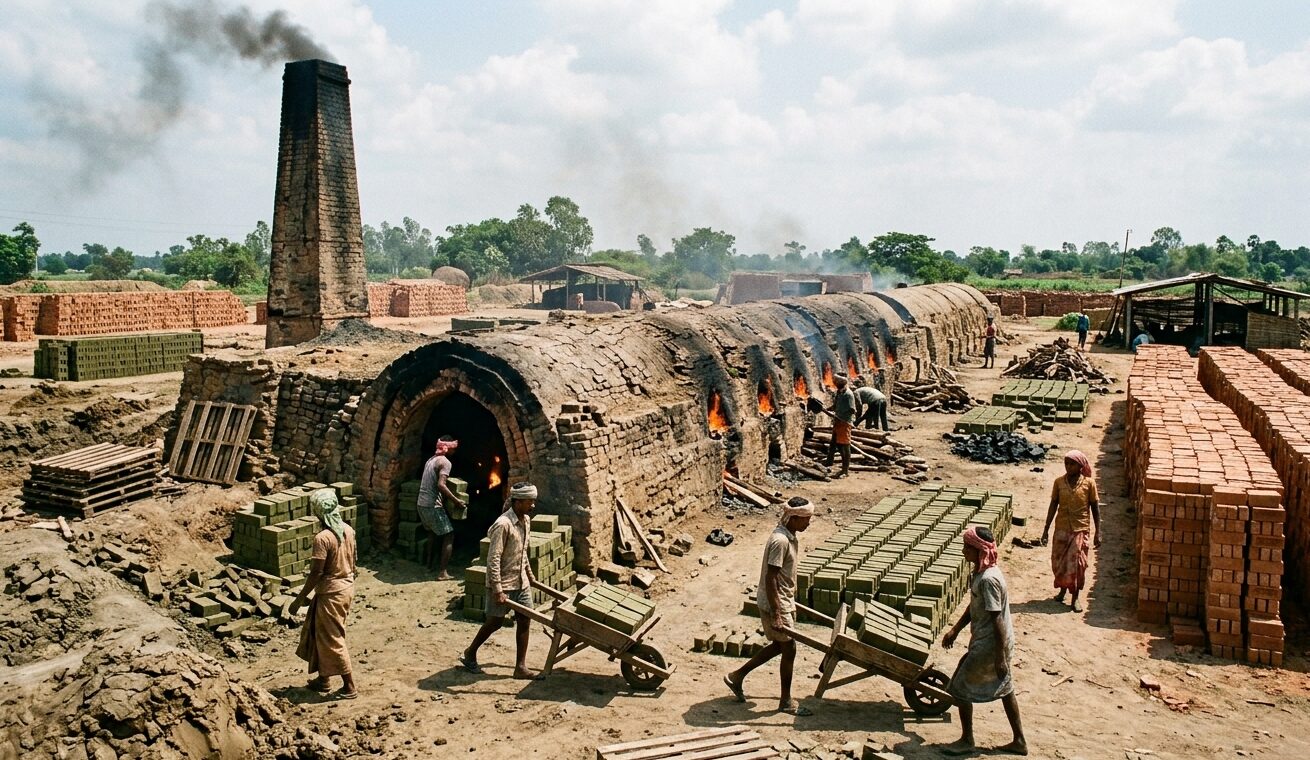
Historically, the architectural adaptation of the brick was heavily influenced by geographic constraints and environmental challenges. By the Middle Ages, hand-molded clay bricks had become the structural foundation of Gothic architecture throughout Europe.
During the Industrial Revolution, local environmental conditions heavily dictated material selection. In Victorian London, the heavy particulate smog necessitated the use of bright red bricks, pigmented heavily with iron oxide, to enhance the visibility of structures in the dense, highly polluted fog. As mechanization rapidly replaced artisanal hand-molding in the late 19th and early 20th centuries, strict dimensional tolerances became achievable, catalyzing the widespread adoption of structural masonry for massive commercial applications.
Archival records from the Building Technology Heritage Library illustrate this rapid diversification. By 1880, manufacturers like Waldo Brothers in Boston were standardizing corbelled and molded bricks for detailed architectural chimneys. By 1904, the Kansas City Hydraulic Press-Brick Company introduced powerful hydraulic press technology, yielding ultra-dense bricks with impeccably smooth surfaces and precise geometric profiles. Shortly thereafter, the introduction of the tapestry brick by Fiske and Co. in 1911 popularized rough-textured, pattern-driven masonry, becoming a defining hallmark of the Arts and Crafts movement.
3. Material Taxonomy and Classification
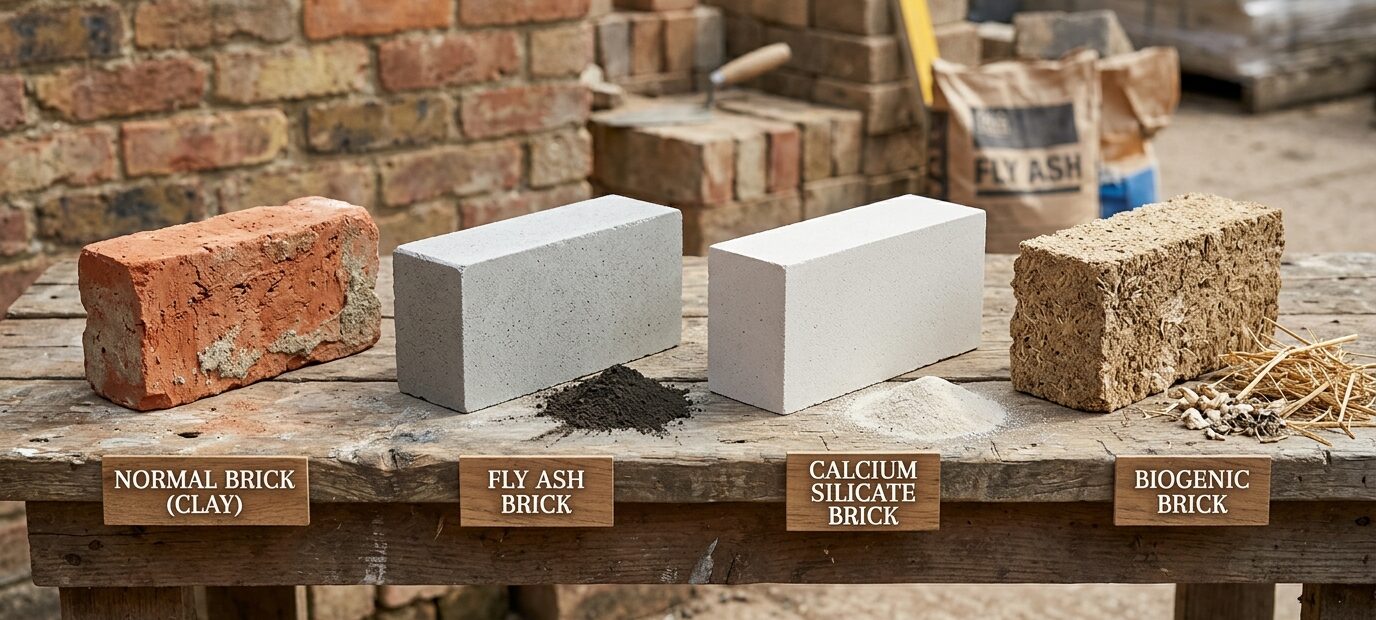
Contemporary structural masonry relies on a diverse taxonomy of materials, engineered to meet highly specific structural, thermal, and chemical performance criteria. While the traditional fired clay brick remains globally dominant, localized supply chains and environmental imperatives have expanded the spectrum of composite units.
In regions governed by British Standards like BS 3921:1985, standard dimensions are strictly calibrated to 215 x 102.5 x 65mm, allowing walls to be accurately quantified in multiples of stretcher lengths.
- Burnt Clay Bricks: The global standard for residential construction, formed from silica and alumina-rich clays and fired to vitrification. In South Asian markets, they are graded into first, second, third, and fourth-class categories based on uniformity. Over-burnt, or Jhama bricks, which become distorted due to extreme vitrification, are frequently crushed for use as coarse aggregate in foundations.
- Fly Ash Bricks: A modern, eco-friendly alternative synthesized from fly ash, which is a byproduct of coal combustion, cement, stone-dust, lime, and water. These units cure mechanically without the need for kiln firing, offering smooth finishes and low water absorption.
- Calcium Silicate (Sand-Lime) Bricks: Manufactured by mixing sand, lime, and a minor percentage of fly ash, these bricks are chemically bound through high-pressure autoclaving. They are highly uniform and utilized where sharp architectural lines are strictly required.
- Concrete Bricks: Cast from a mixture of Portland cement, sand, and water. They possess completely different thermal and moisture expansion coefficients compared to clay bricks, dictating highly specific movement-joint detailing in hybrid masonry walls.
4. Refractory and High-Temperature Bricks
Industrial operations involving extreme thermal cycling and corrosive slags, such as steelmaking, cement production, and petrochemical refining, require highly specialized refractory bricks. These inorganic, non-metallic materials are classified entirely by their chemical behavior in extreme environments.
| Refractory Classification | Primary Chemical Composition | Operational Characteristics and Industrial Applications |
|---|---|---|
| Acidic Refractories | Silica (greater than 93%), Fireclay (hydrated aluminum silicates) | High load-bearing capacity at temperature, up to 2100 degrees Celsius for acid liners like Ganister bricks. Used in glass melting roofs and coke ovens. Degrades rapidly in basic environments. |
| Basic Refractories | Magnesite (85% MgO), Dolomite (high calcium carbonate) | Superior corrosion and chemical resistance. Essential for lining steelmaking furnaces, converters, and vessels interacting with basic slags. Can withstand up to 1600 degrees Celsius. |
| Neutral and Advanced | High Alumina (45-85%), Chromite, Silicon Carbide (SiC), Carbon | Resists both acidic and basic chemical attacks. Known for unparalleled thermal conductivity and extreme abrasion resistance. Heavily utilized in cement kiln transition zones and waste incinerators. |
5. Global Manufacturing Processes
The transformation of raw earth into a durable structural unit is governed by precise thermodynamic and mechanical operations. Modern facilities deploy highly automated systems to optimize throughput, ensure exact dimensional tolerances, and minimize human energy expenditure.
The mechanical properties, internal density, and aesthetic texture of a brick are heavily influenced by its initial forming process. Extrusion (Stiff-Mud Process) is the dominant global method for mass production, wherein clay with a relatively low moisture content is forced through a massive steel die by a powerful auger. This creates a continuous, highly compacted column of clay that is subsequently cut into individual units by tensioned wires. This method allows for the inclusion of internal perforations and complex coring, which drastically reduces the unit’s mass and firing energy while facilitating rapid drying. Molding (Soft-Mud Process) is utilized for clays with much higher moisture content, yielding traditional, sand-finished textures highly valued for heritage architecture. Dry-Pressing compacts clay under extreme hydraulic pressure into steel molds, producing highly dense, dimensionally precise units used for heavy vehicular paving.
6. Kiln Thermodynamics and Emission Dynamics
The vitrification of clay typically occurs between 1800 and 2100 degrees Fahrenheit, a critical thermodynamic threshold where silica and alumina fuse to form a rigid, permanent ceramic matrix. The efficiency of this process is entirely dependent on the architecture of the kiln.
In developing regions, particularly across the Indo-Gangetic plains of South Asia, the traditional Fixed Chimney Bulls Trench Kiln (FCBTK) remains common due to its incredibly low capital requirements. However, it is characterized by notoriously poor combustion efficiency and severe particulate emissions. The transition to Induced Draft Zig-Zag Kilns (IDZK) represents a critical environmental upgrade. By forcing the hot exhaust gases through a tortuous, zig-zag path among the stacked bricks, heat transfer is dramatically improved, reducing Black Carbon emissions by up to 80% and lowering overall production costs.
In advanced global economies, continuous Tunnel Kilns dominate the manufacturing landscape. These kilns consist of a long, stationary heated tunnel through which refractory-lined kiln cars travel continuously, allowing for precise, computerized control of the pre-heating, firing, and cooling zones.
Modern manufacturing facilities have increasingly minimized human intervention. Advanced plants deploy heavy-duty industrial robots equipped with precise pneumatic grippers for hacking (stacking green bricks in complex geometric patterns) and de-hacking. These automated systems calculate setting patterns to maximize the flow of hot gases through the stack, ensuring uniform heat distribution and preventing structural collapse during vitrification.
7. Physical and Structural Properties
The performance of masonry as a structural element is inextricably linked to the intrinsic physical and chemical properties of its constituent units.
Compressive strength is the absolutely defining metric for structural masonry, determining a wall’s capacity to bear superimposed vertical loads. Testing is conducted in accordance with strict methodologies, such as ASTM C67, which dictates that the brick unit must be oriented horizontally during the application of crushing force. Vitrified clay units exhibit exceptional load-bearing capacities, generally ranging from 7 N/mm2 for common non-load-bearing internal partitions, up to 40 N/mm2 for standard engineering bricks, and exceeding 100 N/mm2 for specialized infrastructural applications.
Water absorption, inversely correlated with density and compressive strength, is a critical predictor of long-term durability. High absorption rates indicate a highly interconnected porous matrix, rendering the unit severely susceptible to freeze-thaw degradation. Highly durable engineering bricks are strictly limited to absorption rates below 10%.
Brick masonry is fundamentally non-combustible, having already been subjected to extreme temperatures during manufacture. Fire resistance ratings range from 1 to 4 hours. According to standards such as ACI/TMS 216.1, the fire endurance of a hollow or cored masonry unit is calculated using its equivalent thickness, defined strictly as the solid volume of clay divided by the exposed face area.
The dense mass of brick masonry provides superior acoustic insulation against airborne noise, a property quantified by the Sound Transmission Class (STC) rating. Because sound transmission loss operates on a logarithmic scale, simply increasing the mass of a single-wythe wall yields diminishing returns. Maximum acoustic isolation is achieved through geometric decoupling in cavity wall construction, where two independent wythes of masonry are separated by a minimum 2-inch air gap, preventing low-frequency acoustic vibrations from directly bridging the structural assembly.
8. Advanced Masonry Techniques and Bonds
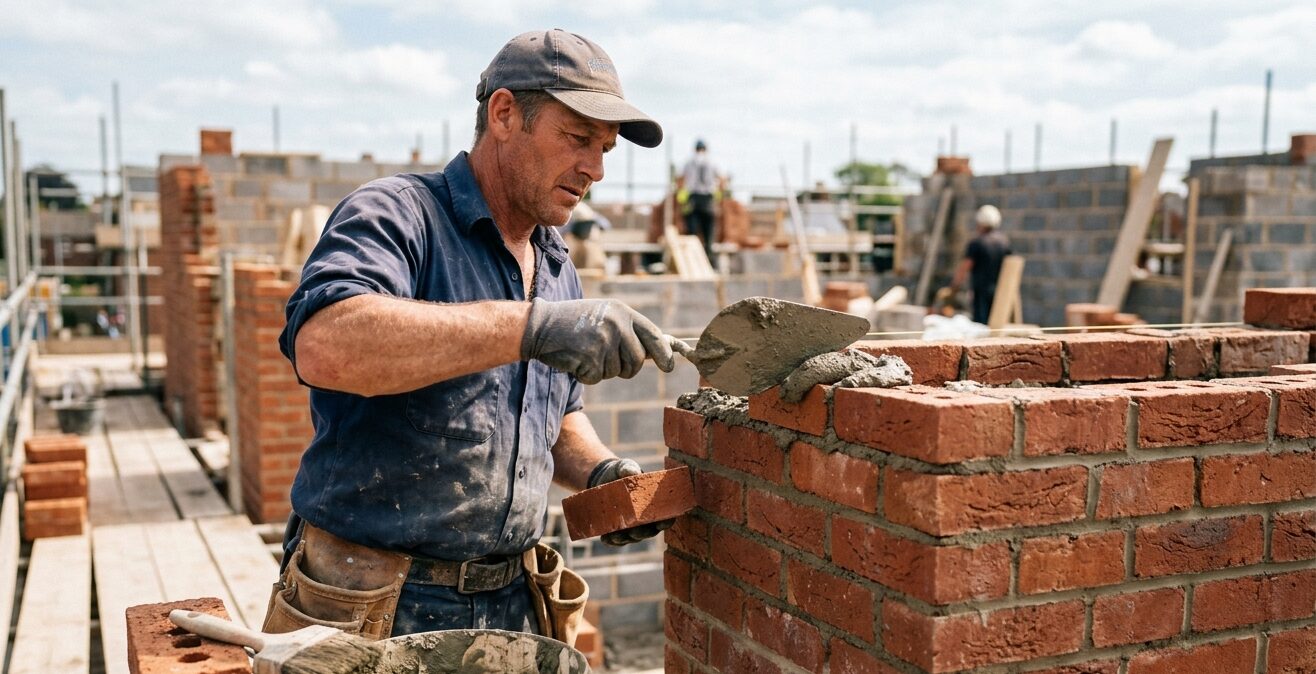
A brick wall is a complex composite system, relying on the structural interaction between the rigid ceramic units and the cementitious matrix binding them. The geometric arrangement of these units is known as a bond.
- Stretcher (Running) Bond: The simplest and most ubiquitous modern bond, consisting entirely of stretchers offset by half a brick per course. Ideal for modern cavity-wall construction.
- English Bond: Alternates complete courses of stretchers and headers. The header courses physically tie multiple wythes together, providing immense transverse strength suitable for heavy load-bearing solid masonry.
- Flemish Bond: Alternates headers and stretchers within the exact same course, creating a woven, highly refined appearance. Variants include the Monk bond and the complex Flemish diagonal bond.
- Decorative Bonds: The Herringbone bond imitates a woven v-shaped pattern for non-structural paving, while Diapering utilizes bricks of contrasting colors to form prominent diamond patterns across large historical facades.
To prevent rising damp from ground moisture, historical masonry techniques employed courses of ultra-dense, low-absorption engineering bricks at the foundation level, forming a distinctive Damp-Proof Course (DPC) that physically halted capillary moisture ascent.
9. The Mortar Dichotomy: Lime vs. Portland Cement
The chemical and mechanical interaction between brick and mortar represents a critical vector for either building longevity or catastrophic structural failure, particularly in heritage architecture.
Prior to the widespread adoption of Portland cement in the 1920s, buildings were constructed using lime-based mortars. Lime mortar possesses a high degree of vapor permeability and relatively low compressive strength. Structural movement, thermal expansion, and foundational shifting were safely absorbed by the soft, flexible mortar, while moisture within the wall migrated outward through the porous joints.
The advent of Portland cement introduced a dense, highly rigid, and impermeable binder. While entirely suitable for modern constructions utilizing hard extruded bricks, applying Portland cement to historic brickwork causes devastating collateral damage. Because the cement is harder and less yielding than the historic brick, structural stresses are transferred directly into the masonry units, causing the soft bricks themselves to shear, crack, and fail. Furthermore, trapped moisture is forced to evaporate through the face of the brick, leading to rapid deterioration during freeze-thaw cycles. Preservationists use destructive acid testing on mortar samples to determine the original binder-to-aggregate ratio before repointing historic structures.
10. Degradation Mechanisms and Structural Pathology
Despite its legendary durability, brick masonry is susceptible to highly specific physicochemical degradation mechanisms, almost entirely mediated by water ingress and thermal cycling.
Water migrating through a masonry system dissolves highly soluble salts present in the clay. When this moisture reaches the exterior surface and evaporates, it leaves behind a crystalline white powder known as efflorescence. While visually objectionable, efflorescence is primarily a benign cosmetic defect. However, if rapid drying conditions force the evaporation to occur beneath the surface of the brick, the salts crystallize within the porous ceramic matrix, a dangerous phenomenon termed subflorescence. The volumetric expansion of these subsurface salt crystals generates immense internal hydrostatic pressure, causing the outer face of the brick to spall or delaminate entirely.
Another critical failure mode involves the oxidation of embedded ferrous metals. When moisture reaches unprotected steel lintels supporting brickwork, the steel inevitably corrodes. The resulting iron oxide occupies significantly more volume than the original steel, a destructive process known as rust jacking. The expansive force of the rusting steel exerts immense upward pressure, fracturing the mortar joints and cracking the surrounding masonry.
Cleaning and restoration protocols must strictly account for environmental conditions. Any cleaning protocols utilizing water must be strictly avoided during or immediately prior to freezing weather. If interstitial water within the brick’s porous matrix freezes, the volumetric expansion of the ice will instantaneously shatter the fired clay.
11. Sustainable Alternatives and Biogenics
The traditional brick manufacturing supply chain imposes a severe ecological burden on the planet. The extraction of raw materials frequently involves the indiscriminate stripping of fertile agricultural topsoil. Furthermore, the combustion of millions of tons of coal in inefficient kilns drives deforestation and releases massive quantities of greenhouse gases.
In response, materials science has pioneered several low-carbon alternatives. Compressed Stabilized Earth Blocks (CSEB) utilize locally sourced subsoil mixed with a minimal fraction of cement or lime stabilizer. They are formed under high mechanical compression and air-cured, completely eliminating the energy-intensive firing phase. Eco-Bricks and Recycled Aggregates integrate industrial waste, such as Ground Granulated Blast Furnace Slag (GGBS), discarded plastics, and agricultural waste into the binding matrix.
The vanguard of sustainable masonry involves the application of biotechnology to grow bricks at ambient temperatures. Microbially Induced Carbonate Precipitation (MICP) utilizes urease-positive microorganisms, such as the bacterium Sporosarcina pasteurii, to catalyze a biochemical reaction. The microbes metabolize urea, producing carbonate ions and ammonia. When introduced to a calcium source, the process precipitates solid calcium carbonate directly between aggregate grains, cementing them together into a rigid bio-brick. This process effectively turns the building material into a permanent atmospheric carbon sink.
12. Global Economics and Trade Dynamics
The global brick market represents a colossal, highly fragmented segment of the heavy construction materials industry. As of 2024, estimates value the global brick market at USD 1.74 trillion, with projections indicating steady growth to approximately USD 2.36 trillion by 2034, reflecting a Compound Annual Growth Rate of roughly 3.09%.
Because bricks possess a very high weight-to-value ratio, the industry has historically been highly localized, with products consumed within 500 miles of their origin to minimize freight costs. However, high-value architectural and refractory bricks are actively traded internationally. The Asia-Pacific region dominates both production and consumption, accounting for over 50% of global demand, driven by rapid urbanization in China and India.
The most disruptive economic force currently facing the global masonry supply chain is the implementation of the European Union’s Carbon Border Adjustment Mechanism (CBAM). Entering its definitive operational stage on January 1, 2026, CBAM functions as an environmental tariff, applying a massive carbon fee to imported goods based on their embodied emissions. Developing nations relying on highly polluting kilns will face massive tariffs when exporting to the EU, rendering their products economically uncompetitive and forcing a global acceleration toward low-carbon manufacturing.
13. International Standards and Frameworks
To ensure structural safety, environmental compliance, and market interoperability, brick manufacturing is governed by strict national and international standardization frameworks.
| Regulatory Standard | Governing Body | Primary Scope and Technical Focus |
|---|---|---|
| ASTM C216 / C62 | ASTM International (North America) | Classifies bricks by weather resistance: Grade SW (Severe Weathering, requiring exhaustive freeze-thaw testing) and Grade MW. Dictates dimensional tolerances as FBX, FBS, and FBA. |
| EN 771-1 | European Committee for Standardization | Mandatory for EU markets, requiring CE marking. Classifies frost resistance into F2 (High exposure), F1, and F0. Places heavy emphasis on environmental declarations. |
| BS 3921 / BS 5628 | British Standards Institution | Traditional standards defining exact format dimensions, compressive strength ranges, and strict soluble salt limitations to prevent efflorescence. |
| GB/T 5101 | Standardization Administration of China | Governs fired common bricks in China. The GB prefix designates a mandatory national standard required for customs clearance. |
14. Frontier Innovations: The Future of Masonry
The intersection of material science, robotic automation, and aerospace engineering is rapidly pushing masonry beyond its traditional architectural boundaries, evolving the brick from a passive structural element into an active, highly engineered technology.
Researchers at Washington University have successfully altered the internal microstructure of the standard red clay brick to function as a supercapacitor, creating energy-storing smart bricks. Through a process of vapor-phase polymerization, the iron oxide pigment in the brick triggers the formation of a highly conductive polymer network known as PEDOT. The resulting smart brick serves as an ion sponge capable of storing and discharging electricity to directly power devices, surviving up to 10,000 charging cycles underwater.
The integration of 3D printing into construction is shifting the paradigm of geometric limitations. Additive manufacturing utilizes robotic arms to extrude proprietary mortars, allowing for the rapid fabrication of customized masonry structures. Simultaneously, the drive toward circular construction has led to the development of 3D-printed, reconfigurable glass masonry. Utilizing the Glass 3D Printer 3 (G3DP3) developed by MIT spinoff Evenline, molten recycled glass is deposited into interlocking, figure-eight shapes structurally analogous to Lego bricks, which can be disassembled and reused indefinitely.
15. Extraterrestrial Masonry and Space Habitats
As international space agencies prepare for permanent human outposts on the Moon and Mars by the 2030s and 2040s, the exorbitant cost of launching heavy building materials into orbit has necessitated the development of In-Situ Resource Utilization (ISRU).
Extraterrestrial masonry seeks to use lunar and Martian surface dust, known as regolith, as the primary aggregate for construction. Because the vacuum and extreme cold of space prevent the use of traditional liquid-based cementitious binders, autonomous additive construction relies on advanced sintering techniques. Specialized robotic rovers utilize microwave arrays, concentrated solar energy, or high-powered infrared lasers to heat the regolith just below its melting point, fusing the powder particles together layer by layer. Concepts such as MarsCrete aim to use these localized methods to construct vital radiation shielding, launch pads, and human habitats, proving that the ancient principles of masonry will fundamentally underwrite humanity’s expansion into the solar system.