
The integrity of global democratic elections relies on a complex web of security measures. Today, while many nations depend on biometric databases, encrypted voting machines, and digital registries, one of the most powerful and universally recognized safeguards remains surprisingly low-tech: indelible electoral ink. Known for its distinctive, stubborn purple-black stain, this simple chemical dye acts as an immediate, highly visible, and virtually infallible deterrent against voter impersonation, double voting, and widespread electoral fraud.
The journey to modern ballot security has evolved over centuries. In the 1830s, voting was often a deliberately public act, symbolized by transparent glass ballot boxes. However, rampant vote-buying and voter intimidation during the late nineteenth century forced democracies to adopt the secret ballot to protect citizens from coercion and bribery. While this shift to secrecy successfully reduced election violence, it created a dangerous new administrative paradox: how could a government guarantee that a citizen had not voted multiple times if their actual ballot was completely untraceable?
The Power of Indelible Ink in Democracy
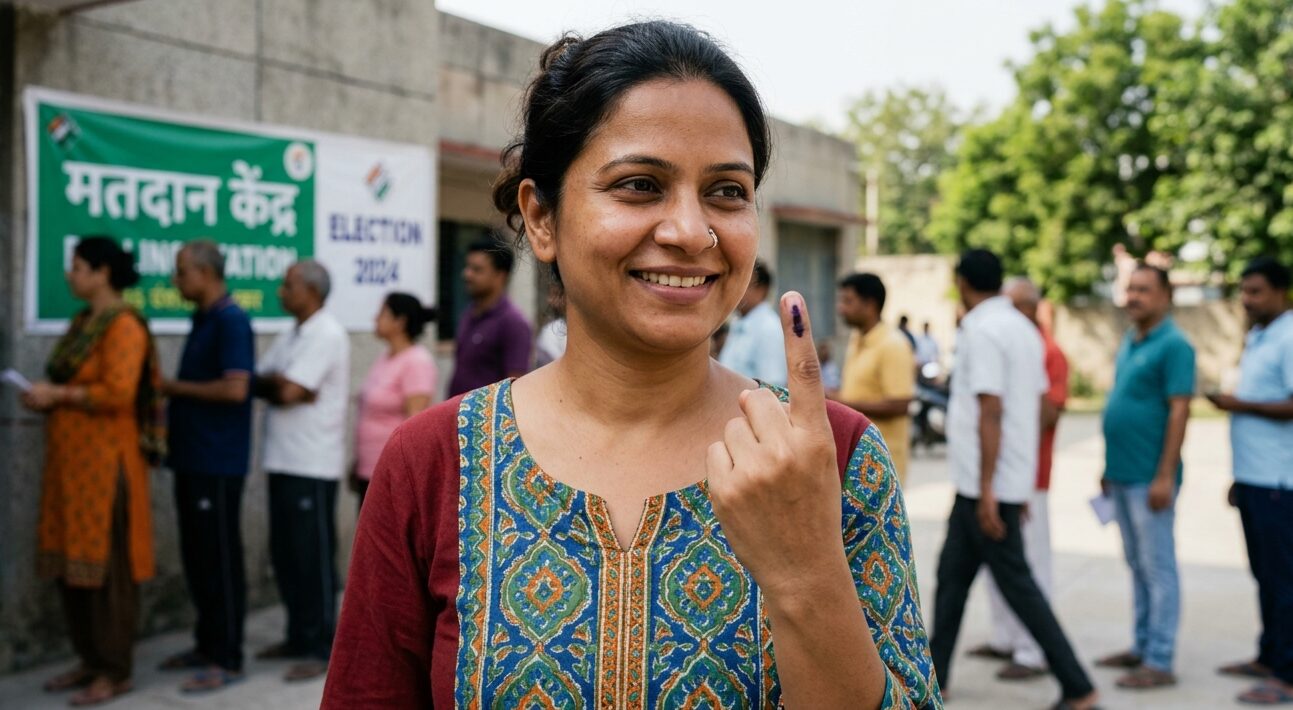
Indelible ink plays a fascinating role in modern democracy. In a world filled with advanced technology, it is incredible that a simple chemical stain remains the most trusted safeguard against election fraud for billions of people. That purple mark on a voter’s finger is more than just a stain, it is a visible symbol of fairness and the collective voice of citizens.
The mark carries deep historical weight because it balances two important ideas. While the ballot itself stays secret, the ink provides public proof of civic duty. It reminds us that democracy is built not only on complex systems but also on simple, reliable traditions that protect the integrity of elections.
| Indelible Electoral Ink: Scientific & Administrative Profile | |
|---|---|
| Primary Active Chemical | Silver Nitrate (AgNO3) |
| Chemical Concentration | Typically 7% to 25% |
| Mechanism of Action | Protein-binding & Photochemical reduction |
| Original Development Team | CSIR-National Physical Laboratory (NPL), India |
| Scientists | Dr. Salimuzzaman Siddiqui, Dr. M. L. Goel |
| Authorized Manufacturer (India) | Mysore Paints and Varnish Limited (MPVL) |
| Standard Vial Capacity | 5ml (Covers approximately 700 voters) |
| Standard Cost per Vial | ₹174 (Approximately $2.10 USD) |
| Statutory Framework | Rule 49K (Conduct of Elections Rules, 1961) |
| Application Target | Left Forefinger (Nail bed to first joint) |
| Duration of Visibility | 72-96 hours (Skin), 2-4 weeks (Nails) |
| Major Global Competitors | SICPA (Switzerland), Sussex Ink (UK) |
| Occupational Health Hazard | Irritant Contact Dermatitis (ICD) |
| Alternative Public Health Uses | Polio Vaccination Campaigns, COVID-19 Quarantine Tracking |
| Official Governance Links |
Election Commission of India (ECI) Mysore Paints & Varnish Ltd. |
1. The Secret Ballot Paradox and the Need for Physical Verification
The secret ballot inherently created a new administrative vulnerability. If the act of voting was entirely untraceable to the individual, how could the state ensure that a single individual did not cast multiple untraceable votes across different jurisdictions? In environments where standardized, institutionalized identity documents were either unavailable, easily forged, or unevenly distributed among the populace, the state required a physical, unforgeable proxy for voter verification.
Electoral ink emerged as the definitive solution to this paradox. Often referred to as voter’s ink, electoral stain, or phosphoric ink, this highly specialized formulation is applied primarily to the index finger of an elector immediately after they have exercised their franchise, ensuring that while the contents of their ballot remain perfectly secret, the fact of their participation is undeniably public. Once applied, the ink sets rapidly and resists all conventional methods of eradication, ensuring that an individual cannot traverse multiple polling stations to cast illicit, duplicate ballots.
Beyond its utilitarian function as an anti-fraud mechanism, the indelible ink has evolved into a potent sociocultural symbol of democratic participation, civic duty, and absolute political equality. From the world’s most populous democracy in India (which recently facilitated the participation of nearly 970 million voters) to nations undergoing fragile, transitional elections in Africa and the Middle East, the inked finger operates as a universal equalizer. Whether an individual is a prominent cinematic celebrity, an influential national politician, a corporate executive, or a disenfranchised rural citizen, the indelible mark renders them entirely identical in the context of the electoral franchise.
2. Historical Origins: The Genesis of Electoral Ink in India
To comprehensively understand the development and global proliferation of indelible ink, one must examine the geopolitical and domestic anxieties of a nascent independent India in the mid-twentieth century. In August 1947, India emerged from the shadow of British colonial rule to become a free nation, a transition famously heralded by its first prime minister, Jawaharlal Nehru. However, the new nation faced the monumental, unprecedented task of organizing the largest democratic exercise in human history amidst the chaotic aftermath of Partition, massive population displacements, and profound socio-economic inequalities.
As the new government sought to operationalize universal adult suffrage for its vast population, a critical logistical vulnerability became immediately apparent: the total absence of a reliable, universal citizen identification system. The fledging democracy grappled with the immense challenge of ensuring free and fair elections while preventing fraudulent voting and electoral manipulation. Traditional methods of voter identification proved fundamentally inadequate against the scale of potential manipulation, opening the door to widespread impersonation and double voting. In this climate of uncertainty, the Election Commission of India (ECI) recognized that a physical, chemical solution was urgently required to safeguard the integrity of the democratic process. The task of developing this scientific solution was officially delegated to the Council of Scientific and Industrial Research (CSIR).
3. The Pioneering Role of the National Physical Laboratory (NPL)
Within the expansive CSIR framework, the challenge was taken up by the National Physical Laboratory (NPL), a constituent laboratory situated in New Delhi. Specifically, the Ink Development Unit (IDU) of the NPL was tasked with formulating a secure, semi-permanent marking agent. Prior to this historic mandate, the IDU, under the leadership of Dr. Salimuzzaman Siddiqui, was primarily engaged in the more mundane manufacture of postal stamping inks and conventional printing materials. Historical records indicate that the IDU supplied approximately 6.8 tons of standard stamping ink to the Indian Posts and Telegraphs department in the year 1949.
The urgency of the impending national democratic mandate necessitated an immediate pivot in research focus. A dedicated Chemistry Division was established at the NPL, featuring a team of pioneering scientists including Dr. M. L. Goel, Dr. B. G. Mathur, Dr. V. D. Puri, and several other young chemists. The research imperative was highly specific and chemically demanding: the team needed to invent a liquid concoction that could be applied easily to human skin, dry almost instantaneously to prevent smudging or transfer, and resist all known aqueous solvents, lipid-based soaps, and abrasive removal attempts for a period sufficient to outlast the multi-phase election cycle.
Through rigorous experimentation with various chemical compositions and extensive dermatological testing, the NPL scientists achieved a definitive breakthrough by isolating silver nitrate (AgNO3) as the primary active ingredient. They discovered that a specific aqueous solution of silver nitrate, when combined with proprietary solvents and photosensitive agents, would react aggressively with the protein structures of human skin and nails upon exposure to ultraviolet light (sunlight). The resulting deep purple or black stain proved stubbornly resistant to any form of washing, becoming a permanent biological marker that would only fade as the skin cells naturally regenerated.
4. Chemical Architecture and Mechanism of Action
The unparalleled efficacy of electoral ink does not stem from advanced synthetic dyes, but rather from its sophisticated exploitation of fundamental inorganic chemistry, photochemistry, and human biology to ensure absolute permanence. While the exact stoichiometric ratios, solvent mixtures, and proprietary additives remain highly classified trade secrets held by authorized manufacturers, the foundational chemical mechanisms governing the ink’s behavior are well understood within the broader scientific and dermatological communities.
The Primary Agent: Silver Nitrate (AgNO3)
The primary active agent in all industry-standard electoral ink formulations is silver nitrate, an inorganic compound denoted by the chemical formula AgNO3. In its pure, unadulterated state, silver nitrate manifests as a colorless crystalline solid with a molar mass of 169.872 g/mol and a density of 4.35 g/cm³ at standard room temperature. It possesses a melting point of 209.7 °C and is highly soluble in water, dissolving at a rate of 256 g/100 mL at 25 °C, as well as being soluble in acetone, ammonia, ether, and glycerol. Historically, ancient alchemists who associated the element silver with the moon referred to this compound as “lunar caustic” due to its ability to severely burn and cauterize human tissue at high concentrations.
In the specific context of electoral ink, the concentration of silver nitrate utilized typically ranges from 7% to 25%, depending entirely upon the specific requirements of the contracting electoral management body, the anticipated environmental conditions, and the desired longevity of the resulting stain. The overall potency, depth of coloration, and resilience of the stain are directly proportional to the volumetric concentration of silver nitrate present in the solution.
5. The Dual Photochemical and Biological Reaction
The enduring permanence of indelible ink is not achieved through simple topical pigmentation or superficial staining, as is the case with conventional commercial dyes or markers. Instead, it relies on a complex, two-step reactive process involving both rapid biological binding and subsequent photochemical reduction.
Firstly, upon application to the epidermis and the keratinous structure of the human fingernail, the silver nitrate immediately and aggressively interacts with the skin’s inherent protein components. The positively charged silver ions (Ag+) bind covalently to the amino acids and sulfur groups present in the keratin proteins. This rapid chemical bonding effectively integrates the silver directly into the cellular matrix of the skin and the hard nail plate, making it an intrinsic part of the tissue and entirely preventing it from being dissolved or washed away by superficial aqueous solutions or lipid-based commercial solvents.
Secondly, and simultaneously, the compound undergoes a rapid photosensitive reduction. Upon exposure to ambient ultraviolet (UV) radiation from natural sunlight, the photolytic reaction reduces the bound silver nitrate into elemental silver and dark silver oxide nanoparticles. This chemical reduction manifests visually as a highly pigmented, dark purple or deep black stain that develops over the course of several minutes. Because the silver is structurally bound to the proteins of the body, the resulting stain cannot be erased through any known chemical means without simultaneously destroying the underlying human tissue.
The mark left on the delicate cuticle and surrounding skin is only removed organically over time as the external epithelial cells naturally die, slough off, and are replaced by new epidermal layers (a continuous biological process that generally takes between 72 to 96 hours). The application to the hard fingernail, however, ensures a vastly extended duration of visibility, which is why electoral guidelines mandate specific application to the nail bed. The ink applied to the inert nail plate cannot be washed away and remains starkly visible until the nail physically grows out beyond the distal nail fold and is mechanically clipped off. Depending on the individual voter’s rate of nail growth, this anatomical reality ensures the mark persists for a period of two to four weeks, well beyond the timeframe of any standard, multi-phase national election.
6. Rapid Solvents, Biocides, and Evaporation Dynamics
A high-functioning electoral ink designed for mass deployment requires more than just an active staining agent. To be viable in the chaotic, rapid-throughput environment of crowded polling stations, the ink must dry almost instantaneously to prevent accidental smudging or the intentional transfer of the wet ink to un-inked voters. Therefore, the proprietary formulations include highly volatile, alcohol-based solvents. These specialized solvents evaporate rapidly upon contact with the ambient air and the body heat of the voter, leaving the active silver nitrate firmly and instantly bonded to the skin.
Furthermore, because the ink is frequently applied to tens of thousands of voters using shared, communal applicators (such as reusable brushes or sponge-insert dipping bottles), there is a significant, inherent risk of cross-contamination and the rapid transmission of bloodborne or topical pathogens. To mitigate this severe epidemiological risk, industry-standard electoral stains incorporate powerful biocides into the liquid matrix, ensuring that ambient bacteria and viruses are eradicated within the vial and not transferred between individuals during the electoral process.
7. The Mythology of Eradication and Subversion Tactics
Given the incredibly high political and economic stakes of national electoral contests, the presence of indelible ink naturally invites sophisticated attempts at subversion. Over the decades, various myths, urban legends, and illicit methodologies have emerged detailing supposed methods to eradicate or neutralize the ink to facilitate double voting.
A highly persistent, scientifically flawed myth suggests that natural acidic agents, such as highly concentrated lemon juice, can dissolve or bleach the electoral ink. This misconception is largely derived from the elementary science of traditional “invisible inks” utilized in espionage or children’s experiments. Invisible inks are typically composed of organic, carbon-based compounds that remain entirely transparent when dry and oxidize (turn brown) when exposed to heat. This thermal degradation of organic carbon has absolutely no chemical relevance to the inorganic, photosensitive, protein-binding chemistry of silver nitrate. Lemon juice, lacking the ability to sever covalent bonds, cannot break the ionic bonds formed between the heavy silver ions and the keratin proteins of the human epidermis.
Attempts to rapidly remove the ink using harsh industrial solvents (such as concentrated bleach or industrial acetone) or abrasive mechanical friction (such as sandpaper, pumice stones, or wire brushes) are not only futile but present severe health risks. Because the silver is deeply embedded within the stratum corneum, aggressive attempts to scrub away the stain inevitably result in the physical removal of the skin itself, leading to severe excoriations, painful lacerations, and chemical burns.
A more sophisticated, premeditated tactic involves the deliberate neutralization of the ink prior to its photochemical setting. Malicious actors may attempt to pre-apply heavy lipid-based oils, industrial greases, or petroleum jelly to their index finger, creating a hydrophobic barrier intended to block the aqueous silver nitrate solution from absorbing into the protein matrix. Anticipating this precise vulnerability, statutory electoral protocols explicitly mandate that polling officers meticulously inspect the finger and physically wipe the voter’s digit with a clean piece of cloth to remove any oily or greasy substances before applying the ink, ensuring maximum chemical penetration.

8. Mysore Paints and Varnish Limited (MPVL) and the Sovereign Monopoly
The massive production, secure storage, and complex logistical distribution of electoral ink represent a highly specialized niche within the global chemical and printing industries. The market is effectively dominated by a select few corporate entities that have successfully navigated the formidable matrix of proprietary chemistry, sovereign government contracting, and international security logistics.
The undisputed, historic titan of the indelible ink industry is Mysore Paints and Varnish Limited (MPVL). The enterprise was originally established in 1937 by Maharaja Krishnaraja Wadiyar IV under the nomenclature Mysore Lac and Paints Limited, primarily intended to manufacture standard industrial paints, sealing waxes, and polishes. Following Indian independence in 1947, the entity transitioned into a public sector company, owned and operated entirely by the Government of Karnataka. The company’s trajectory was permanently altered in 1962 when the Election Commission of India granted MPVL the exclusive, sovereign authorization to manufacture the highly classified, NPL-formulated indelible ink.
Today, MPVL remains the absolute sole authorized supplier of electoral ink within the Republic of India. This legally enforced monopoly strictly prohibits private individuals, unauthorized commercial entities, or foreign governments from purchasing or possessing the official Indian election ink without explicitly sanctioned sovereign contracts. The industrial scale of MPVL’s operations is staggering, meticulously scaled to meet the unparalleled demands of the world’s largest democratic franchise.
| Operational Metric | Details and Capacity |
|---|---|
| Total Registered Electorate Serviced | ~969 to 970 Million Individuals |
| Total Volume of Vials Shipped | 2.65 to 2.7 Million Vials |
| Peak Daily Production Target | 80,000 bottles daily |
| Standard Cost per Electoral Vial | ₹174 (Approximately $2.10 USD) |
| Voter Capacity per Single Vial | Approximately 700 voters per 5ml vial |
| Estimated Electoral Revenue | > $7 Million USD (Approx. ₹55 Crore) |
| Operational Staffing (Peak) | Approx. 120 outsourced personnel |
The distribution of the ink within the massive Indian subcontinent operates on a decentralized, state-based procurement model. Individual state electoral commissions independently engage with MPVL based on their specific demographic requirements and polling station density. For instance, the highly populous northern state of Uttar Pradesh commands the largest volume of orders by a massive margin, while smaller, remote island territories like Lakshadweep necessitate highly minimal supplies, occasionally submitting orders for as few as 110 vials.
MPVL’s formidable influence, however, transcends the borders of the Indian subcontinent. The company is a major, trusted exporter, supplying its proprietary indelible ink to over 30 sovereign countries globally. Its international clientele includes nations across diverse geographies and developmental stages, executing major orders for governments in Canada, Mongolia, Malaysia, Cambodia, South Africa, and the Maldives. This robust, highly lucrative export pipeline cements MPVL’s status as a critical, irreplaceable node in global democratic infrastructure. Despite its dominance in the ink sector, the company actively seeks to diversify its portfolio to ensure long-term sustainability, expanding into decorative paints, chemical-resistant enamels, primers, distempers, and specialized postage stamp cancellation inks.
9. International Competitors and Security Ink Conglomerates
While MPVL holds a virtual, unshakeable monopoly in the Indian market and a significant share of the export sector, the broader international arena features several prominent competitors specializing in high-security inks, forensic markers, and comprehensive electoral supplies. The deployment of physical indelible ink remains particularly prevalent in the emerging democracies of Africa, Southeast Asia, and the Middle East, where biometric infrastructure is still developing. Industry analysis indicates a massive, sustained demand for electoral marking products. Between 2017 and early 2018, an estimated 121 million voters across 11 different African nations participated in elections requiring indelible ink. To service an electorate of this magnitude, the African market alone generates a demand estimated at roughly 2,000 liters of bulk indelible ink per major election cycle, typically packaged in 5ml marker pens or dipping bottles ranging up to 100ml.
To meet this specialized global demand, several other highly sophisticated corporations have developed proprietary electoral stains and security solutions:
- SICPA (Switzerland): Operating out of Switzerland, SICPA is universally recognized as a global heavyweight in the production of highly classified security inks. While their core business revolves around providing proprietary intaglio, offset, and optically variable inks for sovereign banknotes, identity documents, visas, and secure biometric passports, SICPA has aggressively expanded into holistic electoral security. Recognizing the limitations of purely physical ink, SICPA provides comprehensive solutions that integrate traditional overt security inks with covert forensic markers and cutting-edge digital verifications, such as blockchain-enabled protection of voter registries developed in conjunction with cybersecurity firms like Guardtime.
- Sussex Ink / Election-Ink.co.uk (United Kingdom): Operating as a specialized, niche provider, this UK-based supplier focuses explicitly on UN-approved election and voting inks. They distribute their products to electoral management bodies worldwide, providing both standard silver-nitrate indelible dipping inks and advanced, invisible fluorescent voting inks that only appear under specific UV wavelengths, catering to local elections, national referendums, and mass humanitarian vaccination programs.
Beyond firms dedicated exclusively to national security, the top tier of international commercial printing ink manufacturers possess the advanced chemical engineering capabilities, massive R&D budgets, and global supply chains required to produce specialized marking dyes.
| Global Rank | Company Name | Headquarters | Primary Industrial Expertise |
|---|---|---|---|
| 1 | DIC Corporation (incl. Sun Chemical) | Japan / USA | Commercial, Packaging, Specialty |
| 2 | Flint Group | UK / Luxembourg | Flexographic, Gravure, Security |
| 3 | Sakata INX | Japan | Commercial Offset, Packaging |
| 4 | Siegwerk | Germany | Packaging, Specialized Security |
| 5 | Toyo Ink Group (artience Co. Ltd) | Japan | Commercial, UV, Specialty |
| 6 | hubergroup | Germany | Commercial Offset, Security |
| 7 | ALTANA AG | Germany | Specialty Chemicals, Metallic Inks |
| 8 | FUJIFILM | Japan | Digital, Inkjet, Specialty |
| 9 | SICPA | Switzerland | Sovereign Security Inks, Intaglio |
| 10 | T&K Toka | Japan | UV Inks, Commercial |
10. The North American Paradigm: Hardware over Chemistry
In advanced jurisdictions like the United States and Canada, physical indelible ink is rarely, if ever, utilized due to the presence of robust, standardized voter registration databases and real-time electronic poll books. Instead of relying on a chemical mark on the body, electoral security relies heavily on highly regulated electronic voting hardware firms such as Election Systems & Software (ES&S) and Dominion Voting Systems.
These corporations operate under strict scrutiny, with their voting machine components produced in facilities certified under strict International Organization for Standardization (ISO) protocols. While they do not produce chemical ink, they share the identical operational mandate: guaranteeing the absolute integrity, verifiability, and non-duplication of the cast ballot. The intense public scrutiny surrounding the procurement and security of machines from Dominion and ES&S mirrors the stringent physical security protocols applied to indelible ink in the developing world, underscoring the universal need for uncompromising security in the democratic process.
11. Strict Administrative Protocols and Anatomical Hierarchy
The deployment of indelible ink is never a haphazard or entirely discretionary process; it is governed by meticulously codified legal rules, precise administrative protocols, and stringent penal codes designed to ensure absolute physical consistency, prevent accidental disenfranchisement, and mitigate systemic fraud.
In India, the application of indelible ink is statutorily mandated and precisely detailed by Rule 49K of the Conduct of Elections Rules, 1961. This seminal legislation specifies not only that the ink must be applied to every voter, but dictates precisely where and how it must be administered to achieve maximum security. The primary, default target for application is the left forefinger (index finger) of the elector.
The Election Commission of India dictates a highly specific physical methodology for the application to maximize the ink’s resilience against abrasive removal. Using a specialized, standardized brush supplied directly within the MPVL polling kits, the presiding polling official is strictly instructed to paint a continuous, unbroken line of ink starting from the top (free edge) of the nail, dragging the brush down to the bottom of the first joint of the left forefinger. This linear application ensures the ink heavily coats the cuticle (the highly porous area where the keratinous nail meets the skin), making it structurally impossible to remove the stain without inflicting severe, highly visible tissue damage.
However, comprehensive electoral frameworks must account for the vast diversity of the human condition, specifically addressing physical disabilities, congenital conditions, and traumatic amputations. Rule 49K anticipates these complex scenarios by establishing a strict, legally binding anatomical hierarchy for ink application:
| Anatomical Condition of the Elector | Legally Designated Marking Location |
|---|---|
| Standard Anatomy | Left Forefinger (Index Finger) |
| Missing Left Forefinger | Any existing, intact finger on the Left Hand |
| Missing all fingers on Left Hand | Right Forefinger (Index Finger) |
| Missing Right Forefinger (and all Left) | Any existing finger on the Right Hand, starting sequentially from the forefinger |
| Missing all fingers on both hands | The furthest extremity (stump) of the left or right arm that the elector possesses |
Furthermore, within polling stations utilizing Electronic Voting Machines (EVMs), the polling official in charge of the Control Unit is legally obligated to physically inspect and verify that the indelible ink mark is intact, wet, and clearly visible on the elector’s designated finger before they are permitted to press the final ballot button. If an elector aggressively refuses to allow their finger to be inspected, refuses the application of the ink, or actively attempts to immediately wipe off or chemically neutralize the ink in the presence of the officer, they are immediately denied the right to vote. Special provisions exist for blind or infirm voters, allowing a companion to assist them, but strict regulations ensure the companion cannot assist more than one voter, a rule indirectly enforced by the inking process.
12. Secure Storage and Severe Penalties for Unlawful Possession
Because the indelible ink is the ultimate, unchallengeable arbiter of a voter’s physical eligibility to cast a ballot, it is classified by electoral commissions as a highly sensitive, restricted security asset. The storage, transportation, and auditing of the ink vials are subjected to high-security protocols completely analogous to those governing the movement of the actual ballot papers and the physical EVMs.
From a chemical logistics perspective, indelible ink is an active oxidant due to the presence of silver nitrate, classifying it legally and chemically as a hazardous and potentially flammable material. Long-term storage necessitates specific environmental controls; the photosensitive nature of the compound requires it to be stored in opaque containers and shielded from sustained light exposure to prevent the premature photochemical degradation of the active silver ions. Unused ink with silver nitrate content poses a disposal challenge, requiring technical processes such as high-temperature burning to recycle the silver for use in ceramics or cloth tinctures, rather than simple disposal into municipal waste systems.
The unauthorized procurement, possession, distribution, or application of official electoral ink by private citizens, political operatives, or unauthorized commercial entities is strictly prohibited and constitutes a severe, prosecutable electoral offense in India. Under the stringent provisions of the Representation of the People Act (1951), fraudulently defacing official documents, attempting to illicitly procure restricted electoral materials to manipulate voting demographics, or interfering with the voting process attracts heavy penal consequences.
The law clearly differentiates between civilian offenses and offenses committed by officials on duty. Any individual found attempting to illegally possess or distribute the ink is subject to criminal prosecution resulting in imprisonment for a term that may extend up to six months, alongside financial fines, and these are designated as cognizable offenses. However, if a returning officer, presiding officer, or any polling clerk employed on official duty willfully aids in the non-application, misapplication, or illicit distribution of the ink, the breach of public trust results in a dramatically enhanced penalty of imprisonment extending up to two years.
13. Dermatological Toxicity and Occupational Health Hazards
Despite its widespread global acceptance, its romanticized status as a symbol of democracy, and its critical role in maintaining electoral integrity, the highly reactive chemical composition of indelible ink carries inherent, documented physiological risks. Silver nitrate is fundamentally a caustic substance; in clinical medical settings, high-concentration silver nitrate (specifically formulations at 25% or higher) is utilized deliberately as a chemical cauterizing agent to burn away excess granulation tissue or warts. While the concentrations formulated in electoral ink are lower (ranging from 7% to 25%) and are generally deemed dermatologically safe for a standard, singular, highly localized application to the nail bed, the substance is far from entirely benign.
The Pathogenesis of Irritant Contact Dermatitis (ICD) and Chemical Burns
Recent clinical literature and peer-reviewed dermatological studies have documented numerous cases of adverse, acute skin reactions directly linked to the topical exposure of indelible electoral ink, primarily manifesting clinically as severe Irritant Contact Dermatitis (ICD). ICD occurs when a caustic chemical agent structurally damages the epidermal barrier faster than the skin can repair it, leading to a profound, localized inflammatory response, cellular necrosis, and pain. Clinical observations conducted by dermatologists in Eastern India following a major election cycle meticulously documented the specific symptomatology across diverse patient demographics.
| Clinical Manifestations | Observed Patient Demographics and Impacted Anatomy |
|---|---|
| Acute Erythema (Redness) and Swelling | Voters and Polling Officers (Index/Middle Fingers) |
| Painful Blisters, Vesicles, and Induration | Predominantly Polling Officers (Fingertips and Palms) |
| Superficial Skin Erosions and Peeling | Voters (Index and Middle fingers) |
| Partial-Thickness Chemical Burns | Cases involving accidental bulk spillage (Feet, Thighs) |
The severity of the resulting dermatological damage is directly, proportionally correlated to the total volume of ink applied, the duration of exposure prior to the evaporation of the solvents, and the frequency of physical contact. For the average civilian voter, a singular, controlled brush stroke across the tough keratin of the nail bed poses minimal, negligible risk. However, election polling officers face severely compounded occupational hazards. Tasked with applying the highly reactive ink to hundreds or thousands of citizens over gruelling, extended shifts, these officers frequently experience cumulative, accidental exposure on their own fingertips, palms, and cuticles. The repeated micro-exposures to the caustic silver nitrate over a 12-hour period lead to painful blistering, severe induration, and the necrotic erosion of the epidermis, requiring treatment with topical corticosteroids and antihistamines.
Furthermore, accidental bulk spillage events present acute medical emergencies. Clinical reports detail harrowing cases where both polling officers and voters sustained severe, partial-thickness burn-like lesions on their thighs, forearms, and the dorsum of their feet due to vials tipping over or being violently manhandled during polling station disruptions by miscreants. In one highly publicized and documented clinical case, a 40-year-old deaf and mute security guard stationed at a polling booth accidentally lay down to sleep on a spilled pool of ink. This resulted in severe facial ICD characterized by extensive black staining, massive skin peeling, erosions, and an intense burning sensation that required emergency systemic corticosteroid intervention (prednisolone) and topical combination creams to resolve.
Recommended Occupational Safety Precautions for Electoral Staff
The medical community has strongly criticized the systemic lack of occupational health warnings provided to election personnel regarding the underlying toxicity of the ink. To effectively mitigate the rising incidence of ICD and severe chemical burns, several systemic, preventative reforms are highly recommended for implementation by electoral management bodies worldwide. Mandatory Personal Protective Equipment (PPE) such as non-reactive, disposable nitrile gloves must be issued to polling officials to eliminate direct dermal contact. Furthermore, optimizing applicator design (utilizing elongated applicators or specialized marker pens rather than wide-mouthed dipping bottles) drastically reduces spillage risk. Finally, comprehensive pre-election medical training must explicitly incorporate detailed chemical safety protocols, including immediate first-aid for massive spillage and the strict prohibition of washing fresh spillage with reactive industrial agents or harsh soaps.
14. Non-Electoral Applications: Public Health and Epidemiology
The entirely unique physical properties of indelible ink (specifically its extremely low cost per dose, rapid application methodology, and unforgeable biological persistence) have successfully driven its widespread adoption far outside the realm of political elections. Specifically, the ink has been ingeniously repurposed as a critical, highly reliable logistical tracking tool in mass public health initiatives, vaccination campaigns, and severe epidemiological containment strategies globally.
Mass Vaccination Campaigns and Global Polio Eradication
In numerous developing nations, tracking the statistical efficacy and geographical reach of mass vaccination campaigns is severely hindered by the exact same lack of robust civil documentation that plagues their electoral systems. To circumvent this massive data gap, global public health organizations routinely utilize indelible ink to physically, visibly mark individuals who have successfully received critical medical interventions. A highly prominent example is the global pulse polio immunization program led by the World Health Organization. During these massive, rapidly synchronized health drives, thousands of healthcare workers must administer oral polio vaccines to millions of children within a matter of days. To absolutely prevent accidental, potentially dangerous double-dosing of the vaccine, and to rapidly, visually identify isolated communities or specific children that have been missed by the sweeping campaign, health workers apply a small, distinct mark of indelible ink to the child’s little finger. This simple visual ledger allows for highly efficient, rapid auditing of vaccine coverage in remote or entirely undocumented rural populations without requiring a single piece of paper or digital registry.
Epidemiological Containment: The COVID-19 Quarantine Paradigm
The utility and versatility of indelible ink were dramatically and controversially expanded during the terrifying early phases of the global COVID-19 pandemic. Before the development of vaccines, rapid testing, or robust digital contact-tracing infrastructure, panicked governments required an immediate, infallible method to identify and socially monitor individuals who were legally mandated to observe strict home quarantine due to recent travel history or viral exposure. In a highly unprecedented move, the Election Commission of India authorized national health authorities to utilize the nation’s massive strategic reserves of electoral ink to physically mark individuals entering the country via airports or moving across heavily monitored state lines.
To absolutely avoid logistical cross-contamination with potential future electoral uses, the ECI explicitly and legally stipulated that the ink must not be applied to any finger on the left hand of the individual. Instead, health authorities utilized standardized, large rubber stamps dipped directly into the indelible formulation to aggressively brand the words “HOME QUARANTINE” in massive lettering onto the ventral aspect of the individual’s forearm or the back of their right hand.
This novel, improvised application, however, inadvertently triggered a mass dermatological crisis. Because the ink was chemically engineered specifically for the tough, dense keratin of the small nail bed, its application in large, highly concentrated quantities to the vastly more sensitive, softer, porous skin of the inner forearm resulted in widespread, severe chemical irritation. Medical studies reported large cohorts of quarantined individuals (including a group of 97 students aged 15-17) experiencing intense localized burning, severe inflammatory swelling, and acute ICD within 4 to 6 hours of being stamped. These severe adverse reactions highlighted the critical medical distinction between a highly localized, minimal brush-based nail application and the bulk, surface-level stamping of sensitive dermal tissue.
Furthermore, the simultaneous integration of rigorous COVID-19 hand sanitization protocols posed a direct, chemical threat to the efficacy of the ink. Health bodies and Electoral Management Bodies (EMBs) had to carefully orchestrate hygiene procedures during pandemic-era voting. The International Foundation for Electoral Systems (IFES) noted that voters utilizing standard 60% alcohol-based sanitizers were required to ensure their hands were entirely, bone dry prior to ink application, as residual wet alcohol could act as a barrier or severely dilute the solvent matrix. Conversely, the use of 0.05% chlorine solutions (a protocol highly common in West African viral containment strategies for Ebola) required voters to wait extended periods before ink application; the hypochlorite could initiate complex, negative chemical reactions with the silver nitrate, dramatically altering the stain’s visibility and making it notably darker or lighter, thereby compromising its utility.
15. The Sociopolitical Paradox: Weaponization and Coercion
Moving beyond its complex chemical properties, supply chain logistics, and legal constraints, the inked finger occupies a profound, highly charged psychological and sociological space in the modern world. In nations successfully transitioning from brutal authoritarianism to democratic governance, the purple stain is aggressively promoted and celebrated as a badge of honor, a tangible, physical manifestation of newfound enfranchisement, and the ultimate symbol of civic equality. Major media campaigns, such as the Times of India printing its entire front page in purple ink under the banner “Ink of Democracy,” utilize the visual of the marked finger to powerfully emphasize the urgent need for greater voter participation and to visually shame those with unmarked hands.
However, the very visibility that makes the ink a highly effective administrative anti-fraud tool simultaneously renders it a terrifyingly potent vector for coercion, intimidation, and violent turnout manipulation. Because the indelible ink publicly and undeniably identifies an individual’s voting status for weeks after an election concludes, it allows malicious political actors, insurgent groups, and state-sponsored militias to aggressively condition rewards, punishments, and violent retribution based entirely on an observable physical marker.
This brutal weaponization of electoral ink has been tragically documented in multiple highly volatile geopolitical environments. During the highly contested 2008 presidential runoff elections in Zimbabwe, state-sponsored militias loyal to President Robert Mugabe explicitly utilized the presence (or absence) of the ink to enforce mandatory, coerced turnout. Paramilitary groups systematically patrolled the townships of Harare, going door-to-door and threatening “the most ferocious retribution” against any citizen who failed to display an inked finger. By weaponizing the mark, they effectively transformed an anti-fraud security measure into a brutal instrument of state terror and forced political participation.
Conversely, in environments where violent insurgent groups seek to entirely delegitimize the state apparatus and destroy the democratic process, the ink is utilized for violent turnout suppression. During the bloody 2009 and 2010 elections in Afghanistan, the Taliban issued explicit, widespread edicts threatening severe physical violence against anyone participating in the Western-backed democratic process. The slow-fading indelible ink provided the insurgents with an immediate, undeniable method of identifying defiant voters at checkpoints or during raids. Tragic, widespread reports emerged of Taliban operatives carrying out their grisly threats by physically amputating the inked fingers of civilians they intercepted, chillingly utilizing the state’s own protective security mechanism to inflict terror, maim the populace, and drastically suppress future voter turnout.
These extreme, violent manifestations underscore a critical, inescapable vulnerability in the methodology: an unerasable physical mark fundamentally compromises the foundational secrecy of the act of participation. While the Australian secret ballot perfectly protects who an individual voted for behind a privacy screen, the indelible ink entirely strips away the privacy regarding whether they voted at all. In highly polarized, fractured, or violent societies lacking the rule of law, this total loss of participatory anonymity can carry lethal, devastating consequences.
16. Summary
The indelible electoral ink remains a cornerstone of democratic practice worldwide, despite the rise of advanced digital technologies. Originating from the CSIR-National Physical Laboratory in New Delhi more than seven decades ago, its simple chemical composition of silver nitrate and alcohol solvents continues to safeguard elections in over thirty nations. Its unmatched affordability, instant visibility, and independence from digital infrastructure make it indispensable in diverse electoral contexts.
The monopoly of Mysore Paints and Varnish Limited (MPVL) highlights the strategic role of secure, state-controlled supply chains in protecting electoral integrity. The large-scale production and distribution of ink vials, governed by strict legal frameworks such as the Representation of the People Act, ensure widespread coverage while minimizing risks of fraud or misuse.
Nevertheless, challenges persist. The caustic nature of silver nitrate poses occupational hazards for polling staff, demanding improved safety measures. Additionally, the visible ink mark can expose voters in conflict zones, raising serious human rights concerns when participation becomes a target for violence or coercion.
Ultimately, the enduring purple-black stain symbolizes far more than a chemical reaction. It embodies civic responsibility, state security, and the resilience of democratic systems. Until global disparities in digital infrastructure and identification are resolved, this mid-century innovation will continue to serve as a universally recognized emblem of electoral legitimacy.