| Indian Electoral System Overview | |
|---|---|
| Foundational Framework | Article 324 of the Constitution |
| Establishment Date | January 25, 1950 |
| Recent National Event | 18th Lok Sabha (2024) |
| Registered Voters | Over 900 Million |
| Estimated Expenditure | ₹1,00,000 Crores |
| Primary Authority | Election Commission of India (ECI) |
| Statutory Pillars | Representation of the People Acts (1950, 1951) |
| Voting Hardware | Electronic Voting Machines (EVMs) |
| Hardware Manufacturers | BEL and ECIL |
| Verification System | VVPAT System |
| Deployed Personnel Voting | Election Duty Certificates (EDC) & Postal Ballots |
| Security Infrastructure | Central Armed Police Forces (CAPF) |
| Candidate Transparency | Form 26 Sworn Affidavit |
| Digital Reporting Application | cVIGIL App |
| Electoral Reforms Authority | Election Commission of India Official Portal |
The Indian electoral system represents the largest and most operationally complex democratic exercise in human history, strictly governed by a sophisticated matrix of constitutional provisions, statutory frameworks, and rapidly evolving administrative protocols. The sheer magnitude of the electorate surpassed an incredible 900 million registered voters during recent General Elections, necessitating a gargantuan logistical apparatus capable of ensuring free, fair, and transparent outcomes across an immensely diverse socio-cultural and geographic landscape. The massive 18th Lok Sabha elections in 2024 served as a powerful testament to this scale, not only in terms of logistical execution but also in the sheer deployment of financial resources, with civil society estimates suggesting a total expenditure approaching ₹1,00,000 crores, making it one of the most expensive elections globally.
Administering this democratic machinery requires continuous, dynamic adaptation. This entails the meticulous execution of legacy laws, primarily the Representation of the People Acts of 1950 and 1951, while simultaneously integrating modern technological solutions like digital verification. Over the decades, the Supreme Court of India has played a pivotal role in refining electoral boundaries, checking the criminalization of politics, and enforcing financial transparency. Simultaneously, the Election Commission of India (ECI) has evolved from a purely administrative body into a proactive constitutional authority, deploying sophisticated digital infrastructure and targeted demographic strategies.
This comprehensive report provides an exhaustive, in-depth examination of the Indian electoral system. We will explore its robust constitutional legal foundations, complex operational procedures for voting and security, immense technological advancements in hardware architecture, systemic challenges regarding political finance, and the trajectory of future structural reforms.
1. Constitutional Foundations
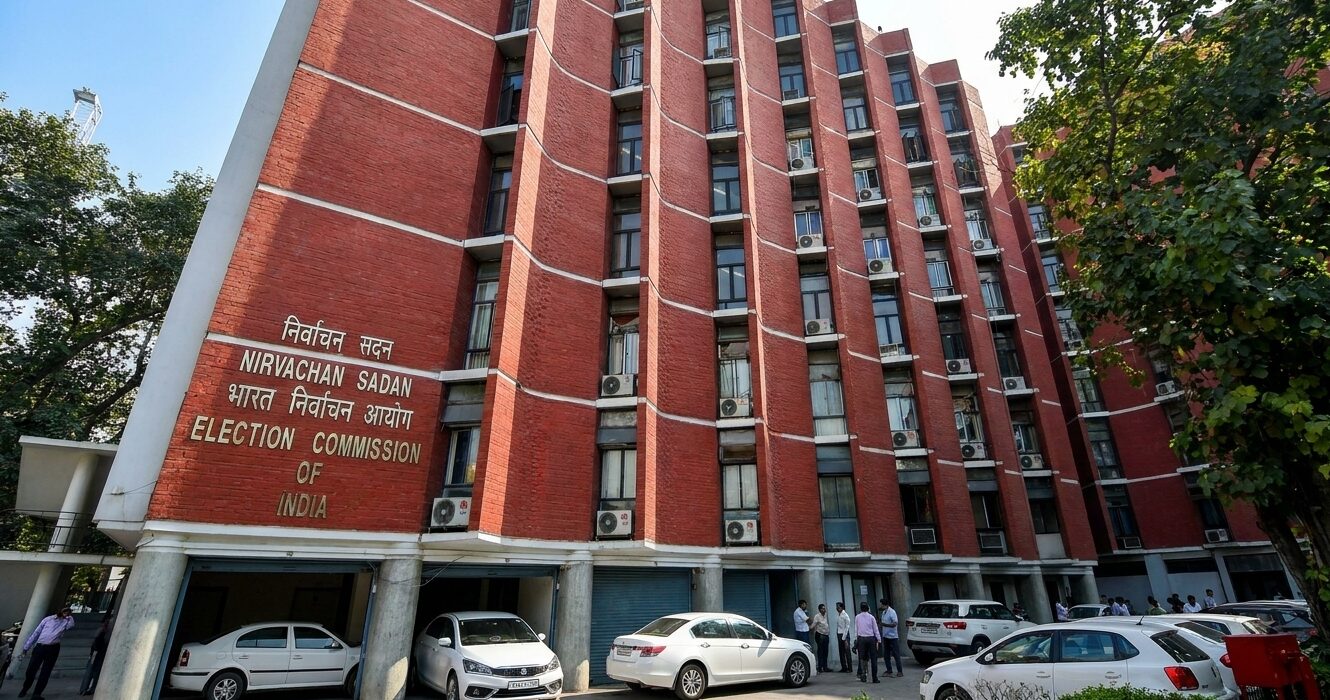
The absolute bedrock of the Indian electoral system is Article 324 of the Constitution, which explicitly vests the superintendence, direction, and control of elections directly in the Election Commission of India (ECI). Established formally on January 25, 1950, the ECI is a permanent, autonomous constitutional body strictly designed to function completely independently of the executive branch. Originally conceived as a single-member entity, the Commission transitioned to a multi-member body comprising a Chief Election Commissioner (CEC) and two Election Commissioners, functioning on the principle of majority vote to ensure decentralized decision-making. These officials are appointed by the President, hold a tenure of up to six years or until the age of 65, and enjoy a status equivalent to that of a Supreme Court judge to thoroughly insulate them from political coercion.
A vital distinction in India’s federal structure is the rigid jurisdictional boundary separating the ECI and the State Election Commissions (SECs). While the ECI manages national and state-level legislative elections, the SECs are independent constitutional authorities established post-1992 under the 73rd and 74th Constitutional Amendments. The SECs possess the exclusive mandate to control elections for the third tier of governance: local self-governments, encompassing Panchayati Raj Institutions and Urban Local Bodies. The SECs frequently utilize the foundational voter lists prepared by the ECI under the Representation of the People Act of 1950, adapting and bifurcating these rolls through specialized software.
2. The Representation Acts
The constitutional ideals of universal adult suffrage are operationalized and granted legislative teeth through two complementary statutory pillars: the Representation of the People Act (RPA), 1950, and the Representation of the People Act (RPA), 1951. The RPA 1950 focuses predominantly on the structural and preparatory prerequisites of an election, laying down the procedures for the delimitation of constituencies and the meticulous preparation of electoral rolls. It defines the fundamental qualifications for voters, stipulating that every citizen aged 18 and above, a voting age reduced from 21 by the 61st Constitutional Amendment in 1988, holds the right to vote irrespective of religion, race, caste, or wealth.
Conversely, the RPA 1951 rigorously governs the actual conduct of the elections and the adjudication of subsequent disputes. It delineates the strict qualifications and disqualifications for candidates, regulations governing the nomination process, and penal provisions for corrupt electoral practices. The Act requires candidates to submit specific security deposits to deter frivolous nominations, currently set at ₹20,000 for Lok Sabha elections and ₹10,000 for State Legislative Assembly elections. Furthermore, the RPA 1951 houses Section 8, which outlines the exact grounds for disqualification upon conviction for specific offenses, acting as the primary legislative shield against the entry of criminal elements into the legislature.
3. Delimitation and Boundaries
Delimitation is the mathematically driven process of fixing the number of seats and redrawing the territorial boundaries of constituencies to accurately reflect demographic shifts, ensuring the democratic principle of one person, one vote is aggressively maintained. In India, this immense responsibility is entrusted to the Delimitation Commission, a high-powered, independent statutory body established under the provisions of the Delimitation Commission Act. The strict orders of the Delimitation Commission carry the absolute force of law and cannot be called into question before any court, insulating the redistricting process from judicial litigation. India has constituted Delimitation Commissions four times in 1952, 1963, 1973, and 2002.
However, the actual allocation of seats to specific states has remained completely frozen based on the 1971 census. This freeze, initially enacted via the 42nd Amendment and subsequently extended by the 84th Amendment to the year 2026, was a strategic policy decision designed to prevent the political penalization of states that had successfully implemented population control measures. Looking forward, the Delimitation Bill of 2026 anticipates the creation of a new Commission that will include a current or former Supreme Court Judge and will likely utilize the first census conducted after 2023 to reapportion seats, potentially altering the regional balance of power in the Parliament.
4. The Electoral College
The indirect election of the President and Vice-President of India features unique electoral mechanics rooted in proportional representation by means of a single transferable vote conducted via a secret ballot. The President is elected by an Electoral College consisting exclusively of the elected members of both Houses of Parliament and the elected members of the Legislative Assemblies of the States, including Delhi and Puducherry. Nominated members of either House or the State Assemblies are strictly excluded from this Electoral College.
| Elector Category | Formula for Calculating Vote Value |
|---|---|
| Member of Legislative Assembly (MLA) | Total Population of the State (1971) divided by Total Number of Elected MLAs, multiplied by 1/1000. |
| Member of Parliament (MP) | Sum Total Value of Votes of all MLAs nationwide divided by Total Elected Members of Parliament. |
To ensure parity between the States and the Union, a specific mathematical formula calculates the value of each elector’s vote using population figures tethered to the 1971 census. The total value of the Electoral College is highly structured, amounting to a combined total of over 1,095,587 vote values. The Vice-President is elected by a different electoral college, which includes both elected and nominated members of the Lok Sabha and Rajya Sabha, but explicitly excludes members of the State Legislative Assemblies.
5. Political Party Recognition
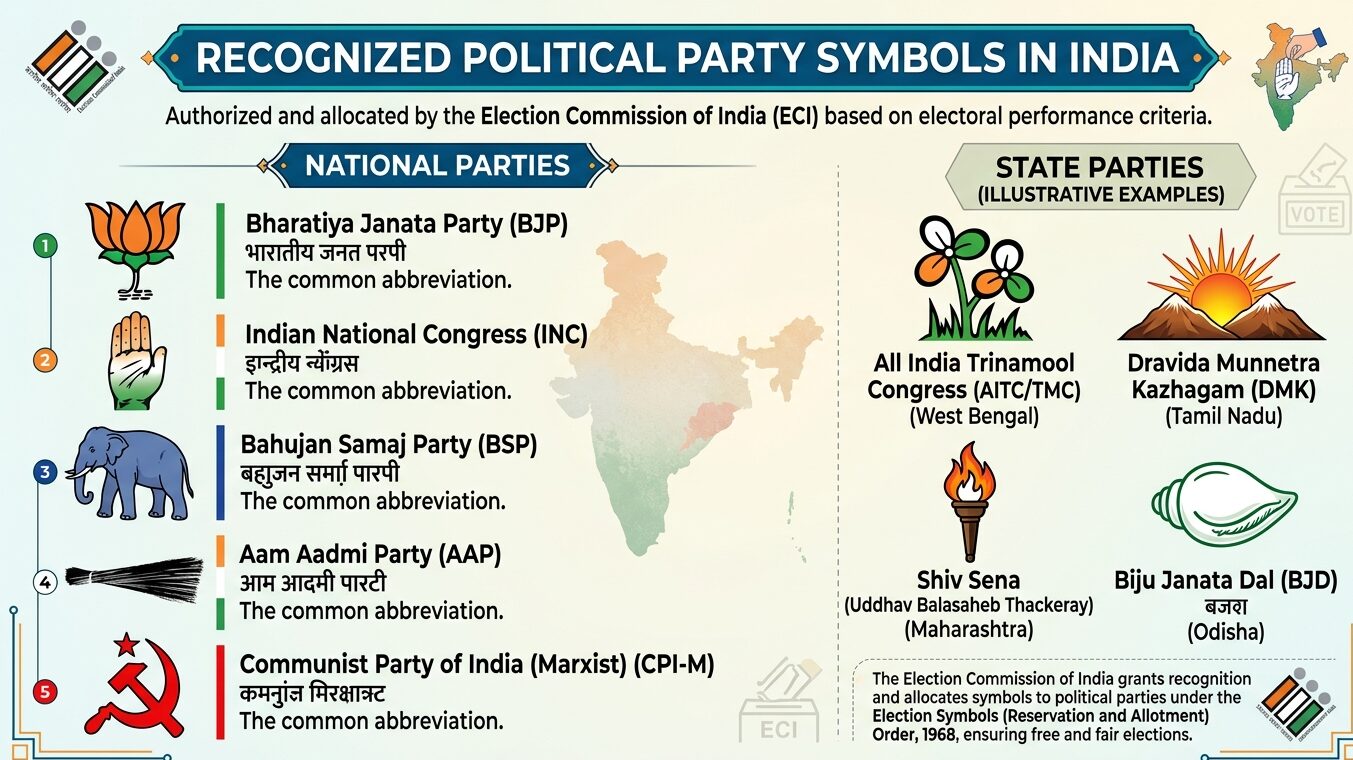
In India’s vibrant multi-party democracy, the ECI registers political parties under Section 29A of the RPA 1951 and grants them recognition as either National or State parties based on their objective electoral performance. This critical recognition, governed by the Election Symbols (Reservation and Allotment) Order, 1968, confers significant privileges, including the exclusive reservation of an election symbol across the state or nation, subsidized access to electoral rolls, and the ability to field star campaigners.
Parties that register with the ECI but fail to meet these specific thresholds are classified as Registered Unrecognized Political Parties (RUPPs). RUPP candidates must choose from a list of free symbols distributed by the Returning Officer. To maintain systemic purity and prevent the misuse of political party status for tax evasion under the Income Tax Act, the ECI actively monitors RUPPs, recently conducting a massive cleanup that delisted 334 parties in a single tranche for failing to contest elections continuously for six years.
| Party Status | Primary Recognition Criteria |
|---|---|
| National Party | Secures at least 6 percent of valid votes in four states and wins 4 Lok Sabha seats, or wins 2 percent of total seats from three different states. |
| State Party | Secures at least 6 percent of valid votes polled in a State Assembly election and wins at least two seats in that Assembly. |
6. Candidate Nominations
The integrity of the electoral choice relies heavily on the absolute transparency of the candidates. During the nomination phase, governed by Chapter I of the RPA 1951, candidates must file their papers before the Returning Officer (RO) within strict statutory deadlines. A vital component of this submission is Form 26, a sworn affidavit detailing the candidate’s comprehensive background. Form 26 acts as a profound instrument of voter empowerment, arising directly from the Supreme Court’s mandate in the Union of India v. Association for Democratic Reforms (2002) case, which established that voters have a fundamental right to know the antecedents of those seeking public office.
Currently, a candidate must transparently declare their precise financial assets and liabilities, their Permanent Account Number (PAN), complete income tax profiles, full disclosure of any pending criminal cases, and their complete digital footprint, including active social media accounts. To ensure widespread public accessibility, the ECI digitizes these affidavits through the Candidate Affidavit Portal, a module within the broader ENCORE application. The Law Commission of India, in its 244th Report on Electoral Disqualifications, analyzed the severe impact of candidates filing false affidavits, leading to stricter judicial and administrative scrutiny.
7. Vulnerability Mapping
To aggressively ensure that elections are conducted in an intimidation-free environment, the ECI shifts away from reactive policing toward a highly analytical, preemptive protocol known as Vulnerability Mapping (VM). Vulnerability is strictly defined as the susceptibility of any voter to being wrongfully prevented from exercising their right to vote through intimidation or coercion. The District Election Officer (DEO) and the Returning Officer heavily rely on Sector Officers and Sector Magistrates to physically visit every locality to pinpoint individuals causing vulnerabilities.
This micro-level intelligence feeds directly into the designation of Critical Polling Stations. The ECI objectively analyzes the number of non-EPIC (Elector Photo Identity Card) voters and missing voters without family links, which present significant scope for impersonation. The Director General of Police (DGP) establishes a dedicated Election Cell six months prior to the polls, deploying Central Armed Police Forces (CAPF) to execute route marches and secure sensitive electoral infrastructure. The ECI also deploys General Observers, Police Observers, and Micro-Observers to rigorously enforce the Model Code of Conduct.
8. Electronic Voting Machines
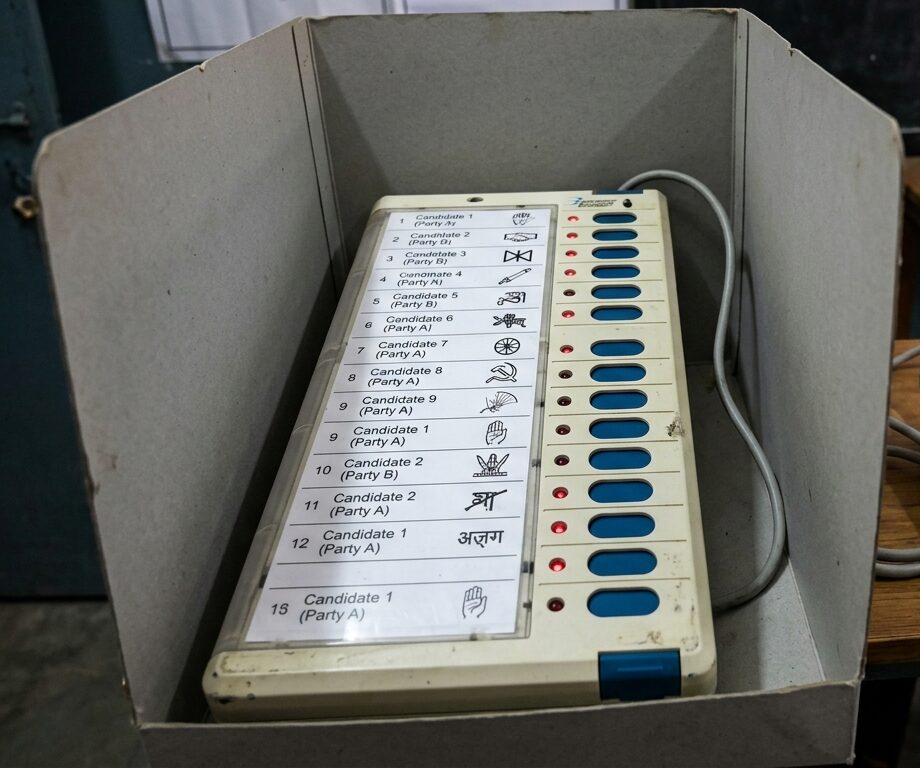
To definitively eliminate the historical malady of booth capturing and massive ballot stuffing, the Election Commission engineered a comprehensive transition toward Electronic Voting Machines (EVMs). Recognizing the absolute necessity of physical auditability to maintain public trust in digital systems, the ECI introduced the Voter Verifiable Paper Audit Trail (VVPAT) system in 2013.
The VVPAT serves as an independent, tangible verification mechanism. When a vote is cast on the EVM, the VVPAT accurately generates a printed paper slip containing the name and election symbol of the chosen candidate. This printed slip remains clearly visible to the voter behind a transparent glass window for approximately seven seconds, allowing the elector to visually verify their choice before the slip is automatically cut and securely dropped into a sealed, opaque compartment. This dual-recording system provides a critical barrier against allegations of mass digital fraud.
9. Hardware Architecture
The physical hardware of the Indian EVM is fundamentally a standalone, closed-circuit system. It is physically and electronically isolated, entirely lacking any internal mechanisms, hardware ports, or radio frequency receivers that would enable wireless communication or internet access. The primary processing and memory capabilities of the machine rely entirely on highly specialized microcontrollers manufactured exclusively by two highly secure public sector undertakings: Bharat Electronics Limited (BEL) and the Electronics Corporation of India Limited (ECIL).
The microcontrollers utilized within the Indian EVMs are One-Time Programmable (OTP) chips. The executable program that dictates the logic of the vote counting is permanently burnt into the silicon memory during manufacturing. Because the memory is strictly One-Time Programmable, the software logic becomes fundamentally immutable; it can neither be overwritten, reprogrammed, updated, nor digitally altered. Any physical attempt to open the casing or interface with the motherboard instantly triggers a permanent security lockout, rendering the entire Control Unit completely and irreversibly inoperable.
10. Security and Randomization
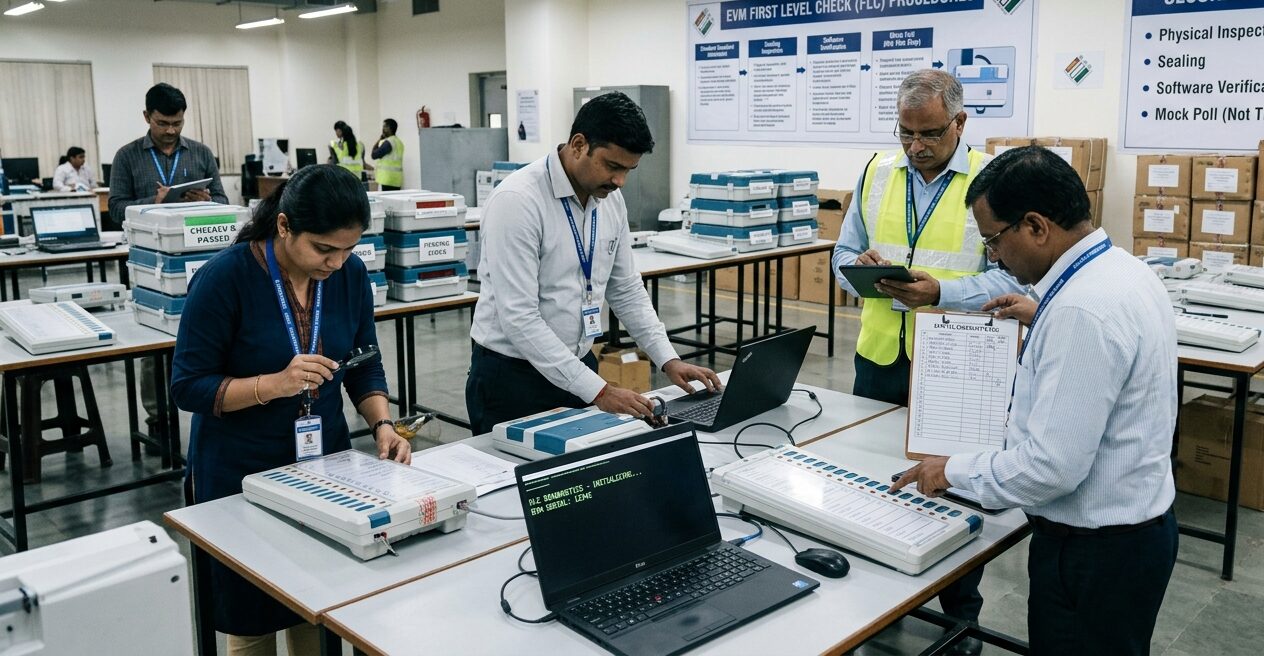
To eliminate any possibility of premeditated machine tampering, the ECI mandates a rigorously structured preparation sequence. The foundation of EVM security is the First Level Checking (FLC), conducted well in advance of candidate finalization in highly sanitized halls guarded by armed police. Engineers from BEL and ECIL execute diagnostic checks on every machine entirely in the presence of authorized representatives from recognized political parties.
Following a successful FLC, the EVMs undergo a rigorous two-stage digital randomization process using specialized software. The first randomization allocates specific machines to specific assembly constituencies, while the second randomization assigns them directly to individual polling stations. On the morning of the poll, before actual voting commences, the Presiding Officer conducts a mandatory mock poll in the direct presence of candidate polling agents to demonstrate that the machine accurately reflects the inputs. The machine’s memory is subsequently cleared, and it is sealed using multiple tamper-evident seals.
11. Strong Room Protocols
The post-polling phase is the most highly scrutinized period of the electoral cycle. The integrity of the election depends entirely on the physical security of the strong rooms where the sealed voting machines are stored. The perimeter defense of the strong room is structured according to a rigid, highly disciplined three-tier security architecture. The inner perimeter is managed by the Central Armed Police Forces (CAPF), which maintains a continuous 24/7 armed vigil immediately outside the strong room door.
The middle perimeter is reinforced by the State Armed Police, while the outer perimeter is managed by the District Executive Force for crowd control. The Election Commission embeds robust transparency mechanisms directly into this protocol by legally allowing political parties to actively monitor the strong rooms. Contesting candidates are officially permitted to deploy representatives to maintain a continuous, twenty-four-hour vigil outside the security ring. High-definition closed-circuit television cameras broadcast a live, continuous feed directly to monitors situated within the agents’ observation tents.
12. Inclusivity Initiatives
The Election Commission aggressively operates on the fundamental motto that no voter is to be left behind. The programmatic vanguard of this outreach is the Systematic Voters’ Education and Electoral Participation (SVEEP) program, which employs multi-intervention strategies to bridge gender gaps and combat urban youth apathy. A watershed moment in operational inclusivity occurred during the 2024 General Elections with the nationwide institutionalization of home voting, facilitated by the ECI’s Saksham App. Senior citizens above 85 years of age and Persons with Disabilities were granted the option to cast their ballots from their residences, successfully enfranchising over 1.7 crore eligible voters globally.
The ECI has effectively crowdsourced the enforcement of the Model Code of Conduct through the cVIGIL mobile application. cVIGIL empowers ordinary citizens to actively report violations, capturing live, geo-tagged photos and videos that are instantly routed to flying squads for rapid resolution. By restricting users to capturing live incidents only, the application prevents the upload of pre-recorded, manipulated media.
13. Service Voters and ETPBS
The integration of the Electronically Transmitted Postal Ballot System (ETPBS) has revolutionized the voting process for Service Voters, defined under Section 20(8) of the RPA 1950. Service Voters include members of the armed forces, paramilitary forces, and government officials deployed in embassies abroad. Developed in collaboration with C-DAC, the ETPBS replaces the outbound physical dispatch of ballots with a secure, two-layer encrypted electronic transmission.
The Service Voter receives a password-protected e-Postal Ballot, prints it, casts their vote in secrecy, and returns the physical document via post to their home constituency’s Returning Officer before the counting date. The system generates a unique QR code on each ballot, eliminating the possibility of duplication. This massive technological leap drastically improved the service voter turnout rate to over 60.14 percent in 2019, processing over 1.8 million electronic ballots. Similarly, Non-Resident Indians (NRIs) can register as Overseas Electors, though they currently do not have access to ETPBS and must be physically present at their polling station to vote.
14. Voting Rights of Deployed Personnel
A massive logistical challenge involves ensuring the enfranchisement of the millions of polling officers, state police, and administrative staff who are physically deployed on active election duty and cannot visit their home polling stations. To resolve this, the system provides two distinct mechanisms. If a polling official is deployed within their home constituency but at a different booth, they are issued an Election Duty Certificate (EDC) after submitting Form 12A. This certificate securely allows them to cast their vote directly at the polling station where they are actively working on election day.
Conversely, if the official is deployed entirely outside their home constituency, they must apply for a traditional Postal Ballot using Form 12. To streamline this process and ensure maximum participation, the Election Commission sets up highly secure Voter Facilitation Centers directly during the mandatory training sessions for polling staff. This specialized setup allows deployed personnel to securely cast and seal their postal ballots in designated drop boxes several days before they are dispatched to their final deployment locations, ensuring their democratic rights are perfectly preserved while they manage the election infrastructure.
15. The Counting Process
The culmination of the electoral process is executed under conditions of extreme security and procedural rigidity. The Returning Officer is the statutory authority responsible for counting, ensuring barricaded separation between the counting tables and the candidate’s counting agents. To maintain absolute secrecy, the ECI completely prohibits the use of mobile phones inside the counting halls. Crucially, Rule 60 of the Conduct of Elections Rules of 1961 dictates that counting must be continuous without any interval.
The integration of VVPATs has introduced a mandatory audit phase into the counting process. Following a landmark Supreme Court directive in 2019, the ECI must physically tally the printed VVPAT slips from five randomly selected polling stations in every assembly segment against the electronic count of the corresponding EVMs. Once results are officially declared, any challenge to the validity of the election outcome must be routed through the judiciary via an Election Petition, governed by Section 100 of the RPA 1951, requiring a strict filing period of exactly 45 days.
16. Judicial Adjudication
The highest echelons of the Indian judiciary have frequently been required to adjudicate on the delicate balance between administrative electoral efficiency and absolute verification. In April 2024, the Supreme Court of India delivered a landmark judgment addressing a major public interest litigation filed by the Association for Democratic Reforms. A Division Bench comprising Chief Justice Sanjiv Khanna and Justice Dipankar Datta presided over the intense hearings and comprehensively rejected demands for a complete return to paper ballots or a 100 percent manual cross-verification of all VVPAT slips.
The Court explicitly questioned the technical officials regarding the post-election storage duration of the machines. The ECI clarified that all EVMs are mandatorily stored in the sealed strong rooms for a continuous period of 45 days following the declaration of results, directly corresponding to the statutory limitation period prescribed for a defeated candidate to file an election petition. Satisfied with the technical depositions regarding the immutable nature of the OTP chips and the 45-day storage mandate, the Supreme Court firmly validated the existing technological framework.
17. Election Finance and Bonds
Election finance remains a critical vulnerability within the system. While the ECI imposes strict expenditure limits on individual candidates, currently capped at ₹95 lakh for Lok Sabha constituencies and ₹40 lakh for State Assembly constituencies, there is no statutory ceiling on the expenditure incurred by political parties themselves. The financing architecture faced a massive watershed moment in 2024 when a five-judge Constitution Bench of the Supreme Court unanimously struck down the controversial Electoral Bond Scheme of 2018.
The scheme had allowed individuals and corporations to purchase anonymous bonds and donate them to political parties, heavily exempting parties from declaring the source of these funds. The Court declared the scheme unconstitutional on the absolute grounds that the embedded anonymity directly violated the voters’ fundamental Right to Information under Article 19(1)(a) of the Constitution. To combat the covert placement of political advertisements, the ECI established District Level Media Certification and Monitoring Committees (MCMC), aggressively monitoring print and social media to detect paid news and add its cost to the candidate’s statutory expenditure account.
18. Criminalization of Politics
The intersection of crime and politics remains a glaring paradox in Indian democracy. Data from the Association for Democratic Reforms highlights an escalating trend of criminalization, with 46 percent of elected Members of Parliament in the 18th Lok Sabha declaring pending criminal cases, and 31 percent facing serious charges. Legislatively, Section 8 of the RPA 1951 attempts to curb this by stipulating that any person convicted of specific serious offenses or sentenced to imprisonment for not less than two years is completely disqualified from contesting elections.
The Supreme Court has continuously sought to tighten this framework. In the landmark Lily Thomas v. Union of India (2013) judgment, the Court struck down a provision that previously allowed convicted legislators to retain their seats by filing an appeal, enforcing immediate disqualification upon conviction. In the Public Interest Foundation Case of 2018, the Court further mandated political parties to visibly publish the criminal records of their candidates in newspapers and on social media, explaining the precise rationale for selecting them over candidates without criminal backgrounds.
19. The Anti Defection Law
To combat rampant political opportunism epitomized by legislators repeatedly switching parties for monetary gain, the Tenth Schedule, commonly known as the Anti-Defection Law, was boldly inserted into the Constitution via the 52nd Amendment Act of 1985. Under the Tenth Schedule, a legislator incurs strict disqualification if they voluntarily give up membership of their political party or vote contrary to any specific direction or whip issued by their party.
The law contains exemptions that have sparked extensive judicial controversy, notably allowing for a legal merger if at least two-thirds of the legislators of a legislature party decide to merge with another party. The adjudicatory authority rests exclusively with the Speaker or Chairman of the House. Because the Speaker is typically affiliated with the ruling party, allegations of partisan bias and deliberate delays in deciding disqualification petitions are frequent, severely weakening the law’s deterrent effect despite the Supreme Court upholding its basic validity in Kihoto Hollohan.
20. Simultaneous Elections
As the Indian electoral system matures, structural reforms are continuously debated to enhance administrative efficiency. The most dominant paradigm currently under consideration is the One Nation, One Election (ONOE) or simultaneous elections framework. Historically, India functioned precisely on this model, holding simultaneous elections seamlessly between 1952 and 1967. A High-Level Committee chaired by former President Ram Nath Kovind submitted a comprehensive report strongly recommending the restoration of simultaneous elections to heavily prevent policy paralysis caused by the recurrent enforcement of the Model Code of Conduct.
The Committee proposed a phased, two-step constitutional amendment strategy, starting by synchronizing elections to the Lok Sabha and State Legislative Assemblies, followed by aligning local body elections. To facilitate this massive transition, the Committee recommended inserting Article 82A into the Constitution to establish a transitional mechanism, alongside a critical proposal for a unified Common Electoral Roll to completely centralize the voter registry.
21. The West Bengal Flashpoint
| Constituency | District | Booths Subjected to Re-polling |
|---|---|---|
| Magrahat-Paschim | South 24 Parganas | 11 Booths |
| Diamond Harbour | South 24 Parganas | 4 Booths |
| Barasat | North 24 Parganas | 1 Booth |
The persistent debate over the security of EVMs is a complex political phenomenon that manifested dramatically during the 2026 West Bengal Assembly elections. The election was framed as an existential defense of regional political hegemony by the incumbent Trinamool Congress (TMC), led by Chief Minister Mamata Banerjee, against an aggressive expansion strategy deployed by the Bharatiya Janata Party. Following conflicting exit poll projections, Banerjee rejected the adverse surveys as a coordinated conspiracy designed to artificially stabilize financial markets.
The political anxieties materialized in late-night strong room protests at the Khudiram Anushilan Kendra and the Bhabanipur EVM facility. TMC leaders alleged that unauthorized access to ballot boxes was occurring, specifically regarding the movement of postal ballots. The Election Commission of India issued a swift, categorical denial, clarifying that the activities observed by protesting politicians were merely an integral part of the routine, statutory segregation of postal ballots occurring in the corridors outside the sealed strong rooms. The Commission aggressively initiated fresh polling under heavily augmented security in highly sensitive areas, such as the Magrahat-Paschim constituency, revealing patterns of localized disruption and demonstrating the operational friction inherent in fiercely contested elections.
22. The Political Economy of Distrust
The relentless debate over electoral machines in India is best understood through the theoretical framework of the Social Construction of Technology (SCOT). Extensive empirical research conducted by the Brookings Institution demonstrated that the introduction of EVMs successfully curtailed the violent practice of booth capturing, paradoxically resulting in a measurable decline in overall voter turnout due to the elimination of fraudulent proxy votes. Research by the University of Rochester revealed that EVMs are associated with dramatic declines in the incidence of invalid votes by eliminating ambiguity.
However, the fundamental opacity of electronic systems creates a psychological vulnerability that political actors expertly exploit. Questioning the integrity of the voting infrastructure acts as a vital preemptive narrative strategy to contextualize potential electoral defeat, systematically shifting the locus of blame to an external, systemic injustice. Furthermore, tampering allegations serve as an extraordinarily powerful mobilization tool, keeping ground-level workers in a state of hyper-vigilance during the liminal period between polling and counting. Political leaders leverage informational asymmetry regarding statutory logistics protocols to construct broad narratives of systemic disenfranchisement, deeply damaging institutional trust while yielding high short-term political solidarity.