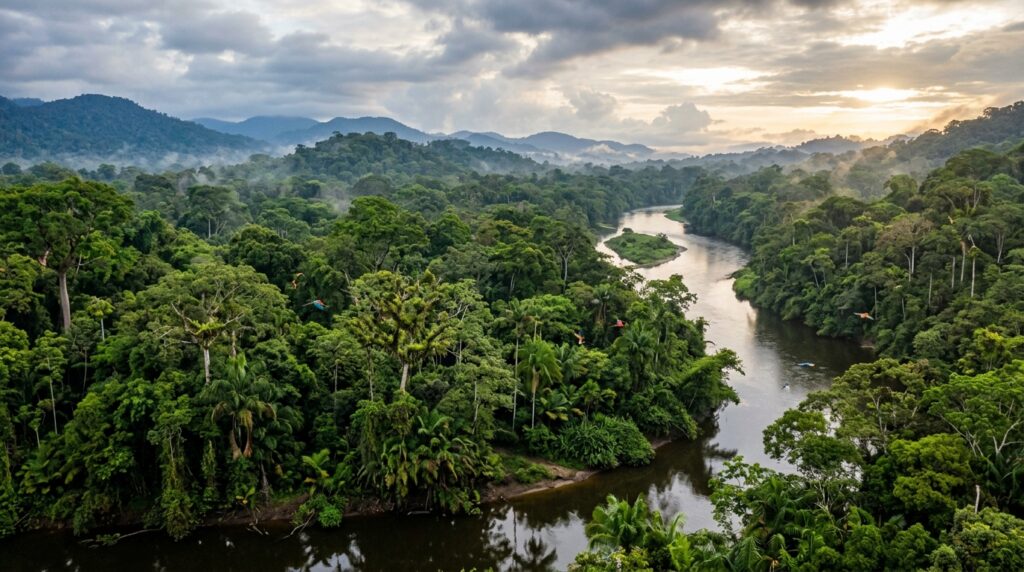
The global industrial and ecological landscape is currently undergoing a systemic transition, driven by the urgent necessity to decarbonize manufacturing supply chains and phase out non-renewable, petroleum-based resources. Within this context, bamboo has emerged from its historical classification as a traditional artisanal material to become a foundational pillar of the modern circular economy. Often colloquially and erroneously referred to as a “tree,” bamboo is, in fact, a highly complex, fast-growing grass that exhibits physical and mechanical properties rivaling those of heavy metals, carbon fiber, and synthetic polymers.
This pervasive misconception regarding its botanical classification obscures the extraordinary biological mechanics that govern its rapid biomass accumulation and structural density. As international regulatory frameworks increasingly penalize greenhouse gas emissions and single-use plastics, multinational corporations, architectural firms, and materials scientists are pivoting toward bamboo to engineer high-performance, regenerative solutions. Spanning global markets, advanced aerospace applications, and profound cultural histories, the bamboo paradigm represents the ultimate intersection of nature and advanced industrial engineering.
The Versatility of Bamboo
Bamboo is one of the most versatile resources on Earth. It is incredible to think that a simple grass can be transformed into earthquake‑resistant sports halls, woven into luxury textiles, and even molded into packaging that replaces plastic. Its strength, flexibility, and rapid growth make it a natural solution for many of the challenges of modern manufacturing.
What makes bamboo truly fascinating is how it has moved far beyond being seen as just panda food or a garden decoration. Today it stands as a multibillion‑dollar engine for sustainable global industries, proving that nature’s simplest materials can power innovation. Bamboo shows us that the future of manufacturing can be both eco‑friendly and economically strong.
| Global Bamboo Industrial Profile | |
|---|---|
| Scientific Classification | Subfamily: Bambusoideae (Family: Poaceae) |
| Global Species Count | Over 1,462 species across 115 distinct genera |
| Primary Growth Types | Sympodial (Clumping) & Monopodial (Running) |
| Market Value (2024) | USD 67.13 Billion (Grand View Research) |
| Projected Value (2032) | USD 123.16 Billion (Credence Research) |
| Highest Growth Region | Asia-Pacific (79.0% global revenue share) |
| Leading Global Producer | China (~70% of global output) |
| Fastest Growing Market | Brazil (Projected 8.6% CAGR) |
| Max Growth Velocity | Up to 120 cm (47.2 inches) per day |
| Carbon Sequestration | 12,000 to 17,000 kg CO2 per hectare annually |
| Primary Chemical Matrix | Cellulose (45-55%), Lignin (17-32%) |
| Industrial Sectors | Engineered Timber, Biocomposites, Viscose Textiles |
| Global Organizations |
INBAR (Intl. Bamboo and Rattan Org) World Bamboo Organization |
1. Botanical Taxonomy and the Grass Ecosystem
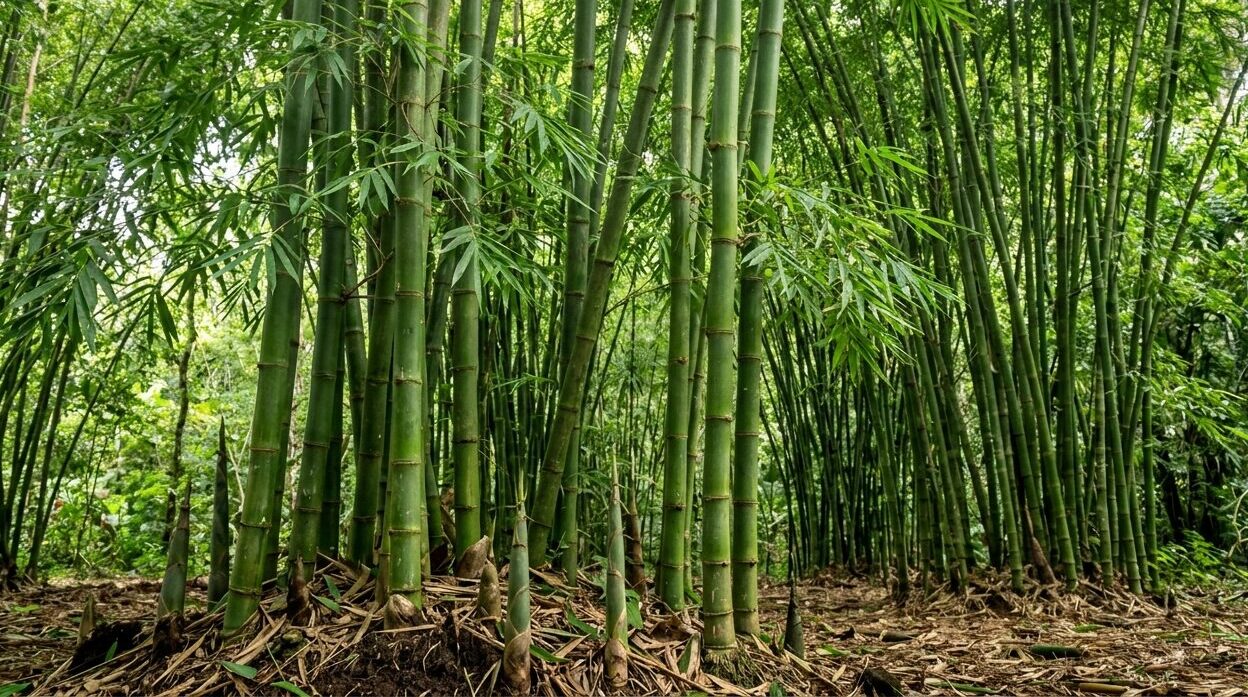
Despite its towering stature and the heavily lignified, woody characteristics of its mature culms, bamboo is scientifically classified as a grass. It resides within the Kingdom Plantae, the clade Tracheophytes, the order Poales, and the family Poaceae. Specifically, bamboo constitutes the subfamily Bambusoideae, an extraordinarily diverse taxonomic group that encompasses over 1,462 known species distributed across 115 distinct genera. Phylogenetically, the Bambusoideae subfamily is situated within the broader BOP clade of grasses, making it a direct sister group to the Pooideae clade, which includes everyday turf grasses and agricultural staples such as wheat.
Historically, botanists viewed bamboos as the most basal grass genera due to primitive physical traits. However, modern molecular phylogeny, predicated on chloroplast DNA sequencing, has refined this understanding. The nuclear genome of bamboo reveals a highly complex branching pattern driven by ancient hybridization events that led to widespread allopolyploidy.
| Clade / Tribe | Characteristics and Genera | Climate & Genetics |
|---|---|---|
| Olyreae (Herbaceous Bamboos) | Native exclusively to the Americas. Genera include Olyra, Raddia, and Pariana. Lacks massive height and aggressive lignification. | Understory neotropical forests; Diploid (HH). |
| Bambuseae (Tropical Woody) | Comprises 73 genera including Bambusa, Dendrocalamus, and Guadua. Economically vital for timber and construction. | Tropical high humidity; Tetraploid (BBCC) or Hexaploid (AABBCC). |
| Arundinarieae (Temperate Woody) | Comprises 33 genera including Phyllostachys, Fargesia, and Arundinaria. Evolves to withstand cooler climates and frost. | Temperate zones; Tetraploid (CCDD). |
2. Anatomical Anomalies: Growth Without Wood
The structural mechanics of bamboo differ fundamentally from those of dicotyledonous trees and conifers. The defining anatomical characteristic of the bamboo culm (stalk) is the complete absence of a cylindrical cambium layer and the resulting lack of secondary growth wood. In a traditional tree, the cambium layer generates new layers of wood outward, increasing diameter over its lifespan. Because bamboo lacks this mechanism, a bamboo shoot emerges from the soil at its absolute maximum diameter and its stems are columnar rather than tapering.
The internodal regions of the stem are typically hollow, a remarkable evolutionary optimization that minimizes weight while maintaining structural integrity. The vascular bundles in a bamboo’s cross-section are scattered throughout the walls, with density increasing dramatically toward the outer perimeter. This creates a natural composite material where the outer “skin” efficiently handles extreme tensile and compressive stresses, while the lighter interior absorbs sheer forces.
Extreme Morphological Variance and Growth Velocities
Bamboo is globally recognized as one of the fastest-growing terrestrial organisms. Driven by a massive underground rhizome network that generates intense hydrostatic pressure, a new shoot can grow up to 120 centimeters (47.2 inches) in a single 24-hour period, equivalent to nearly 40 millimeters per hour. This extreme velocity is observed in species such as the Japanese giant timber bamboo (Phyllostachys bambusoides). The entirety of a bamboo culm’s growth in both height and diameter is achieved within a hyper-condensed window of approximately 60 days in the spring. After this phase, the mature culm dedicates its metabolic energy strictly to internal lignification over its typical 10-year lifespan.
3. The Enigma of Mass Flowering
One of the most enigmatic biological phenomena within the plant kingdom is bamboo’s reproductive cycle. Bamboos flower infrequently and unpredictably, with intervals that vary drastically among species, often ranging from 65 to 120 years. Many taxa exhibit a behavior known as “mass flowering” or “gregarious flowering,” wherein every individual plant of a specific cohort flowers simultaneously over a several-year period, regardless of geographic location or environmental stressors.
For example, Phyllostachys bambusoides adheres to a strict 120-year flowering interval, while the commercially significant Guadua angustifolia bloomed globally in 1971 for the first time in recorded history. Once flowering commences, the plant redirects all metabolic energy toward seed production. Because this reproductive effort is metabolically exhaustive, it frequently results in the simultaneous mass die-off of the entire bamboo colony. This sudden landscape-level mortality drastically impacts wildlife reliant on bamboo ecosystems, and the evolutionary rationale driving this synchronized, terminal reproduction remains an unresolved mystery.
4. Chemical Composition and Materials Science
The utility of bamboo in heavy industry, textiles, and structural engineering is entirely dependent upon its complex chemical composition. The biochemical matrix of the bamboo culm is analogous to that of hardwood, yet it exhibits specific variations that enhance its performance as a natural composite.
| Chemical Component | Percentage Range | Structural Function and Industrial Implication |
|---|---|---|
| Cellulose | 45.0% – 55.0% | The primary polymer responsible for tensile strength. Yields fibers with tensile strengths ranging from 391 to 1000 MPa. |
| Hemicellulose | 15.3% – 32.0% | Functions as the matrix binding cellulose microfibrils. Highly thermally volatile during pyrolysis. |
| Lignin | 17.3% – 32.5% | Imparts structural rigidity and compression strength. Provides exceptional heating (calorific) value for bioenergy. |
| Extractives | 1.6% – 13.0% | Composed of resins, waxes, and tannins. Enhances natural decay resistance against fungal rot. |
| Ash / Silica | 0.6% – 5.9% | Unusually high silica content provides excellent fire resistance, though it accelerates tool wear during machining. |
In addition to its structural matrix, raw bamboo contains organic compounds like starch (2% to 6%), making untreated bamboo highly susceptible to biological degradation by powder-post beetles. Consequently, architectural applications mandate rigorous post-harvest treatments, such as saturation in borax salt solutions or low-temperature carbonization. Furthermore, raw bamboo shoots contain cyanogenic glycosides (taxiphyllin), requiring thermal processing (boiling for 20 minutes) to volatilize trace cyanide before human consumption.
5. Growth Systems: Clumping vs. Running Bamboo
The ecological behavior, silvicultural management, and architectural applications of bamboo are heavily dictated by the morphology of its underground rhizome system. Bamboos are broadly divided into two distinct growth types: clumping (sympodial) and running (monopodial).
Clumping Bamboos (Sympodial or Pachymorph): These are characterized by short, thick, U-shaped rhizomes that turn upward immediately adjacent to the parent stalk. Genetically incapable of expanding horizontally by more than a few inches per year, these species are strictly non-invasive. Native to tropical ecosystems, giant timber variants like Bambusa oldhamii or Dendrocalamus asper can rapidly achieve heights of 55 to 70 feet. However, their intense density exerts immense outward physical pressure capable of shattering concrete planter boxes.
Running Bamboos (Monopodial or Leptomorph): Operating via a highly aggressive network of long, horizontal rhizomes that travel parallel to the soil surface, new culms shoot upward from lateral buds along extended root pathways. Native primarily to temperate climates, they exhibit extreme cold hardiness. While species like Phyllostachys nigra are highly effective for rapid afforestation and erosion control, their invasive propensity requires stringent containment protocols, such as installing high-density polyethylene root barriers buried vertically around the planting perimeter.
6. Historical and Cultural Significance
Bamboo’s integration into human society predates recorded history, spanning over 10,000 years of continuous utility. In East Asia, archaeological evidence from China indicates the use of bamboo for crafting specialized arrowheads between 4,000 and 5,000 years ago. By the Song Dynasty (960 A.D.), bamboo was deeply ingrained in the Chinese economy. It provided structural scaffolding for the Great Wall of China, acted as a medium for early papermaking, and later served as the primary filament material for Thomas Edison’s first successful incandescent lightbulb. Philosophically, bamboo is revered as one of the “Four Gentlemen,” symbolizing human perseverance and moral integrity.
In Japan, its rapid growth renders it a symbol of prosperity, famously encapsulated in the 10th-century folktale, The Tale of the Bamboo-Cutter. In pre-colonial Africa, native species were heavily utilized for dwellings, agricultural tools, fermented beers, and medicinal treatments for wound healing. In the Americas, pre-Columbian civilizations like the Incas relied extensively on massive native species (Guadua angustifolia) for Amazonian infrastructure, blowgun weaponry, and traditional Andean musical instruments like the Quena and Zampoña flutes.
7. Global Market Valuation and Macroeconomic Trends
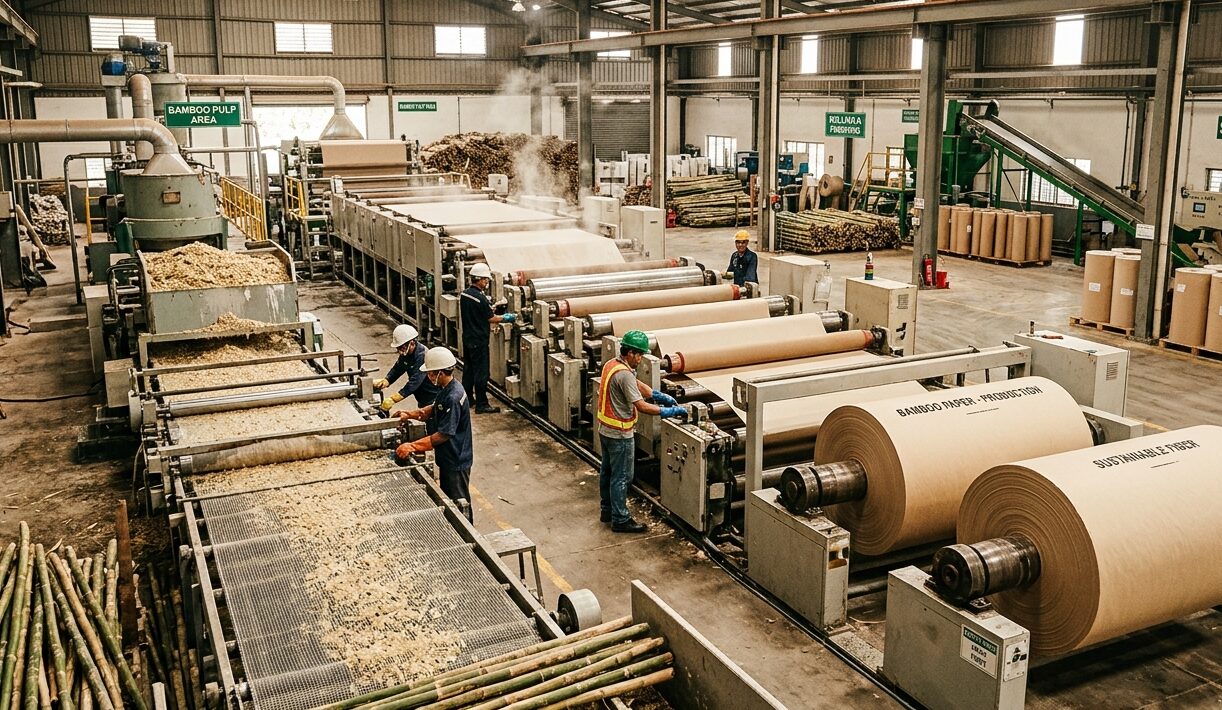
The transition of bamboo from a traditional, localized craft material into a highly industrialized, global commodity has generated a massive and rapidly accelerating market. Driven by mounting environmental regulations, innovations in materials processing, and a global pivot toward sustainable manufacturing, the economic valuation of bamboo has reached unprecedented heights.
According to Grand View Research, the global bamboo market was valued at an estimated USD 67.13 billion in 2024 and is projected to expand to USD 88.44 billion by 2030, reflecting a Compound Annual Growth Rate (CAGR) of 4.7%. More expansive reports from Credence Research propose an even steeper growth curve, forecasting a surge to an astonishing USD 123.16 billion by 2032 (CAGR of 5.65%). The industrial products segment acts as the primary engine of this economic expansion, accounting for a dominant 40.6% of the total revenue share in 2024, heavily catalyzed by the global e-commerce boom and the demand for sustainable paper and cardboard packaging.
8. Leading Producing Nations and Regional Hegemony
The market architecture is heavily skewed toward the Asia-Pacific region, which commanded an overwhelming 79.0% of the global revenue share in 2024. This regional hegemony is sustained by a combination of vast native bamboo reserves, deep historical expertise, and aggressive, state-backed industrialization policies.
| Producing Nation | Estimated Forest Area | Global Market Role and Strategic Focus |
|---|---|---|
| China | >6.67 million hectares | The undisputed global epicenter. Produces nearly 70% of the world’s bamboo and >60% of global trade volume. Generates massive trade surpluses via processed panels and textiles. |
| India | >11.0 million hectares | Possesses the second-largest global reserves. Driven by the National Bamboo Mission, focusing heavily on rural employment, biofuels, and domestic construction. |
| Indonesia | >2.0 million hectares | A major exporter of bamboo furniture and structural materials. Integrating agroforestry to combat severe deforestation. |
| Vietnam | Vast integrated reserves | Rapidly scaling output to capture international demand for premium sustainable furniture and architectural components. |
| Brazil | Vast Guadua reserves | Fastest-growing regional market globally (8.6% CAGR). Fueled by abundant native reserves and rising domestic demand for construction materials. |
While Asia dominates production, Western nations function as the primary drivers of demand. In 2024, the United States accounted for 53% of India’s bamboo product exports, cementing North America’s role as a premium import destination. Similarly, the European market represents the most policy-driven demand sector globally, pushed by stringent mandates regarding carbon emissions and deforestation.
9. Industrial Applications: Engineered Flooring and Textiles
The contemporary utility of bamboo extends far beyond traditional scaffolding. The material is now the foundation of a sophisticated global manufacturing ecosystem. The global construction industry is increasingly utilizing engineered bamboo as a direct, sustainable substitute for slow-growing tropical hardwoods. Through advanced industrial processes—such as thermal modification, splitting, and high-pressure phenolic resin compression—raw bamboo is transformed into strand-woven timber and bamboo scrimber. These materials achieve Janka hardness ratings exceeding traditional oak, making them ideal for high-traffic commercial flooring and outdoor decking (led by firms like MOSO International, Cali Bamboo, and Dassogroup).
The global textile and apparel industry is also pivoting toward bamboo fibers to circumvent the massive water consumption and pesticide reliance of conventional cotton. Bamboo textiles are primarily produced via a chemical pulping process, extracting cellulose to create regenerated viscose or lyocell yarns. Advanced techniques like Siro Spinning yield fabrics that are remarkably soft, naturally antibacterial, and UV-protective. Top-tier manufacturers implement rigorous closed-loop production systems to capture and recycle chemical solvents.
10. Biocomposites and the War on Plastics
The mechanical limits of bamboo are currently being tested in advanced biocomposites. Because natural microfibrils possess a unidirectional specific strength higher than glass fiber, bamboo has garnered intense interest from the aerospace and automotive sectors. Innovations such as CO2-negative Bamboo Unidirectional (UD) Tape are revolutionizing lightweight manufacturing. By infusing woven fibers with bio-epoxy resins, engineers create durable biocomposites for automotive interior paneling, aerospace components, and high-performance sports equipment, offering extreme weight reduction and acoustic dampening while locking away carbon.
Perhaps the most aggressive application is its deployment as a direct substitute for single-use plastics. In response to global pollution and the EU’s Single-Use Plastics Directive, the Chinese government enacted the “Three-Year Action Plan to Accelerate the Development of Bamboo as a Substitute for Plastic”. A groundbreaking advancement is the industrial extraction of nanocellulose directly from the bamboo cell wall. Researchers at Tianjin University have utilized this nanomaterial to produce transparent, highly flexible, fully biodegradable films that are objectively safer and stronger than conventional plastics, currently deployed for food preservation and protective agricultural sprays.
11. Carbon Sequestration and Environmental Engineering
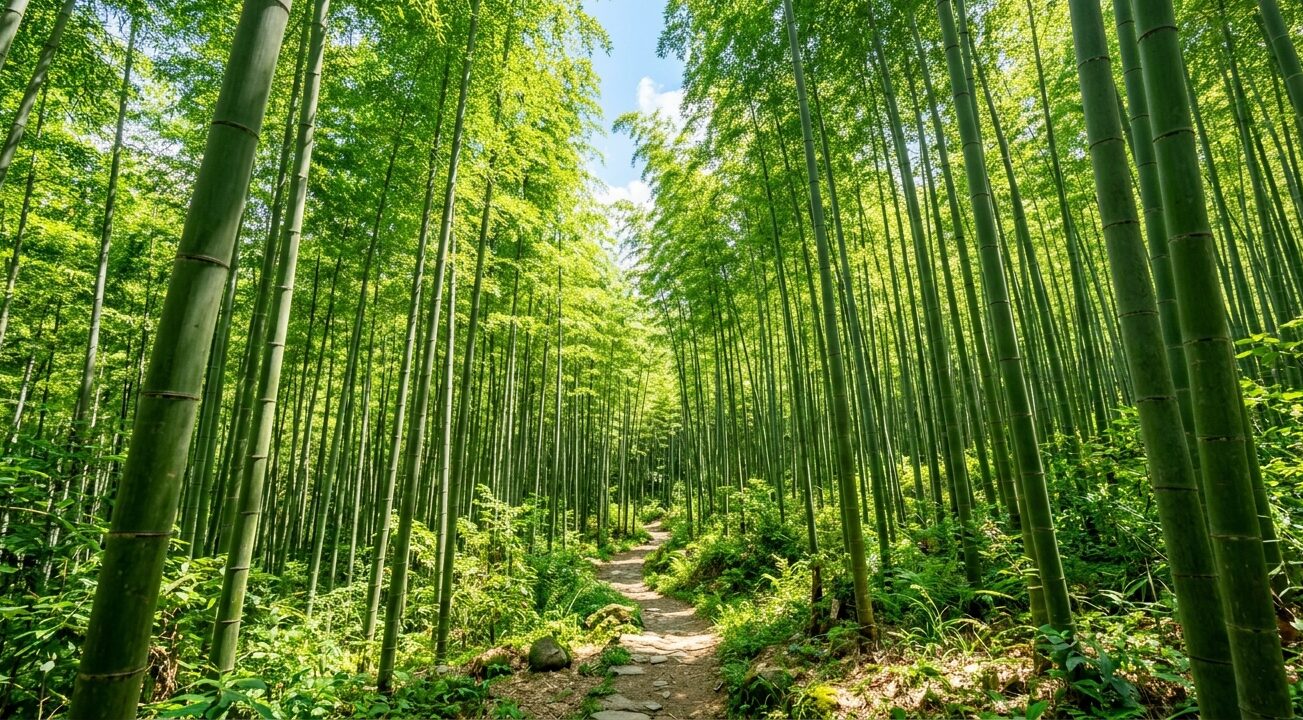
Bamboo accumulates organic biomass up to ten times faster than conventional timber species. While hardwood forests require 30 to 50 years to mature, bamboo plantations can be sustainably managed through selective harvesting. By cutting 20% to 30% of mature culms annually, the canopy and subterranean root network remain intact, allowing continuous regeneration. A single hectare can actively absorb 12,000 to 17,000 kilograms of atmospheric CO2 annually.
When evaluating Total Ecosystem Carbon (TEC), species like Guadua and Moso can store between 94 and 392 tonnes of carbon per hectare. Furthermore, bamboo acts as a vigorous pioneer plant for phytoremediation, absorbing excess agricultural nitrates and industrial phosphates. The industrial byproducts of processing are converted via pyrolysis into a highly porous biochar (e.g., BOO-CHAR), which is inoculated into agricultural soils to permanently trap carbon underground and enhance soil microbial life.
12. Global Architecture and Structural Innovations
Bamboo’s remarkable tensile strength, low density, and extreme flexibility have made it an exceptional building material. Modern structural engineering and parametric design have unlocked its potential for highly complex, large-scale, and iconic architecture, allowing architects to create sweeping, zero-carbon megaprojects.
| Project Name | Location | Architectural Firm | Structural Significance and Engineering Innovation |
|---|---|---|---|
| Tea Leaf Market of Zhuguanlong | Fujian, China | SUP Atelier of THAD | Features a record-breaking 18-meter (60-foot) wide roof span constructed entirely of raw bamboo, supporting four layers over rammed earth walls. |
| Bamboo Sports Hall at Panyaden School | Chiangmai, Thailand | Chiangmai Life Architects | A zero-carbon facility utilizing 17-meter prefabricated bamboo trusses engineered without any steel reinforcements, capable of withstanding earthquakes. |
| Bamboo Bamboo, Canopy and Pavilions | Guangxi, China | LLLab. | A 140-meter long undulating, hand-woven canopy built without nails or glue, integrating living bamboo clusters through roof openings. |
| Diamond Island Community Center | Ho Chi Minh City, Vietnam | Vo Trong Nghia Architects | Features massive, 24-meter diameter pure bamboo domes utilizing a double-layered thatch structure that acts as a thermodynamic regulator. |
| Hong Kong-Zhuhai-Macao Bridge Platform | Zhuhai/Macao, China | Various | A 20,000-square-meter landscape platform constructed entirely from high-durability outdoor bamboo composite panels, withstanding severe regional typhoons. |
13. International Research and Academic Consortiums
The rapid evolution of bamboo is underpinned by a robust, highly funded network of international research institutions. In Latin America, the International Network of Universities and Research Centers related to Bamboo (RIUCI), endorsed by INBAR, facilitates cross-border research into taxonomy and climate change adaptation. In Asia, state-backed institutions like the Chinese Academy of Forestry and Nanjing Forestry University lead the world in bamboo genetics, conducting groundbreaking research into sub-genomic hybridization and molecular breeding.
Concurrently, European consortiums are deeply invested in the ecological verification of the trade. Funded by Horizon Europe, projects such as CML-Bamboo conduct rigorous life-cycle assessments. Furthermore, the “Bamboo Europe” project is actively evaluating the viability of large-scale, commercial bamboo plantations within Europe to establish a localized, low-emission supply chain tailored for European interior design and textiles, circumventing the massive carbon footprint of trans-Pacific shipping.
14. The Future of the Bamboo Economy
The exhaustive global investigation into the Bambusoideae subfamily reveals a biological resource of unparalleled mechanical utility and ecological significance. Its highly anomalous anatomical structure grants bamboo an extreme strength-to-weight ratio that rivals industrial softwoods and mild steel. Coupled with its unique rhizome-dependent biology, bamboo achieves maximum biomass accumulation at a velocity that vastly outpaces traditional timber, fundamentally disrupting the economics of carbon sequestration.
As the global bamboo market rapidly scales toward an estimated USD 123.16 billion valuation by 2032, its economic trajectory is explicitly linked to the worldwide legislative imperative to decarbonize industrial supply chains. Driven by innovations ranging from nanocellulose food packaging to CO2-negative biocomposites, bamboo has unequivocally transcended its traditional, artisanal applications. Supported by an expanding network of automated mega-factories and forward-thinking architectural firms, bamboo stands not merely as an eco-friendly alternative material, but as a structurally superior, highly regenerative foundation for the sustainable industrial infrastructure of the 21st century.