
| Cloudflare Infrastructure & Operations | |
|---|---|
| Initial Founders | Matthew Prince, Lee Holloway, Michelle Zatlyn |
| Precursor Initiative | Project Honey Pot (2004) |
| Founding Date | July 26, 2009 |
| Routing Topology | BGP Anycast |
| Global DNS Resolver | 1.1.1.1 |
| Proxy Architecture | Pingora (Rust-based) |
| Serverless Compute Model | V8 Isolates |
| AI Inference Partner | Hugging Face |
| Chinese Network Partner | JD Cloud |
| Q1 2026 Revenue | $639.8 Million |
| Q1 2026 Market Cap | ~$85.47 Billion |
| Similar Enterprises | Akamai, Fastly, Zscaler, Amazon CloudFront |
| Official Corporate Site | Cloudflare Official |
| Open-Source Repository | Pingora GitHub |
Cloudflare, Inc. represents a foundational pillar of the modern internet, operating as an extraordinarily massive, globally distributed edge computing platform, content delivery network (CDN), and sophisticated cybersecurity provider. The organization functions by strategically positioning its expansive network architecture directly between the end-user and the origin web server, effectively acting as an intelligent, highly programmable reverse proxy. By intelligently routing traffic through its global footprint of data centers, Cloudflare simultaneously mitigates devastating volumetric attacks, drastically accelerates web application performance, and provides a robust, low-latency environment for executing serverless code and artificial intelligence inference directly at the extreme network edge.
The genesis of this massive enterprise traces back to 2004, originating from a simple, open-source data collection initiative known as Project Honey Pot. Engineered by founders Matthew Prince and Lee Holloway, the project initially functioned as a passive intelligence repository explicitly designed to track the IP addresses utilized by email spammers and malicious botnets. However, the conceptual leap from passive observation to active threat mitigation occurred in 2009, when Prince and Holloway partnered with Michelle Zatlyn at the Harvard Business School. The trio formulated a robust business plan for a firewall in the cloud, officially establishing Cloudflare on July 26, 2009, and launching it publicly at the TechCrunch Disrupt conference in 2010.
This comprehensive report deeply explores the massive technological scope of Cloudflare’s global operations. We will exhaustively analyze the underlying mechanics of its Anycast routing architecture, the radical engineering transition to the Rust-based Pingora proxy, the serverless execution model heavily utilizing V8 isolates, and the profound transition toward an agentic artificial intelligence operating model.
1. The Anycast Architecture and DNS Resolution
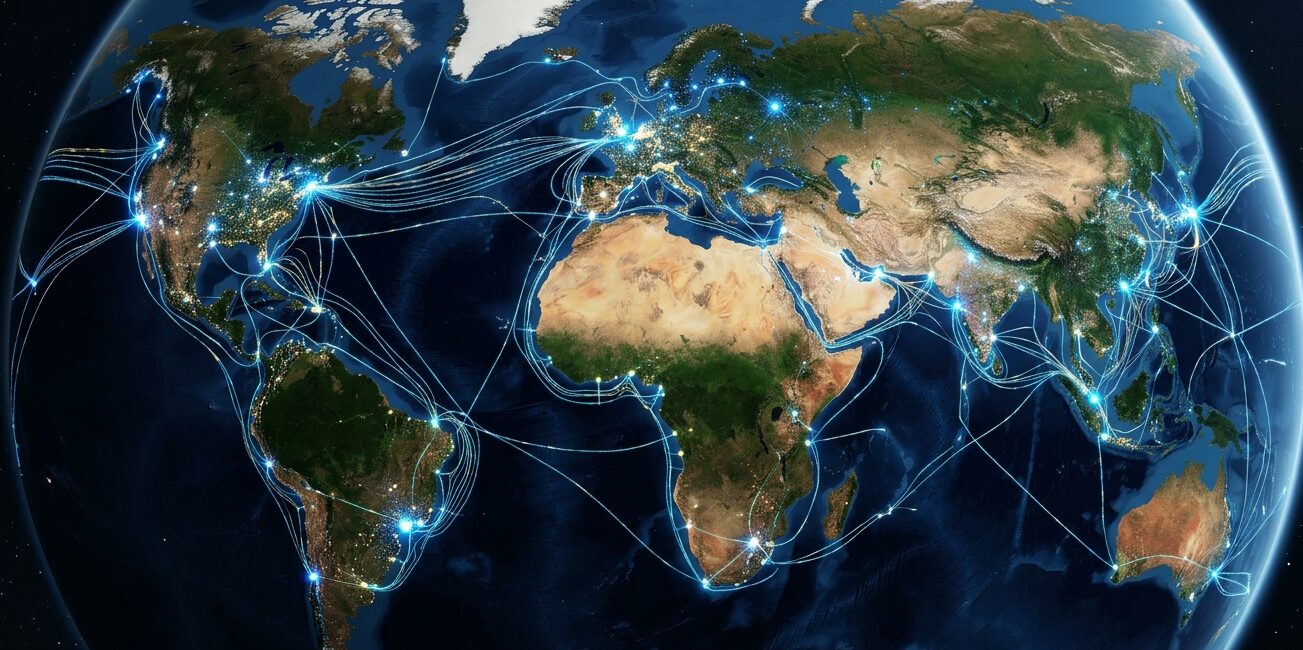
The technical foundation of Cloudflare’s massive dominance in the network infrastructure market is its aggressive and highly optimized implementation of the Anycast routing topology. To truly understand the significance of this specific architecture, one must contrast it with traditional Unicast routing, which dictates exactly how the vast majority of the Internet operates. Under a Unicast scheme, every single node on a network is assigned a unique IP address perfectly mapped to a singular geographic and physical location, forcing user requests to traverse multiple router hops across the globe and introducing substantial, unavoidable latency.
Cloudflare’s Anycast network fundamentally subverts this physical limitation. In an Anycast configuration, a single IP address can be advertised by multiple physical servers simultaneously across a highly distributed geographical footprint. Through the Border Gateway Protocol (BGP), the global routing table dynamically directs incoming requests to the specific Cloudflare data center that is topologically or geographically closest to the user making the request. By rapidly establishing a physical presence in over 330 cities worldwide, Cloudflare securely operates within approximately 50 milliseconds of roughly 95 percent of the entire Internet-connected population. This unique topology is particularly vital for Cloudflare’s public DNS resolver, 1.1.1.1. Engineered using the modular Knot Resolver, 1.1.1.1 guarantees extreme high availability and deeply integrates advanced privacy protocols like DNS over HTTPS (DoH) and DNS over TLS (DoT) to prevent ISPs from eavesdropping on sensitive browsing behavior.
2. Pingora and the Rust Proxy Revolution
Operating a global network that flawlessly handles quadrillions of requests requires underlying software capable of extraordinary concurrency and minimal hardware resource overhead. For over a decade, the foundation of Cloudflare’s proxy infrastructure relied heavily on NGINX, a widely adopted, C-based web server and reverse proxy. However, NGINX inherently operates on a rigid process-based architecture, actively preventing network connections from being efficiently shared across different worker processes. This severe inefficiency forced the infrastructure to initiate millions of redundant and computationally expensive Transport Layer Security (TLS) handshakes, severely degrading CPU performance and carrying the persistent, inherent risk of C-based memory safety vulnerabilities like catastrophic segmentation faults.
To successfully resolve these massive systemic inefficiencies, Cloudflare completely rewrote its entire proxy infrastructure from scratch, brilliantly engineering Pingora. Pingora is a proprietary, asynchronous, multithreaded framework written entirely in the Rust programming language. Rust was specifically selected for its rigid compiler guarantees regarding memory safety. By completely abandoning the strict process barriers of NGINX, Pingora’s advanced multithreading model allows for seamless data sharing across all user requests using shared references behind atomic reference counters, completely eliminating thread contention and mutex locks. Upon deployment, Pingora utilized less than half the CPU and significantly less than half the memory compared to the legacy NGINX architecture, allowing Cloudflare to heavily redirect hardware capacity toward advanced artificial intelligence features. Cloudflare officially released Pingora version 0.7.0 as a highly popular open-source project in early 2024.
3. Magic Transit and Border Gateway Protocol Security
While Cloudflare’s reverse proxy services heavily secure individual web applications, massive enterprises absolutely require robust protection at the foundational IP routing layer. To address this exact requirement, Cloudflare intelligently developed Magic Transit, a cloud-native network security solution providing massive DDoS protection and comprehensive firewall capabilities for on-premise, cloud, and complex hybrid topologies.
Magic Transit effectively circumvents the severe capacity limitations of legacy hardware appliances and traditional centralized scrubbing centers by leveraging the totality of Cloudflare’s massive Anycast architecture. The system functions brilliantly by utilizing BGP to explicitly announce an enterprise’s entire IP address space to the global Internet. All IP packets destined for the customer’s network are naturally drawn directly to the topologically closest Cloudflare data center, practically turning the entire global edge into a massively unified scrubbing center. With an astronomical network capacity exceeding 500 Tbps, Cloudflare rigorously inspects the packets using advanced mitigation techniques like eBPF (Extended Berkeley Packet Filter) and XDP (eXpress Data Path). Following thorough sanitization, Cloudflare seamlessly delivers the clean packets to the customer’s origin network using Anycast Generic Routing Encapsulation (GRE) tunnels, IPsec tunnels, or direct physical infrastructure via Cloudflare Network Interconnect (CNI).
4. V8 Isolates and Serverless Compute
Cloudflare has fundamentally redefined the modern serverless computing paradigm through Cloudflare Workers, a highly robust platform that securely executes backend code directly at the extreme network edge. Traditional serverless offerings, such as AWS Lambda, typically rely heavily on containerized microservices that require booting a virtualized operating system, inherently causing severe cold start latency penalties. To permanently eliminate this delay, Cloudflare engineered Workers to completely bypass containers entirely, explicitly utilizing lightweight V8 isolates.
An isolate is the fundamental execution sandbox within Google’s V8 JavaScript engine. It is an extremely lightweight execution context that dynamically shares a single underlying operating system process with thousands of other distinct isolates. Because the heavy process overhead is perfectly amortized across the entire computing pool, an individual isolate requires only a few megabytes of memory and can initialize flawlessly in single-digit milliseconds, making it exactly 100 times faster to start than a standard container. However, Workers are subjected to rigorous resource constraints, typically allotted only 128 MB of memory per isolate, forcing an architectural paradigm shift where Workers operate optimally as highly concurrent orchestration layers rather than monolithic, heavy compute engines.
5. Edge-Native Storage Primitives
To explicitly support stateful database applications within this highly ephemeral compute environment, Cloudflare engineered a comprehensive, edge-native storage suite specifically designed to operate flawlessly within the strict constraints of the V8 isolate model.
| Storage Primitive | Underlying Architecture and Functionality |
|---|---|
| Workers KV | Globally distributed, eventually consistent KV data store optimized heavily for read-heavy workloads like configuration data and user session state. |
| R2 | S3-compatible Object Storage specifically designed to completely eliminate exorbitant egress bandwidth fees when serving high-resolution media and heavy assets. |
| D1 | Serverless relational SQL database securely built upon SQLite semantics that flawlessly integrates natively with Workers. |
| Durable Objects | Stateful serverless instances possessing a globally unique identifier utilized extensively for real-time WebSocket applications and absolute distributed consensus. |
| Vectorize | Edge-native vector database explicitly engineered to store high-dimensional embeddings generated rapidly by artificial intelligence models for semantic search. |
| Hyperdrive | Database connection pooling and acceleration service bridging serverless Workers perfectly to legacy cloud or on-premise relational databases. |
Developers heavily combine these advanced primitives to architect complex platforms. For instance, a high-traffic media application might flawlessly use KV for temporary session tokens, R2 for heavy image storage to aggressively avoid AWS egress fees, and D1 for rigid relational metadata. However, engineers must heavily navigate specific platform limitations, such as Vectorize currently strictly restricting metadata filtering to simple equality and range conditions, failing completely on complex boolean logic across multiple fields.
6. Artificial Intelligence Inference Infrastructure

The absolute most profound evolution of the Cloudflare network is its incredibly rapid integration deeply into the artificial intelligence stack. Thoroughly recognizing that querying centralized cloud servers creates a critical latency bottleneck for generative AI, Cloudflare announced the general availability of Workers AI, a completely serverless GPU inference platform heavily deployed across more than 150 cities globally. This highly advanced system allows developers to effortlessly execute massive models via simple API calls completely within the V8 isolate environment.
This massive infrastructure deployment is beautifully underpinned by a highly strategic partnership with Hugging Face, the world’s absolute leading open-source artificial intelligence community. This deep collaboration allows developers to seamlessly deploy popular, optimized Hugging Face models directly onto Cloudflare’s serverless GPU infrastructure. The broader ecosystem alignment ensures that complex models trained heavily on NVIDIA’s centralized hardware via Hugging Face can be instantly deployed for rapid inference on Cloudflare’s globally distributed edge GPUs, with the Cloudflare Worker actively acting as the perfect orchestration layer for sophisticated Retrieval-Augmented Generation (RAG) setups.
7. The Agentic Artificial Intelligence Transition
The massive external product push deeply into artificial intelligence infrastructure is mirrored heavily by a highly consequential internal operational transformation within Cloudflare itself. By mid-2026, Cloudflare’s executive management confidently concluded that traditional human scaling models were structurally obsolete, boldly announcing an immediate transition to an agentic AI-first operating model. Internally, Cloudflare witnessed a massive 600 percent increase in the direct utilization of internal AI tools over a single three-month period to efficiently automate routine compliance reporting, rapid code generation, and complex operational tasks.
Consequently, on May 7, 2026, alongside its highly profitable Q1 earnings report, Cloudflare explicitly announced a severe global workforce reduction, drastically eliminating approximately 1,100 positions, accounting for roughly 20 percent of the company’s 5,156-person headcount. CEO Matthew Prince heavily framed the event not as a reactionary cost-cutting measure, but strictly as a deliberate architectural realignment required to successfully remain highly competitive in the AI era. Cloudflare firmly committed between $140.0 million and $150.0 million in restructuring charges to completely fund an industry-leading severance package, generously guaranteeing departing employees their full base pay and heavily accelerating equity vesting schedules.
8. Zero Trust and Modern Corporate Access
Simultaneously with its heavy serverless compute advancements, Cloudflare aggressively capitalized on the permanent shift toward highly distributed work environments by massively expanding its enterprise security portfolio. Traditional corporate security relied strictly upon heavily flawed perimeter-based defenses, most notably legacy Virtual Private Networks (VPNs). Cloudflare successfully engineered Cloudflare One to render the legacy VPN completely obsolete. Cloudflare One is a massive unified Secure Access Service Edge (SASE) and Security Service Edge (SSE) platform designed to rigorously authenticate remote users and protect sensitive data entirely without perimeter-based trust assumptions.
The robust platform is heavily constructed from several deeply integrated modules. Cloudflare Access (ZTNA) replaces the vulnerable VPN by operating strictly as a Zero Trust Network Access broker, explicitly verifying granular context like user identity and device posture for every single request. Cloudflare Gateway (SWG) functions as a Secure Web Gateway, aggressively filtering all outbound user traffic for dangerous malware and data exfiltration. Furthermore, the Cloud Access Security Broker (CASB) securely protects data residing deeply within third-party SaaS ecosystems, a capability massively accelerated by the strategic 2022 acquisition of the API-first security startup Vectrix.
9. Competitive Market Positioning
Cloudflare aggressively operates within a fiercely competitive and highly consolidated market, directly contending with legacy Content Delivery Networks and specialized pure-play security vendors. The vendor landscape is intensely bifurcated based strictly on historical market focus.
| Competitor | Primary Market Strength | Comparative Positioning vs. Cloudflare |
|---|---|---|
| Akamai | Fortune 500 enterprise traffic delivery, mature edge security. | The historical incumbent with deep enterprise penetration, but considered slower to innovate in agile serverless computing compared to Cloudflare. |
| Fastly | Developer operations, real-time streaming, cache invalidation. | Exceptional for dynamic workloads requiring instantaneous invalidation, but operates at a smaller global scale with less Zero Trust networking depth. |
| Zscaler | Zero Trust Network Access (ZTNA), Identity-based security. | The dominant pure-play incumbent in corporate SSE and SASE, but heavily lacks the web application performance (CDN) inherent to Cloudflare’s platform. |
Cloudflare’s massive strategic moat is its complete architectural convergence. Cloudflare effectively executes intelligent routing, massive DDoS mitigation, absolute Zero Trust authentication, and stateful serverless compute perfectly simultaneously completely within the exact same V8 isolate on the exact same metal server. This strict architectural choice flawlessly eliminates the severe latency penalties and heavy administrative overhead associated tightly with chaining disparate vendor point solutions.
10. Global Geopolitics and Data Localization
As Cloudflare’s massive network expanded aggressively globally, it directly encountered severe friction between borderless Internet protocols and increasingly stringent sovereign data regulations. The highly efficient Anycast protocol absolutely does not natively respect political borders. To successfully reconcile this conflict, Cloudflare brilliantly engineered Regional Services, heavily deployed across the Asia-Pacific (APAC) markets. When explicitly configured for India, Cloudflare rigorously ensures that Layer 7 decryption never occurs outside Indian borders, securely allowing servers in neighboring countries to act strictly as encrypted proxies.
Simultaneously, Cloudflare has aggressively pursued deep integration within mainland China. Expanding upon an initial 2015 partnership with Baidu, Cloudflare massively expanded its operations in late 2025 through a highly comprehensive partnership with JD Cloud. The Cloudflare China Network beautifully establishes a truly unified global platform where international developers can seamlessly activate their presence within mainland China with a single click. Traffic originating from Chinese users is automatically securely steered to localized JD Cloud data centers spanning 17 cities, heavily reducing latency by up to 80 percent, while maintaining rigid architectural separation to absolutely ensure international log data is never stored within the mainland.
11. Financial Trajectory and Market Capitalization
Cloudflare’s robust financial performance heavily demonstrates the compounding returns of its highly diverse product portfolio and its massively successful transition to actively securing huge Fortune 500 contracts. The financial data explicitly reported for the first quarter of fiscal year 2026 reflects an organization operating perfectly at massive scale while simultaneously driving incredibly high profitability.
| Fiscal Year / Quarter | Total Revenue | Total Employees |
|---|---|---|
| 2022 | $0.975 Billion | 3,217 |
| 2024 | $1.670 Billion | 4,263 |
| 2025 | $2.168 Billion | 5,156 |
| Q1 2026 | $639.8 Million | ~4,056 (Post-Layoff) |
Total revenue for Q1 2026 reached a massive $639.8 million, representing a highly robust 34 percent year-over-year increase. Operational profitability surged, with Non-GAAP income from operations growing to $73.1 million and Non-GAAP net income reaching $94.0 million. Free cash flow generation was exceptionally strong at exactly $84.1 million, and the corporate balance sheet remains heavily fortified with total cash equivalents and securities totaling $4,163.9 million. By mid-2026, Cloudflare commanded a massive market capitalization of approximately $85.47 billion, definitively establishing it as the 278th most valuable company globally and massively dwarfing legacy competitors like Akamai and Fastly in pure market valuation.
12. Systemic Vulnerabilities and Network Outages
Because Cloudflare successfully acts as the critical proxy and routing layer for roughly 20 percent of the world’s websites, its massive architecture absolutely represents a highly critical systemic dependency for the entire global Internet. When Cloudflare experiences an internal failure, the impact is immediately catastrophic. This inherent fragility was severely exposed on November 18, 2025, when Cloudflare’s network experienced massive failures, rendering essential platforms, including ChatGPT, the X social media network, and Google, completely inaccessible to users for nearly three hours.
Post-incident forensic analysis revealed the exact root cause was a mundane, internal software limitation. An engineer inadvertently caused a database to output redundant entries into a specific feature file utilized heavily by the global Bot Management system, causing the file to double in size. When this enlarged file was aggressively propagated to the routing daemons running across every machine, the software encountered a hardcoded size limitation, violently crashing the routing software. These compounding incidents prompted executive management to strictly initiate a sweeping internal engineering mandate designated Code Orange: Fail Small, aggressively prioritizing high-urgency workstreams designed to fiercely compartmentalize localized misconfigurations and precisely guarantee future bugs degrade gracefully.
13. Copyright Liability and Patent Litigation
While Cloudflare passionately maintains a philosophical stance of total infrastructure neutrality, its absolutely most profound legal battles heavily involve intellectual property and copyright liability. Because Cloudflare actively caches content, rights holders strongly argue the company directly facilitates piracy. This specific legal theory was successfully tested in Japan on November 19, 2025, when the Tokyo District Court ruled decisively against Cloudflare in a highly consequential lawsuit brought directly by Japan’s Big Four manga publishers. The court determined Cloudflare fundamentally failed in its duty to stop piracy operators and strictly ordered the company to explicitly pay 500 million JPY (roughly $3.2 million USD) in total damages, firmly establishing a highly perilous global legal precedent.
Despite this severe setback, Cloudflare achieved a monumental legal victory regarding patent defense. For nearly seven years, Cloudflare was heavily embroiled in complex litigation initiated by Sable Networks, a non-practicing entity commonly referred to as a patent troll. Cloudflare actively refused to settle, instead launching Project Jengo, generously offering cash bounties for locating prior art. This incredibly aggressive defensive posture brilliantly culminated in a trial in Waco, Texas, where the jury returned a complete victory for Cloudflare in less than two hours, forcing Sable to pay exactly $225,000 and explicitly grant a completely royalty-free license to its entire patent portfolio.